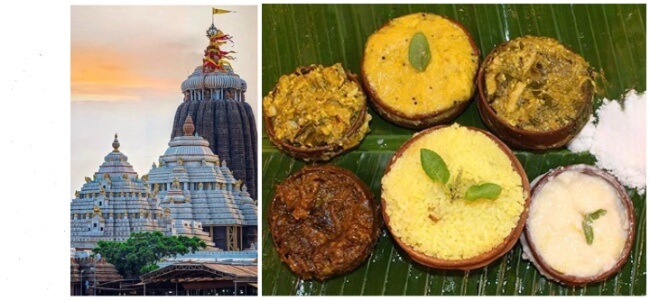
Puri in Odisha rises like a living prayer along the shores of the Bay of Bengal, where sea waves meet centuries of devotion and timeless faith. The sacred skyline is crowned by the Jagannath Puri Temple, a place where rituals, stories, and offerings weave together into a divine rhythm that continues through every sunrise and sunset. Among all the spiritual wonders here, the Jagannath Puri Temple Prasad stands as a symbol of unity, equality, and sacred nourishment shared by devotees from every walk of life. This post is about Jagannath Puri temple prasad, and how food, faith, and folklore blend into one unforgettable spiritual experience.
Table of Contents
Sacred Temple City of Puri, Odisha

Puri in Odisha is not only a coastal town but also a sacred heartbeat of spiritual India where devotion flows as naturally as the ocean tides. As we walk through narrow lanes filled with the fragrance of incense, the sound of temple bells, and the warm smiles of pilgrims who have traveled far and wide. Every corner seems to whisper stories of saints, kings, and ordinary people who found extraordinary meaning here.
The beaches of Puri glow softly at dawn, offering moments of quiet reflection before the temple city awakens. We pause to ask ourselves, how many prayers have risen from these sands over centuries. The rhythm of daily life in Puri feels deeply connected to ritual and remembrance. Even the simplest meal here carries echoes of sacred traditions. In this divine atmosphere, the journey toward understanding Jagannath Puri temple prasad begins naturally and gently.
As we move deeper into the heart of Puri, we notice how devotion shapes the pulse of the town. Shopkeepers arrange offerings with care, pilgrims gather in small groups to share stories, and the air feels charged with anticipation for the next temple ritual. The presence of the Puri Jagannath Temple is felt everywhere, guiding footsteps and intentions alike. We find ourselves drawn into conversations about Jagannath temple prasad and the blessings it carries.
Have you ever considered how a simple plate of food can become a sacred bond between the divine and the devotee. The streets become pathways of faith, leading us closer to an experience that is both spiritual and deeply human. In Puri, every moment feels like a gentle invitation to pause, reflect, and receive.
Jagannath Puri Temple In Puri, Odisha | Puri Jagannath Temple In Puri, Odisha
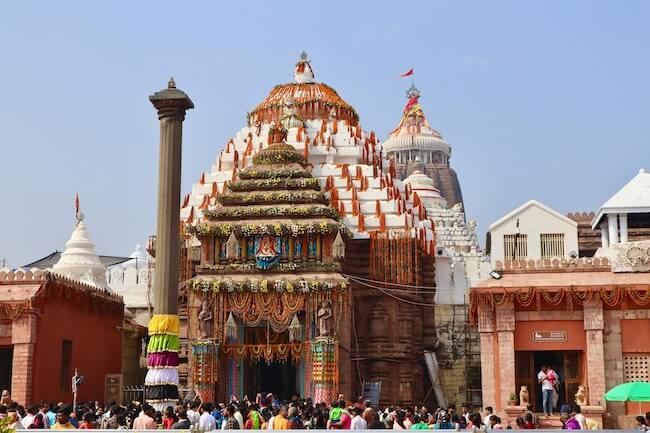
The Jagannath Puri Temple in Puri, Odisha stands as one of the four sacred Dhams of India, drawing seekers who yearn for spiritual connection and cultural immersion. We find ourselves standing in awe of its towering spire, wondering how many generations have looked up with the same reverence. The temple is not just a structure of stone and carvings but a living tradition that breathes through daily rituals, festivals, and offerings.
Every step inside feels like a journey into a deeper layer of devotion. The sound of conch shells and chanting creates an atmosphere that feels timeless. We sense how the energy of countless prayers has shaped this sacred space. It becomes clear that the heart of this temple beats strongly through Jagannath mahaprasad and the traditions surrounding it.
As we explore the temple complex, we observe how every ritual connects the devotee to the divine in a tangible way. The preparation and offering of Puri Jagannath temple prasad become moments of shared reverence and collective faith. We ask ourselves, what makes this temple different from all others. The answer seems to lie in how the divine is made accessible through simple, sacred acts like sharing food. The temple kitchen works like a sacred universe of its own, where flames, pots, and prayers come together. The atmosphere is both bustling and serene, a balance that reflects the spiritual harmony of Puri. Each visit feels like a new chapter in an ongoing story of devotion.
Jagannath Puri Temple Prasad | Jagannath Mahaprasad | 56 Bhog
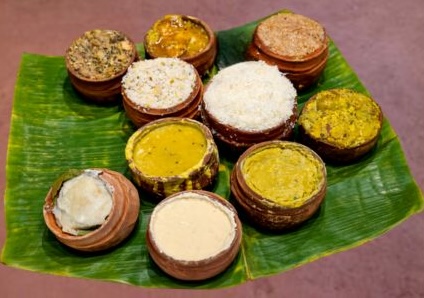
The Jagannath Puri Temple Prasad is not simply a meal; it is believed to be a living blessing that flows from the sanctum of Lord Jagannath into the lives of devotees. Known as Jagannath Mahaprasad, this sacred food is first offered to the deities and then shared without distinction of caste, status, or background, making it a powerful symbol of spiritual equality. At the heart of this tradition lies the legendary 56 Bhog, a grand and symbolic offering that represents abundance, gratitude, and the belief that every form of nourishment, from the simplest grain of rice to the richest sweet, belongs first to the divine.
The preparation of these offerings follows ancient temple customs, using earthen pots, firewood, and age-old recipes that have remained unchanged for centuries. The temple kitchen becomes a sacred space where devotion guides every step, from washing the grains to stirring the simmering pots. Each dish within the 56 Bhog reflects a balance of flavors, seasons, and spiritual meaning, blending simplicity with richness, and nourishment with ritual. Together, these offerings form a sacred feast that tells the story of Odisha’s culture, the temple’s living traditions, and the belief that divine grace can be tasted, shared, and carried home.
The Sacred 56 Bhog Offerings of Lord Jagannath
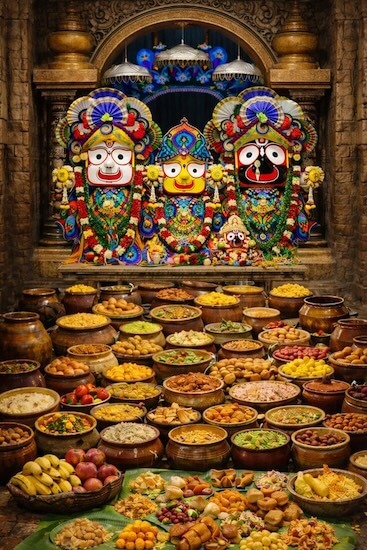
- Khechudi – Soft rice and lentils cooked together, symbolizing simplicity and devotion.
- Dalma – A wholesome stew of lentils and seasonal vegetables with mild spices.
- Besara – Mixed vegetable curry flavored with mustard paste for a gentle tang.
- Saga Bhaja – Lightly sautéed leafy greens, representing purity and balance.
- Alu Bharta – Mashed potatoes seasoned with salt and mild spices.
- Khatta (Khata) – Sweet and sour fruit preparation made with tamarind or mango.
- Mahura – A rich mixed vegetable curry with traditional temple spices.
- Pakhala – Light fermented rice water dish, cooling and refreshing.
- Kanji – Rice water preparation flavored gently with vegetables and spices.
- Dahi (Curd) – Fresh yogurt offered as a cooling and calming element.
- Kheeri (Kheer) – Sweet rice pudding cooked with milk and sugar.
- Payasa – A thin, sweet milk-based dessert similar to kheer.
- Rasabali – Soft fried cheese patties soaked in thickened sweet milk.
- Chhena Khai – Sweetened cottage cheese delicacy.
- Chhena Poda – Baked cottage cheese dessert with caramelized edges.
- Malpua – Fried pancakes sweetened with sugar or jaggery.
- Poda Pitha – Slow-baked rice cake with jaggery and coconut.
- Enduri Pitha – Steamed rice cakes filled with coconut and jaggery, wrapped in leaves.
- Arisa Pitha – Deep-fried rice and jaggery cakes, crisp on the outside.
- Kakara Pitha – Stuffed and fried sweet cakes with coconut filling.
- Manda Pitha – Steamed rice dumplings filled with sweet coconut mixture.
- Suara Pitha – Soft fried cakes made with rice flour and jaggery.
- Ladu (Ladoo) – Sweet round balls made from flour, ghee, and sugar.
- Khaja – Layered, crispy sweet pastry soaked in syrup.
- Gaja – Rectangular fried sweets soaked in sugar syrup.
- Matha Puli – Rice dumplings cooked in sweetened milk.
- Dahi Pakhala – Pakhala rice mixed with curd for a richer taste.
- Pana – Sweet beverage made with fruits, sugar, and spices.
- Ambila – Tangy vegetable stew flavored with tamarind.
- Chuda Mixture – Flattened rice mixed lightly with jaggery and coconut.
- Mudhi (Puffed Rice) – Light and airy rice offering.
- Chuda Dahi – Flattened rice mixed with curd and sugar.
- Khira Sagara – Cottage cheese balls soaked in sweetened milk.
- Sakara – Sweet syrup dish made with sugar and water.
- Nadia (Coconut Sweets) – Coconut and jaggery-based sweet preparations.
- Til Laddu – Sesame seed sweets symbolizing warmth and energy.
- Pheni – Thin, crispy fried sweet strands.
- Kora – Hard sugar-based sweet treats.
- Chakuli Pitha – Soft rice pancakes.
- Sarbata – Sweet flavored water offering.
- Mahaprasad Rice – Plain steamed rice offered directly to the deity.
- Ghee Rice – Rice flavored gently with clarified butter.
- Nimki – Light savory fried snacks.
- Suji Halwa – Sweet semolina pudding with ghee.
- Besan Ladoo – Gram flour sweet balls with ghee and sugar.
- Pakhala Bharta – Mashed vegetables served with fermented rice.
- Chuda Mix – Flattened rice mixed with nuts and jaggery.
- Sweet Pumpkin Curry – Pumpkin cooked with jaggery and mild spices.
- Raw Banana Curry – Lightly spiced banana preparation.
- Coconut Milk Payasa – Sweet dessert cooked in coconut milk.
- Milk Cream Sweets – Soft sweets made from thickened milk.
- Rice Flour Halwa – Smooth, sweet rice-based pudding.
- Jaggery Pudding – Dessert made with rice and palm jaggery.
- Fried Coconut Bites – Crisp coconut-based sweets.
- Seasonal Fruit Offering – Fresh fruits offered as natural bhog.
- Sacred Sugar Crystals (Mishri) – Pure sugar offering symbolizing sweetness and purity.
Karma Bai And Jagannath | Karmabai Khichdi Story | Karma Bai Khichdi | Legend Of Karma Bai Khichdi
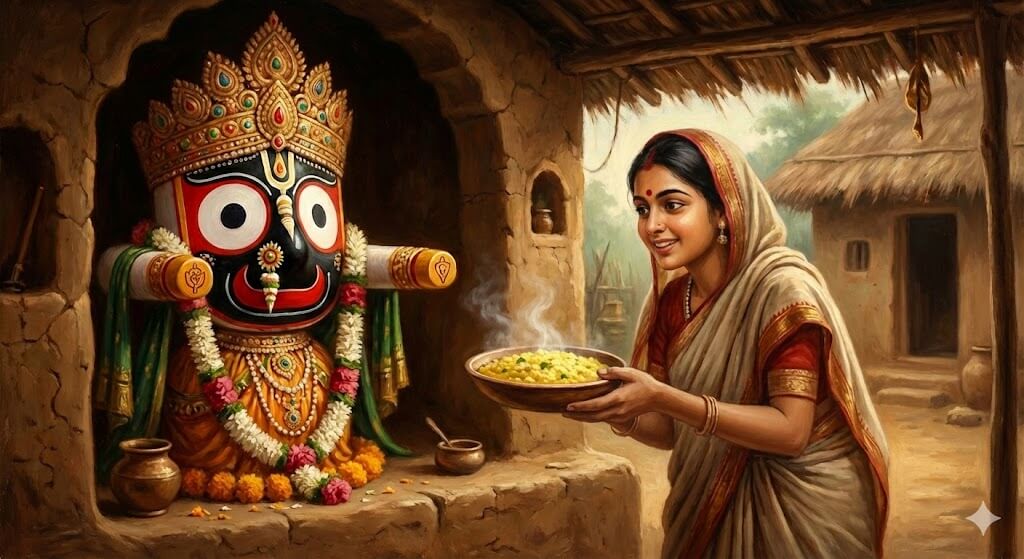
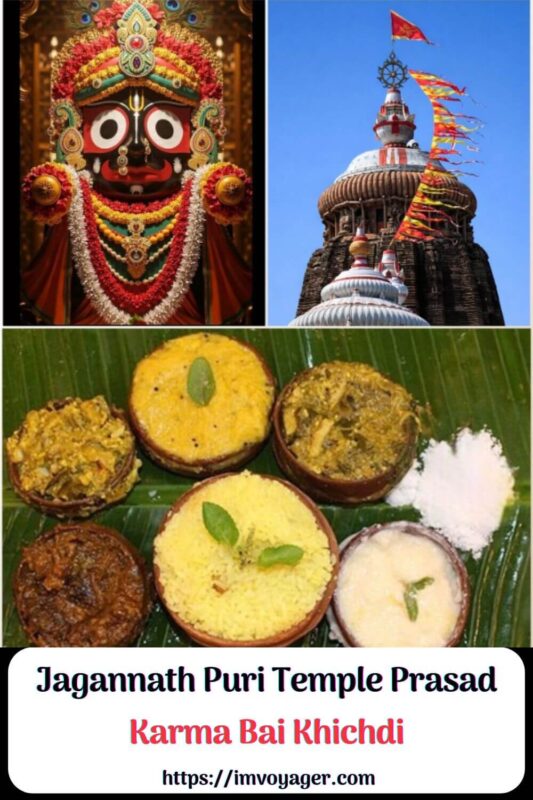
The story of Karma Bai And Jagannath is one of the most tender and inspiring tales associated with Jagannath Puri temple prasad. Karmabai was a humble devotee whose love for the Lord was pure and unwavering. Her days were simple, yet her heart was filled with divine devotion. The Karmabai khichdi story tells us that faith does not require grandeur, only sincerity. She prepared simple food, believing that Jagannath would come to her home to accept her offering. This story continues to touch the hearts of pilgrims who visit Karma Bai Temple Puri.
Karmabai Khichdi Story | Karmabai ki Khichdi | Karma bai ki Khichdi | Karma Bai ki Kahani
The story of Karma Bai And Jagannath stands as one of the most tender and powerful legends connected to Jagannath Puri Temple Prasad. Long ago, in the sacred land of Odisha, lived a humble woman named Karmabai, who was not learned in scriptures or rituals, yet carried a heart overflowing with pure devotion. Her world revolved around Lord Jagannath, not as a distant deity in a grand shrine, but as a beloved guest who would visit her small home each day.
The Karmabai Khichdi Story reminds us that faith does not require elaborate offerings, only sincerity and love. Her life was simple, her meals modest, yet her devotion transformed every act of cooking into an act of worship. We often pause to reflect on whether our own hearts can hold such childlike trust and closeness with the divine.
Each morning, Karmabai would rise before sunrise, bathe, and prepare a simple meal of rice and vegetables, often in the form of khichadi – khechudi ( Karma Bai Khichdi). Before tasting a single bite, she would lovingly call out to the Lord, asking Him to come and share her food. A small portion would be set aside, not as a symbol, but as a genuine offering, because she truly believed Jagannath would walk into her humble hut to accept it.
Villagers sometimes smiled at her innocence, reminding her that the Lord resided in the magnificent temple at Puri. Yet her faith needed no proof, for in her heart, Karma Bai and Jagannath were already seated together, sharing a meal in quiet companionship.
One day, weakened by illness, Karmabai still gathered the strength to cook and wait for her beloved guest. As time passed, she felt that the Lord had not come. Her eyes filled with tears, and in a trembling voice, she called out, asking why He had stayed away. The sorrow in her prayer was so pure that it is said it reached beyond her small home and into the sacred halls of the Jagannath Temple itself. In that moment, her personal devotion became part of the greater spiritual rhythm of the temple.
Inside the temple, the priests witnessed something extraordinary. When they approached the sanctum to begin the ritual offering, they found traces of food near the deity, as if the Lord had already eaten. The Jagannath khichdi story took on a living form, revealing that devotion could move the divine beyond stone walls and sacred corridors. Through spiritual insight, the priests understood that Jagannath had gone to Karmabai’s home to accept her offering, honouring her love over all formal rituals.
When the priests reached her hut and shared what had happened, Karmabai folded her hands in awe and tears. It is believed that the Lord assured her that wherever there is pure and sincere love, He would always be present, whether in a grand temple or a small, simple home. The legend of Karma Bai khichdi thus became a timeless lesson that the true measure of devotion lies not in wealth, knowledge, or ceremony, but in the openness of the heart.
Today, pilgrims who hear the Karmabai khichdi story carry it with them as they receive Jagannath temple prasad, remembering that every grain of rice offered with sincerity holds divine meaning. The bond between Karma Bai and Jagannath continues to inspire countless devotees, reminding us that even the simplest meal, when prepared with love, can become a sacred bridge between the human soul and the divine presence.
The legend of Karma Bai Khichdi also highlights the idea that no offering is too small when given with a sincere heart. We find ourselves inspired by the way Karmabai transformed a simple meal into a sacred moment. The Jagannath khichdi story becomes a bridge between the divine and the everyday. Through her story, we learn that devotion is not measured by wealth or status. It is measured by the purity of intention and the warmth of the heart.
Karma Bai Temple Puri
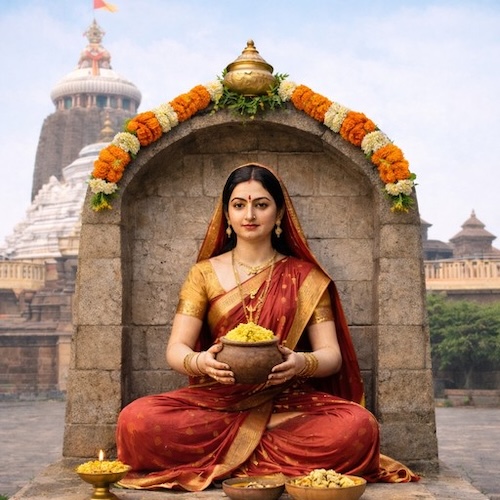
In the sacred city of Puri, there is not a large temple complex dedicated to Karmabai inside the main Jagannath Temple, but rather a samadhi (memorial shrine or shrine-like place) that honours her life and devotion. Historically, Karmabai was a devotee who lived in Puri and served the Lord with simple, heartfelt offerings of khichdi, reflecting her deep love and connection with Jagannath. Her samadhi is revered by pilgrims and is often referred to as Karmabai ka Mandir or shrine, where devotees come to pay respects to her life and legacy.
The samadhi of Karmabai is a place of quiet reverence rather than a grand temple structure, and it stands within the temple precincts as a reminder of pure devotion triumphing over ritual formality. Devotees who visit feel a deeply personal connection to the Karmabai Jagannath Puri story, recalling how even simple offerings were accepted by the Lord because of sincerity of heart.
During the annual Rath Yatra, a beautiful tradition unfolds around her shrine. When the massive chariot of Lord Jagannath travels along the Bada Danda, it is said that the procession pauses near Karmabai’s samadhi as a mark of respect and tribute to her unwavering devotion. This pause reflects the belief that the chariot will not move forward unless her sacred presence is honored — a tradition that connects the grand festival ritual with the intimate personal devotion of Karmabai.
Pilgrims often offer prayers here before or after witnessing the chariot pull, and many feel that stopping near her samadhi adds another layer of meaning to the Rath Yatra journey. It is said that this pause symbolizes how devotion in simple form stands alongside even the greatest of celebrations, reminding all that the Lord values a pure heart above all.
This spot also becomes meaningful for those who have heard the Karmabai khichdi story or the legend of Karma Bai Khichdi, as it stands as a living tribute to her connection with Jagannath and her role in inspiring the continued offering of khichdi in the temple rituals.
The samadhi shrine thus serves as a sacred reminder that faith need not be grand to be powerful — it needs only to be sincere. Devotees visiting the main Jagannath Temple often make a point of walking past her shrine to offer their respects, reflect on her story, and feel part of the living tradition where divine grace meets humble devotion.
Bai Handi | The Legend Of Bai Handi | Jagannath Mahaprasad Story | Jagannath Puri Prasad Mystery
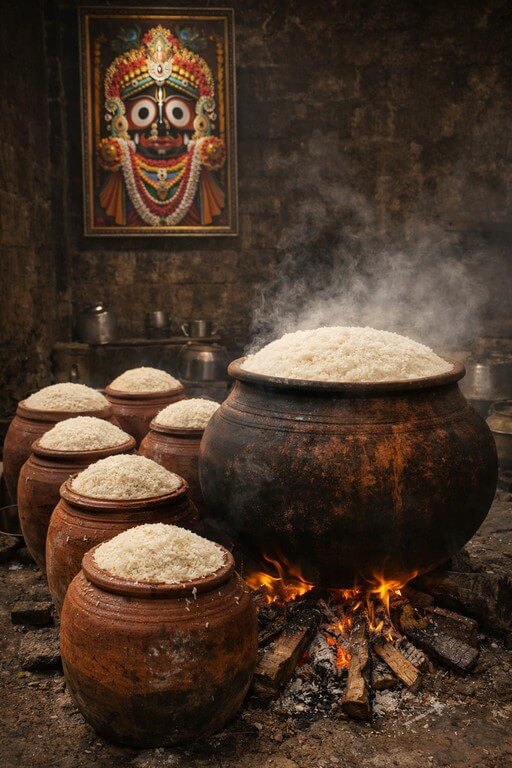
The tradition of Bai Handi is woven into the sacred legend of how Jagannath Mahaprasad travels from the divine kitchen to the hands of devotees. Bai Handi refers to the earthen pots in which the prasad is cooked and carried, but temple lore says these vessels are more than clay shaped by human hands. According to belief, the earth used to make these pots is blessed by Lord Jagannath himself, making every handi a sacred link between the temple, the land of Puri, and the divine presence of the deity. It is said that once food enters a Bai Handi, it transforms from a simple meal into Mahaprasad, carrying the Lord’s grace within it.
The Jagannath Puri prasad mystery deepens with the belief that no Bai Handi ever returns empty or wasted. Even when thousands gather, the prasad prepared in these pots is believed to be exactly enough, never falling short and never overflowing beyond what is needed. Devotees treat broken pieces of Bai Handi with reverence, as they are thought to still hold spiritual energy. Through this ancient tradition, the humble clay pot becomes a symbol of divine abundance, reminding pilgrims that in the presence of Lord Jagannath, simplicity itself becomes sacred.
Jagannath Temple Prasad Recipe | Jagannath Mahaprasad | Jagannath Khichdi Bhog | Jagannath Khichdi Bhog Recipe | Jagannath Puri Bhog Khichdi Recipe | Karma Bai Ki Khichdi Recipe | Jagannath Puri Khechudi | Puri Jagannath Temple Khechudi
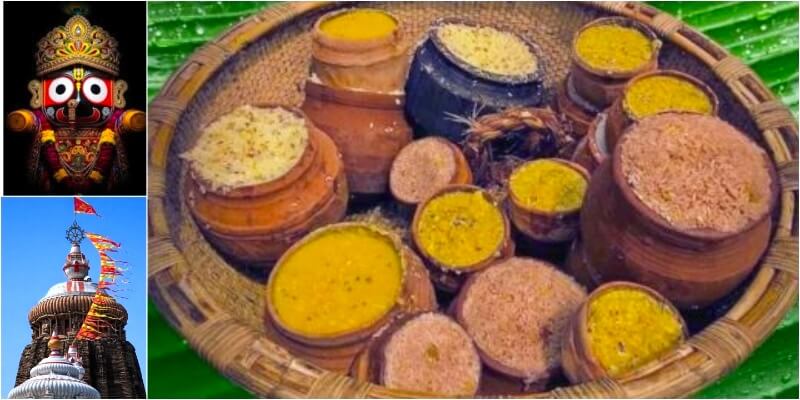
The Jagannath khichdi bhog recipe is a beautiful blend of simplicity and sacred tradition. We often explore how this dish reflects the essence of Jagannath temple prasad and its deep connection to devotion. The Jagannath Puri bhog khichdi recipe uses basic ingredients that come together in a harmonious way. We feel inspired by how Karma Bai Ki Khichdi Recipe represents the heart of the Karmabai khichdi story. The process of cooking becomes a form of meditation. We ask ourselves, can preparing food be a spiritual act. The answer becomes clear as we follow each step with intention.
To prepare Jagannath Puri Khechudi, you gather rice, lentils, ghee, vegetables, and mild spices. You wash and soak the rice and lentils before cooking them together in a large pot. Vegetables are added slowly, allowing flavors to blend gently. Ghee is poured in at the final stage, filling the dish with a rich aroma. The food is cooked over a steady flame, symbolizing patience and care. Once ready, the dish is offered with a prayer before being shared. This Puri Jagannath temple Khechudi reminds us that cooking can be an act of devotion.
Ingredients For Jagannath Puri Khechudi | Karma Bai Ki Khichdi Recipe | Jagannath Khichdi Bhog
- 1 Cup Rice, preferably short-grain or locally sourced rice
- 1 Cup Split Yellow Lentils or Moong Dal, washed thoroughly
- 3 Tablespoons Ghee, traditionally cow ghee
- 1 Teaspoon Cumin Seeds
- 1 Teaspoon Grated Ginger
- 1 Cup Mixed Vegetables such as Pumpkin, Potato, and Raw Banana
- 1 Teaspoon Turmeric Powder
- 1 Teaspoon Rock Salt or Regular Salt, to taste
- 5 to 6 Cups Water
- 2 Bay Leaves
- 1 Teaspoon Mild Whole Spices such as Black Pepper or Cloves
Method For Jagannath Temple Prasad Recipe | Jagannath Puri Bhog Khichdi Recipe
- Wash the Rice and Lentils together until the water runs clear, then soak them for about fifteen minutes to soften the grains.
- Heat Ghee in a heavy-bottomed pot and gently add Cumin Seeds and Bay Leaves, allowing them to release their aroma without browning.
- Stir in the Grated Ginger and Turmeric Powder to create a fragrant base for the Jagannath Khichdi Bhog.
- Add the soaked Rice and Lentils, mixing slowly to coat every grain with the warm, spiced Ghee.
- Pour in Water and bring the mixture to a gentle boil, then lower the flame and allow it to simmer steadily.
- Add the Mixed Vegetables once the Rice and Lentils begin to soften, ensuring they cook evenly and absorb the flavors.
- Season with Salt and Mild Whole Spices, keeping the taste gentle and balanced, in the spirit of traditional Jagannath Temple Mahaprasad.
- Cover the pot and cook on low heat until the texture becomes soft, creamy, and comforting.
- Drizzle a little more Ghee on top and gently stir before turning off the heat.
- Before serving, pause for a moment of gratitude and offer the dish in spirit as Jagannath Khichdi Bhog, honoring the tradition of devotion and sharing.
The Temple Kitchen Of Lord Jagannath
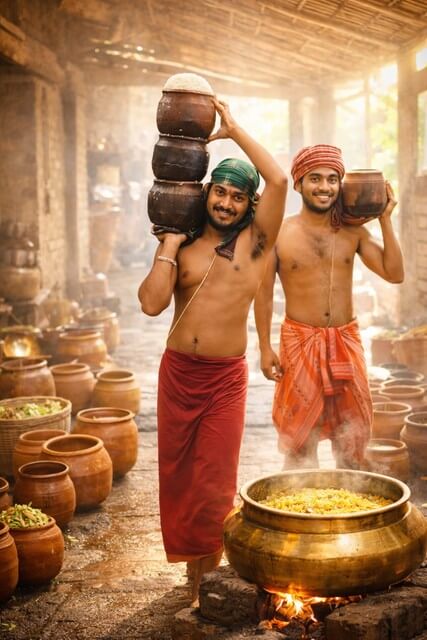
The temple kitchen of Lord Jagannath is one of the largest and most sacred kitchens in the world. You are sure to be awed by the countless clay pots stacked and ready for the daily preparation of Jagannath Puri temple prasad. The cooking follows an ancient method where food is prepared in earthen pots over wood-fired stoves. You are sure to ask yourselves, how does such a massive operation run with such harmony. The answer lies in the collective devotion of the cooks and helpers. Every dish is prepared with prayer and precision.
Meals are prepared at specific times of the day, each offering aligned with a particular ritual and the spiritual significance of major festivals celebrated at the temple. On special occasions, the temple kitchen prepares unique forms of Jagannath Puri Temple Mahaprasad that reflect the theme and sacred purpose of each festival, whether it is the Lord journeying among devotees, the ceremonial bathing of the deities, a period of rest and healing, or the symbolic renewal of divine forms.
Every festival transforms the kitchen into a space of deeper devotion, where ingredients, methods, and prayers are carefully chosen to honour the meaning of that sacred moment. These special offerings not only nourish the body but also help us connect more deeply with the stories and traditions behind each celebration.
- Rath Yatra – Special Khechudi prepared with Rice, Lentils, Ghee, and Mild Spices, symbolizing abundance and the Lord journeying among devotees.
- Snana Yatra – Cooling offerings such as Fresh Fruits, Sweet Drinks, and Light Desserts, meant to soothe the deities after the ceremonial bathing ritual.
- Anasara Period – Simple Vegetarian Dishes without strong spices, reflecting a time of rest and healing for the deities.
- Nabakalebara – Sacred Traditional Offerings made during the renewal of the deities, including Special Rice Preparations and Symbolic Bhog representing rebirth and continuity.
Interesting Facts Of The Temple Kitchen Of Lord Jagannath | Unknown Facts About Puri Jagannath Temple Kitchen
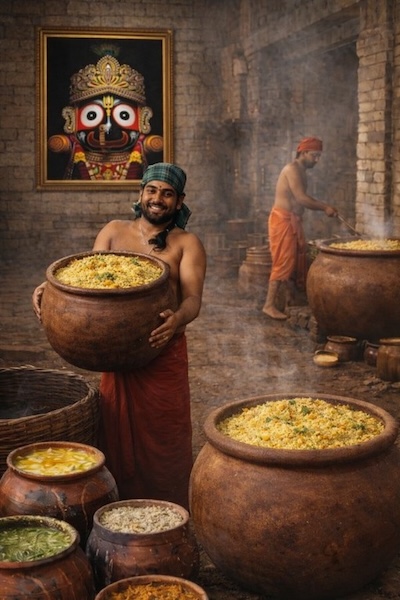
The temple kitchen stands as a living marvel where ancient traditions meet extraordinary scale, serving sacred meals to thousands of devotees each day with remarkable harmony and devotion. Through generations of dedicated cooks and time-honored methods, the recipes remain unchanged for centuries, preserving the original flavors, rituals, and spiritual essence that continue to define the soul of this sacred kitchen.
- The kitchen uses no modern measuring tools, relying entirely on tradition, intuition, and generations of experience passed down through temple cooks.
- Food is prepared in stacked earthen pots, where the top pot mysteriously cooks first instead of the one closest to the fire.
- The firewood used is considered sacred, and only specific types of wood are traditionally chosen for the cooking process.
- The Jagannath Puri temple prasad never goes to waste, as the quantity prepared is believed to be divinely balanced each day.
- The temple kitchen is capable of feeding thousands of devotees daily, making it one of the largest functioning sacred kitchens in the world.
- The recipes remain unchanged for centuries, preserving the original flavors, methods, and spiritual significance of every dish.
Puri Mahaprasad Timing | How To Get Prasad At Puri Jagannath Temple
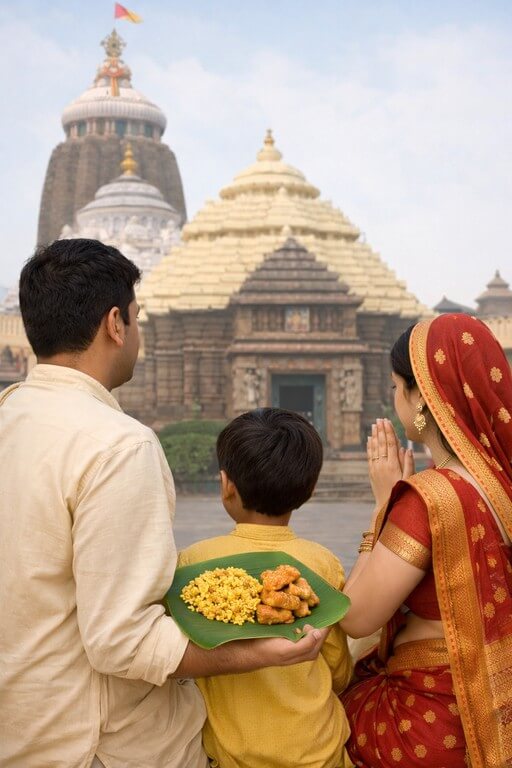
Jagannath Mahaprasad is traditionally obtained from Ananda Bazar, the sacred food courtyard located in the northeastern part of the outer enclosure of the Puri Jagannath Temple complex. This revered space serves as the bridge between the temple kitchen and the devotees, where offerings prepared in the Rosha Ghara are brought out for public sharing. The most favorable time to receive fresh and warm Mahaprasad is usually after the midday rituals, generally between 1:00 PM and 2:30 PM, when a wide variety of rice dishes, dalma, curries, and traditional sweets arrive from the kitchen.
Devotees can walk through the rows of stalls inside Ananda Bazar and choose individual items or complete meal plates, often served on leaf plates or in earthen containers. While small vendors outside the temple premises also sell packed Mahaprasad, many pilgrims prefer purchasing inside the courtyard for freshness and the full spiritual experience. The open seating area within Ananda Bazar allows visitors to sit together and share the blessed food, creating a unique atmosphere of community and devotion that turns a simple meal into a memorable part of the pilgrimage.
Puri Jagannath Temple Prasad | Jagannath Puri Temple Prasad FAQs
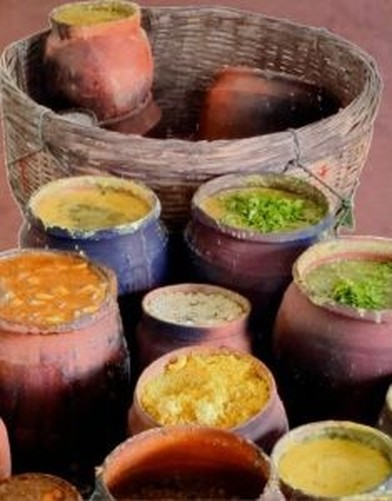
Here we answer common questions about Jagannath Puri temple prasad and its sacred traditions to help us understand the spiritual, cultural, and devotional meaning behind every offering.
What is Jagannath Puri Temple Prasad?
Jagannath Puri Temple Prasad is the sacred food offered to Lord Jagannath and later shared among devotees as a symbol of divine grace and equality.
How is Puri Jagannath Temple Prasad prepared?
Puri Jagannath Temple Prasad is cooked in earthen pots using traditional methods inside the temple kitchen, following rituals that have been preserved for centuries.
What is Jagannath Mahaprasad?
Jagannath Mahaprasad is the blessed food that has been formally offered to the deity and is considered spiritually sanctified for all who receive it.
Can anyone receive Jagannath Temple Prasad?
Yes, Jagannath Temple Prasad is shared with all devotees without distinction of caste, status, or background.
What is Karma Bai Temple Puri?
Karma Bai Temple Puri is a shrine dedicated to the humble devotee Karmabai, known for her deep faith and connection with Lord Jagannath.
What is the Karmabai Khichdi Story?
The Karmabai Khichdi Story tells how the Lord is believed to have left the temple to accept the simple khichdi offered by his devoted follower, showing that love matters more than ritual.
What is Jagannath Puri Khichdi?
Jagannath Puri Khichdi is a sacred rice and lentil dish prepared as bhog and offered as part of the daily and festival rituals.
What is Jagannath Puri Temple Khichdi?
Jagannath Puri Temple Khichdi refers specifically to the khichdi prepared inside the temple kitchen as part of the official prasad offerings.
What is Bai Handi?
Bai Handi refers to the sacred earthen pots used to cook and carry Jagannath Mahaprasad, symbolizing purity and connection to nature.
What is Jagannath Temple Mahaprasad?
Jagannath Temple Mahaprasad is the main sanctified food that devotees receive after it has been offered to Lord Jagannath.
What festivals feature special prasad at Puri Jagannath temple?
Major festivals like Rath Yatra, Snana Yatra, and Nabakalebara feature unique and special forms of Jagannath Puri Temple Prasad.
Can Jagannath Temple Prasad be taken home?
Yes, devotees are allowed to carry Jagannath Mahaprasad – Jagannath temple prasad home to share blessings with family members.
Are the recipes public?
Traditional methods are widely known, but the exact ritual process inside the temple kitchen is preserved by the temple cooks.
What is Puri Jagannath Temple Prasadam Khichdi?
Puri Jagannath Temple Prasadam Khichdi is the khichdi that has been formally offered as sacred bhog and distributed as prasad.
What is Jagannath Puri Khechudi?
Jagannath Puri Khechudi is another traditional name for the temple-style khichdi prepared as part of the prasad.
What does Karmabai Jagannath Puri mean?
Karmabai Jagannath Puri refers to the spiritual association of Karmabai with Lord Jagannath and the sacred town of Puri.
What is Jagannath Puri Khichdi known for?
Jagannath Puri Khichdi is known for its simple ingredients, mild spices, and deep spiritual significance.
How many items are included in the 56 Bhog of Jagannath Mahaprasad?
The 56 Bhog of Jagannath Mahaprasad includes fifty-six different food offerings prepared and presented to Lord Jagannath.
Is Jagannath Temple Prasad vegetarian?
Yes, all forms of Jagannath Temple Prasad are completely vegetarian and prepared without onion or garlic.
Why is Jagannath Puri temple prasad considered sacred?
Jagannath Puri temple prasad is believed to carry divine blessings because it is first offered to the Lord and then received by devotees as a gift of grace and spiritual connection.
We hope you liked this post about Jagannath Puri temple prasad, Puri Jagannath temple prasad, Jagannath temple prasad, Jagannath mahaprasad, and Karma Bai Temple Puri and found it useful. Through stories, recipes, and traditions, we journeyed into the heart of devotion and sacred nourishment.
We explored how food becomes a bridge between the divine and the devotee. We reflected on the Karmabai khichdi story and the timeless lesson of simple faith. We invite you to share this post about Jagannath Puri temple prasad and Jagannath mahaprasad with your family and friends. Do share it across your social media and help spread the story of this sacred tradition. Together, we keep these spiritual narratives alive. Every shared word becomes a small offering of devotion.
Also read:
- 8 Mysteries of Jagannath Temple Puri that are Intriguing
- Incredible Jagannath Puri Story – Untold Stories Of Rath Yatra
- Famous 11th Century Sakhigopal Temple Puri, Odisha
- Quiz On Rath Yatra | 51 Perfect Quiz Questions & Answers
- Jagannath Quotes In English | Jagannath Captions
Where Journeys Begin And Awareness Deepens
Pause for a breath and imagine shorelines shimmering like quiet constellations, mountains veiled in mist and memory, and ancient streets that murmur stories with every step. This is not simply movement across maps. It is a gentle unfolding. A transformation that happens softly, almost without notice. We do not merely design itineraries. We craft experiences that feel intimate and true, like a message written directly to the heart. From peaceful sanctuaries to overlooked wonders, every journey aligns with who we are becoming.
When that inner call to explore stirs, write to us at imvoyager18@gmail.com, and together we will shape a journey that stays with us, long after the road falls quiet.
When Miles Fade And Meaning Remains
Every journey begins before the bags are packed. It starts as a quiet pull, a sense of something waiting to be discovered. Step into a world where travel inspiration is curated with care, where hidden places, soulful encounters, and lived stories awaken curiosity. Walk beside fellow seekers who greet the day with golden light, find stillness in sacred moments, and gather joy from unplanned turns. Let these shared experiences guide us toward journeys that feel personal, alive, and unforgettable.
Travel With Us Beyond Destinations Into Presence
Welcome to Travel With Sandy & Vyjay, where each story opens a doorway and every image holds the warmth of a first sunrise. Wander through vibrant markets, witness the hush of temple dawns, and linger in moments that resist explanation. There are no schedules to chase here, no rush to arrive. Only curiosity, connection, and the quiet magic of discovery.
Voyager A Gathering of Curious Spirits
Voyager is not just a travel space. It is a circle of explorers, dreamers, and storytellers. Join us on Instagram, Facebook, X Twitter, LinkedIn, and YouTube. Receive gentle sparks of inspiration through Voyager Travel Bytes on WhatsApp, or invite reflective stories into your inbox. Follow journeys on Instagram as they unfold, honest, immersive, and beautifully unscripted, just as travel is meant to be.
Journeys Shaped Around You
Whether we move softly through the world, follow distant horizons, or listen closely to the pulse of a place, every journey we create reflects our essence. Each path is chosen with intention, each detail designed to invite wonder. Because the journeys that stay with us do not simply show us new places. They quietly transform how we see ourselves.
The World Is Calling Can You Hear It
Beyond the familiar stretches lies a world rich with beauty, meaning, and moments waiting to unfold. When our hearts tell us it is time, reach out to imvoyager18@gmail.com, and we will thoughtfully craft a travel story that lingers long after the journey ends. Because travel has never been only about where we go. It is about who we become along the way. And when we are ready, we simply whisper, Begin.
We are a reader-supported site. This means, at no additional cost to you, we may earn a small commission if you book a flight or hotel, or make a purchase through one of our affiliate links. Thank you for your support!
Flights – Air India (Domestic) or Air India (International), or Priceline
Tours – Click to book top tours around the world. Book tours and activities here.
Experiences – Book your next unforgettable experience here, with flexible bookings and free cancellations. Reserve tours and activities now and pay later.
Hotels – Click to book the best hotels/resorts. Choose the best stay options with TripAdvisor or Hotels.com, or HotelsCombined
Travel Insurance – Click to book Travel Insurance that covers a range of travel insurance and safety services including medical emergencies, lost luggage, trip cancellation and more
Visas and Travel Documents Application – Click here for Online Travel Visa Check
Online Passport Photo – Get Your Passport Photo Online here


Do You Love Traveling?
Do you want to know how to travel the world? We have put together a very useful travel resources page with the best travel tips. Go check it out now. Thanks for visiting our site Voyager - imvoyager.com and taking the time to read this post! If you wish to collaborate/work with us then reach us at imvoyager18@gmail.com We’d love it if you’d comment by sharing your thoughts on this post and share this post on social media and with your friends. Follow our journey on our social media channels: Facebook X Instagram Pinterest YouTube
Start dreaming about your next adventure with Tripadvisor. Book your next unforgettable experience here with flexible bookings and free cancellations.

Flight booking online at the best fare

60+ Million Users Trust TripAdvisor With Their Travel Plans. Shouldn't You?

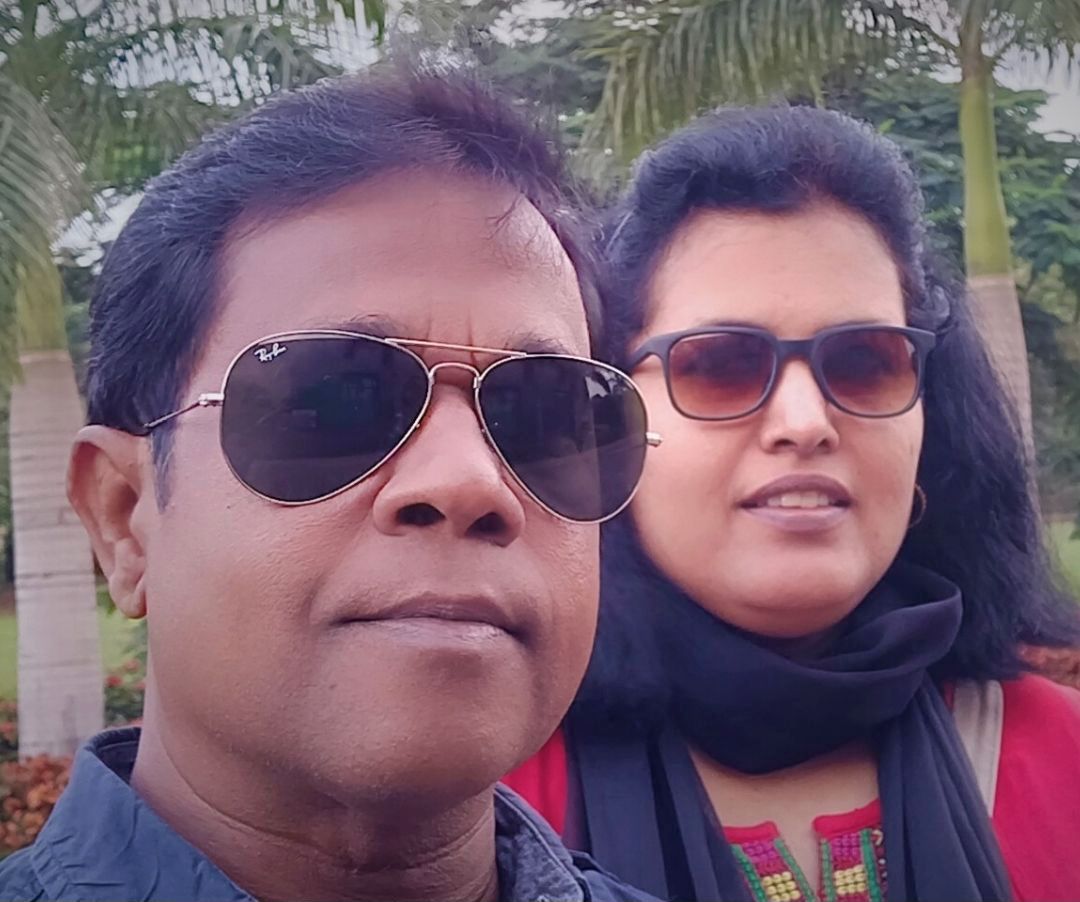
Sandy & Vyjay are a husband and wife duo who are travel content creators. They are co-founders of this travel website and are one of the leading travel content creators in India.
Sandy & Vyjay quit their successful corporate careers to pursue their passion for travel and writing full-time. Their dedication has earned them the “Best Travel Writer” award and numerous accolades on both national and international stages. Focusing on India’s destinations, heritage, and culture, they are passionate advocates for nature and the environment. Through their content, they promote ecotourism and sustainable travel, inspiring others to explore and preserve the beauty of India.