Travel is one of the most rewarding ways to take a break from everyday routines, discover new cultures, and create beautiful memories with the people we love. Whether we are exploring the charming streets of a domestic destination, enjoying a beach holiday, embarking on an international adventure, or escaping to the mountains for a peaceful getaway, digital payments make travelling more convenient. We can book flights, reserve hotels, order meals, shop for souvenirs, and pay for local experiences without carrying large amounts of cash.
Sharing photographs, videos, and travel stories on Instagram and Facebook has also become a delightful part of modern holidays. However, while we focus on enjoying these experiences, we must not overlook the importance of protecting our money and personal information. Understanding common digital payment frauds in India is an essential part of travelling responsibly and enjoying a stress-free holiday.
Table of Contents
Digital Payments During Domestic and International Travel
Digital payments have transformed the way we manage money, particularly through UPI applications, mobile banking, debit cards, credit cards, and digital wallets. During domestic travel, we may use QR codes at restaurants, make payments to taxi drivers, purchase attraction tickets, or transfer money to local vendors. International travel introduces additional considerations, including foreign exchange transactions, overseas card payments, unfamiliar payment terminals, and public Wi-Fi networks.
Although these facilities offer convenience, cybercriminals are constantly developing new tricks to exploit unsuspecting users. Knowing how to avoid digital payment fraud can help us make informed decisions whenever we transact online. A little awareness, combined with sensible precautions, can protect our savings and prevent an enjoyable holiday from turning into a stressful financial experience.
Understanding Common Digital Payment Frauds in India
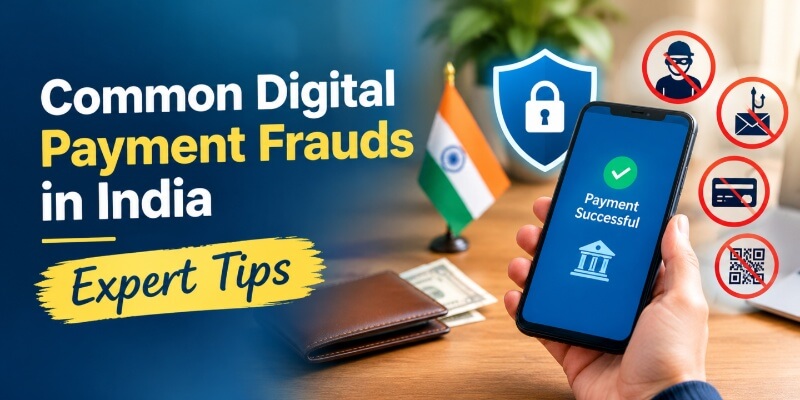
Digital payment fraud happens when criminals manipulate, deceive, or gain unauthorised access to individuals to steal money or confidential financial information. Unlike traditional theft, these scams can happen within seconds, sometimes without the victim immediately realising that something is wrong.
Fraudsters often rely on psychological pressure rather than sophisticated technology alone. They may pretend to be bank representatives, delivery agents, government officials, customer support executives, or even people we know. Their messages and conversations are designed to sound convincing, create urgency, and encourage victims to reveal confidential information or approve transactions.
Some criminals send fraudulent links, while others manipulate QR codes, exploit payment requests, or persuade people to install remote-access applications. Learning how to protect yourself from online payment scams begins with recognising these warning signs before acting.
The important thing to remember is that digital payments themselves are not unsafe. The danger usually comes from trusting an unverified person, sharing sensitive information, or approving a transaction without understanding what it does.
7 Common Digital Payment Frauds You Need to Know
Digital payment frauds are becoming increasingly sophisticated, with cybercriminals constantly finding new ways to trick unsuspecting users and steal their money. Let us explore seven common digital payment frauds in India, understand how these scams work, and discover practical ways to protect your hard-earned money.
1. UPI Payment Scams – Common Digital Payment Frauds In India
Unified Payments Interface (UPI) has made transferring money between bank accounts incredibly convenient. We can pay friends, settle restaurant bills, purchase groceries, and make online bookings within seconds. Unfortunately, this convenience has also attracted fraudsters who exploit unfamiliarity with payment features.
One common trick involves sending a UPI collect request disguised as a refund, prize, cashback, or payment confirmation. The fraudster may contact you claiming that money is waiting to be credited to your account and ask you to approve a request.
However, approving a collect request and entering your UPI PIN generally authorises money to be debited from your account. It does not help you receive money.
Collect Request and Fake UPI Payment Scams
Imagine selling a suitcase through an online marketplace. A prospective buyer contacts you and claims to have transferred the payment. Instead of receiving money, you get a collect request asking you to authorise a transaction.
The buyer may insist that entering your UPI PIN is necessary to receive the payment. If you approve it without checking, you could end up sending money to the fraudster.
How to avoid this fraud:
- Never enter your UPI PIN to receive money.
- Read the transaction screen carefully before approving any request.
- Verify the recipient’s name and payment amount.
- Decline unexpected collect requests from unknown individuals.
Follow these UPI payment fraud prevention tips whenever someone promises a refund, reward, or instant payment.
2. QR Code Payment Scams – Common Digital Payment Frauds In India
QR codes have become a familiar sight at restaurants, shops, petrol stations, tourist attractions, and small businesses. Scanning a code is convenient, but fraudsters can misuse this technology to trick people into sending money to the wrong account.
A criminal may replace a genuine merchant’s QR code with a fraudulent one. When customers scan it, their payments may reach the scammer instead of the intended business.
Another variation involves someone sending a QR code through WhatsApp or social media, claiming that scanning it will release a refund or transfer money into your account.
How Fraudsters Manipulate QR Code Transactions
Consider a situation where you are travelling and paying a local vendor for souvenirs. You scan the QR code displayed at the counter, enter your UPI PIN, and complete the transaction. If the displayed code was secretly replaced, your money may go to an entirely different recipient.
How to avoid this fraud:
- Check the recipient’s name displayed in your payment application.
- Ask the merchant to confirm the correct payment account.
- Avoid scanning QR codes received from unknown people.
- Remember that scanning a QR code and entering your UPI PIN can authorise a payment.
- Do not trust anyone who claims that scanning a QR code is necessary to receive a refund.
These precautions are particularly useful when following QR code payment scams prevention practices at unfamiliar shops and tourist destinations.
3. Phishing Links and Fake Websites – Common Digital Payment Frauds In India
Phishing is one of the most widespread methods used to steal financial information. Fraudsters send emails, text messages, WhatsApp messages, or social media communications containing links that lead to fake websites.
These websites may resemble genuine bank portals, payment applications, hotel booking platforms, courier services, or government websites. Their appearance is designed to make visitors believe they are dealing with a legitimate organisation.
Victims may be asked to enter their banking username, password, card information, OTP, or other confidential details. Once criminals obtain this information, they may attempt unauthorised transactions.
Fake Banking Messages, Emails and Login Pages
You might receive a message claiming that your bank account will be blocked unless you update your KYC details immediately. Another message may announce a pending parcel delivery, an unexpected refund, or a problem with your credit card.
The message often contains a link and creates urgency so that you act without verifying its authenticity.
How to avoid phishing attacks and online banking fraud:
- Never click suspicious links received through unsolicited messages.
- Visit your bank’s official website by typing its address yourself.
- Check website addresses carefully for spelling variations.
- Never share your banking credentials on unfamiliar websites.
- Avoid downloading attachments from unexpected emails.
- If a message appears urgent, contact the organisation through its independently verified official channel.
Knowing how to protect yourself from online payment scams is particularly important when making hotel reservations, purchasing flight tickets, or paying for travel experiences online.
4. OTP and SIM Swapping Frauds – Common Digital Payment Frauds In India
One-Time Passwords (OTPs) provide an additional layer of authentication for many banking and payment transactions. However, criminals often attempt to manipulate people into revealing these codes.
An OTP scammer may pretend to be a bank employee, insurance representative, customer support executive, or government official. They may claim that your account needs verification or that an unauthorised transaction must be stopped immediately.
SIM swapping is another dangerous technique. A criminal fraudulently obtains control of your mobile number by manipulating the mobile service provider or exploiting compromised identity information. Once the fraudulent SIM becomes active, the criminal may receive banking messages and OTPs intended for you.
How Criminals Gain Access to Your Banking Accounts
A fraudster may first collect personal information through phishing or impersonation. They may then attempt to gain control of your mobile number and use intercepted verification messages to access financial services.
Unexpected loss of mobile network connectivity, particularly when you have not changed your location or network settings, deserves attention.
How to avoid OTP and SIM swapping frauds:
- Never share OTPs, UPI PINs, passwords, or CVVs with anyone.
- Contact your mobile network provider immediately if your SIM suddenly stops working unexpectedly.
- Enable transaction alerts with your bank.
- Use strong passwords and additional security features wherever available.
- Avoid sharing personal information on public platforms.
These OTP fraud prevention measures can make it significantly harder for criminals to misuse your banking credentials.
5. Fake Customer Care and Impersonation Scams – Common Digital Payment Frauds In India
Have you ever searched online for a bank’s customer care number or contacted support after a failed payment? Fraudsters exploit exactly these situations.
They publish fake customer care numbers on websites, social media pages, online forums, and other platforms. When an unsuspecting customer calls, the person answering pretends to represent a bank, payment application, airline, hotel, or shopping company.
The fraudster may claim that a payment is stuck, a refund is pending, or an account requires immediate verification. They may then request confidential information or persuade the customer to install a remote-access application.
Fraudulent Customer Support Numbers and Remote Access Apps
Remote-access applications can allow another person to view or control certain functions on your device, depending on the permissions granted. Fraudsters may persuade victims to download such applications under the pretext of resolving payment problems.
Once they gain access, they may observe sensitive information, manipulate transactions, or guide victims into approving payments.
How to avoid fake customer care numbers:
- Find contact details through the official website or application.
- Never trust customer care numbers posted by unidentified social media accounts.
- Do not install remote-access applications at the request of unknown callers.
- Never share your screen while accessing banking applications.
- Disconnect suspicious calls immediately and contact the genuine organisation independently.
Remember that genuine bank representatives do not need your UPI PIN, password, or OTP to resolve an ordinary customer service complaint.
6. Fake Payment Screenshots and Payment Confirmation Scams – Common Digital Payment Frauds In India
Fake payment screenshots are a common trick used in online marketplaces, small businesses, local shops, and peer-to-peer transactions.
A fraudster may show you an edited screenshot that appears to confirm a successful UPI transfer. They may claim that the payment has been completed and ask you to hand over the product immediately.
Sometimes, the screenshot may show a pending transaction or an entirely fabricated payment confirmation.
This scam can also affect travellers who purchase souvenirs, rent equipment, book local experiences, or pay independent service providers.
How to Verify Whether Money Has Actually Reached Your Account
Never rely entirely on a screenshot, SMS forwarded by someone else, or a payment confirmation displayed on another person’s phone.
Open your own banking application and check the actual account balance and transaction history.
How to avoid fake payment screenshots:
- Verify every payment through your own banking application.
- Wait until the money is reflected in your account before handing over goods.
- Do not accept edited screenshots as proof of payment.
- Check the transaction reference number when necessary.
- If a payment is pending, wait for the actual confirmation instead of accepting verbal assurances.
Being careful about fake payment screenshots can prevent unnecessary disputes and financial losses.
7. Online Shopping and Digital Wallet Scams – Common Digital Payment Frauds In India
Online shopping makes it easy to purchase clothes, electronics, travel accessories, gifts, and everyday essentials. However, fake shopping websites, fraudulent sellers, misleading offers, and counterfeit refund messages can put your money at risk.
Some criminals create websites advertising expensive products at unbelievably low prices. Customers make advance payments but never receive the promised goods.
Others contact shoppers pretending to process refunds for cancelled orders. They may send fraudulent links or payment requests that actually authorise a debit.
Digital wallet users may also encounter fake cashback offers, suspicious reward messages, and unauthorised access attempts.
Fake Offers, Refund Scams and Unauthorised Transactions
During festive sales and holiday seasons, fraudsters often use attractive discounts to encourage quick purchases. They may imitate popular retailers or travel booking platforms and create a false sense of urgency.
A message claiming that you have won a shopping voucher or received a travel refund may also be a trap.
How to avoid online shopping payment scams:
- Purchase from reputable websites and verified sellers.
- Check website addresses before entering payment information.
- Avoid deals that seem unrealistically attractive.
- Use secure payment methods and enable transaction notifications.
- Never pay additional processing charges through suspicious refund links.
- Review your digital wallet and bank statements regularly.
Good digital wallet security habits are just as important as protecting your bank account.
How Digital Payment Frauds Affect Travellers
Travellers are often more vulnerable to certain scams because they are unfamiliar with local businesses, payment procedures, networks, and service providers. They may also be distracted while navigating unfamiliar destinations or managing travel arrangements.
Digital Payment Risks During Domestic Travel | Common Digital Payment Frauds In India
India offers several convenient digital payment options, but travellers should remain alert when using them in unfamiliar places.
Some common situations requiring caution include:
- Making UPI payments at roadside shops and restaurants.
- Paying taxi drivers or independent transport providers through unfamiliar QR codes.
- Booking local tours through unverified social media accounts.
- Using public Wi-Fi to access banking applications.
- Responding to unexpected messages about hotel bookings or travel refunds.
- Before completing a transaction, verify the recipient and the amount. When travelling, keeping a small amount of cash as a backup is also sensible.
Digital Payment Risks During International Travel | How To Avoid Digital Payment Fraud
International travel involves additional payment considerations, especially when using cards, foreign exchange services, ATMs, and unfamiliar payment terminals.
- Be cautious when using public computers or open Wi-Fi networks for financial transactions.
- Check the currency displayed by overseas payment terminals before approving card transactions. When offered a choice between paying in Indian rupees and the local currency, understand the exchange rate and any conversion charges before deciding.
- Keep your bank’s international transaction controls and spending limits under review.
- Inform your bank about travel plans if its policies require or recommend it.
- Never allow your card to disappear from your sight during a payment.
- Keep emergency bank contact information accessible separately from your phone.
These simple measures can help you enjoy international travel without unnecessary financial worries.
15 Essential Tips to Avoid Digital Payment Fraud | How To Avoid Digital Payment Fraud | How To Protect Yourself From Online Payment Scams
Understanding common digital payment frauds in India is only the first step. Developing safe payment habits is what makes a lasting difference.
Here are 15 practical precautions that can help protect your finances at home and while travelling.
Secure Your UPI and Banking Applications | UPI Payment Fraud Prevention Tips
- Download banking and payment applications only from official app stores or verified sources.
- Use strong, unique passwords for banking applications and email accounts.
- Never share your UPI PIN, ATM PIN, card CVV, password, or OTP.
- Check the recipient’s name and transaction amount before authorising a payment.
- Enable transaction notifications so that you can identify unfamiliar activity quickly.
- Keep your phone’s operating system and financial applications updated.
- Set appropriate transaction limits wherever your bank or payment application provides this facility.
Protect Your Personal and Financial Information
- Avoid sharing photographs of bank cards, identity documents, or financial statements on social media.
- Never save banking passwords or confidential card details in easily accessible notes or messages.
- Be cautious about unsolicited calls, emails, and WhatsApp messages requesting financial information.
- Avoid making financial transactions using public computers or unsecured Wi-Fi networks.
- Use your bank’s official communication channels to verify suspicious requests.
Stay Alert While Making Payments During Travel
- Inspect QR codes before making payments at unfamiliar establishments.
- Keep your debit and credit cards within sight when paying at hotels, restaurants, and shops.
- Check your account balance and transaction history regularly during your holiday.
- Keep a secure backup payment option and some emergency cash.
- Remember that a few extra seconds spent verifying a transaction can save you from significant financial trouble.
What to Do If You Become a Victim of Digital Payment Fraud
Even careful individuals can become victims of fraud. Criminals constantly change their methods, and some scams are designed to look remarkably genuine.
If you notice an unauthorised transaction or suspect that your financial information has been compromised, do not panic. Acting quickly is important.
Immediate Steps to Protect Your Money | How To Stay Safe With Digital Payments
- Contact your bank immediately through its verified customer care channel and report the suspicious transaction.
- Request that the affected card, account access, UPI facility, or payment instrument be blocked or secured as appropriate.
- Change compromised banking passwords and PINs using official channels.
- Contact your mobile network provider if you suspect SIM swapping.
- Preserve transaction IDs, bank messages, screenshots, phone numbers, emails, and other evidence.
- Do not delete suspicious communications that may help investigators.
- Avoid responding to anyone who promises to recover your lost money in exchange for an advance fee.
How to Report Online Payment Fraud in India
- If you experience financial cybercrime in India, report it immediately through the National Cyber Crime Reporting Portal.
- You can also call the national cybercrime helpline **1930** for assistance with reporting financial cyber fraud.
- After calling 1930, follow the instructions provided for completing the complaint through the official portal, where applicable.
- Keep your bank informed and obtain a complaint or acknowledgement reference number.
Timely reporting can help authorities and participating financial institutions take action to trace or restrict the movement of fraudulent funds, although recovery is not guaranteed.
For additional information, visit https://cybercrime.gov.in.
Smart Digital Payment Habits for Safer Travel and Everyday Life | How To Stay Safe With Digital Payments
Financial safety does not mean avoiding technology or returning to cash-only transactions. Digital payments are useful, convenient, and an important part of modern life.
What matters is understanding how these systems work and recognising when something does not feel right.
Before paying a merchant, verify the recipient. Before clicking a link, check its source. Before sharing information, question why it is required. Before approving a payment request, understand whether you are authorising money to leave your account.
These habits are especially valuable when we are travelling, shopping online, booking accommodation, or making payments through unfamiliar platforms.
Share these precautions with family members, senior citizens, children, and friends who regularly use digital payment services. A little awareness can help protect an entire household from financial scams.
Frequently Asked Questions About Protect Your Wallet – How To Avoid Digital Payment Fraud : Common Digital Payment Frauds You Need to Know
Digital payments are convenient, but understanding their risks is essential for protecting your money. Here are some frequently asked questions about common digital payment frauds in India, how to avoid digital payment fraud, how to protect yourself from online payment scams, how to stay safe with digital payments and practical ways to make safer transactions.
What are the most common digital payment frauds in India?
The common digital payment frauds in India include UPI scams, phishing links, QR code frauds, OTP theft, SIM swapping, fake customer care calls, and fraudulent shopping websites.
How can you avoid digital payment fraud while travelling?
You can avoid digital payment fraud by verifying QR codes, using trusted payment applications, avoiding public Wi-Fi for banking, and checking your account after transactions.
How can I protect myself from online payment scams – what are common digital payment frauds in India?
To protect yourself from online payment scams, never share confidential banking details, avoid suspicious links, verify payment requests, and use official banking channels.
Is it safe to scan QR codes for UPI payments?
Scanning a genuine QR code can be safe, but always verify the recipient’s name and remember that entering your UPI PIN authorises a payment rather than receiving money.
Can someone steal money using a fake payment screenshot?
Yes, fraudsters can use edited fake payment screenshots to deceive sellers, so always confirm that the money has reached your bank account before handing over goods.
What should I do if I receive a suspicious UPI payment request?
Decline unexpected payment requests, verify the sender independently, and never enter your UPI PIN unless you genuinely intend to authorise the displayed payment.
Why should I never share my OTP or UPI PIN?
Your OTP and UPI PIN are confidential authentication credentials, and sharing them can allow criminals to authorise transactions or compromise your financial accounts.
How can I recognise phishing attacks and online banking fraud?
Look for suspicious links, spelling mistakes, unexpected attachments, urgent account warnings, and messages asking you to disclose passwords, OTPs, or card information.
What is SIM swapping fraud, and how can I prevent it?
SIM swapping fraud occurs when criminals gain control of your mobile number, and you can reduce the risk by protecting personal information and immediately reporting unexpected SIM deactivation.
Are fake customer care numbers dangerous?
Yes, fake customer care numbers can connect you to criminals pretending to represent banks or payment companies, so always obtain support numbers from verified official websites.
How can I improve my digital wallet security?
Improve digital wallet security by using strong authentication, keeping applications updated, enabling transaction alerts, and avoiding unknown links or unverified applications.
What should I do immediately after an online payment fraud?
Contact your bank, report the transaction, secure affected payment facilities, preserve evidence, and call India’s cybercrime helpline 1930 without delay.
Where can I report common digital payment frauds in India?
You can report common digital payment frauds in India through the official National Cyber Crime Reporting Portal at cybercrime.gov.in or by calling 1930 for financial cyber fraud assistance.
Is public Wi-Fi safe for mobile banking during international travel?
Public Wi-Fi networks can expose your information to security risks, so avoid accessing banking services or making sensitive financial transactions through unsecured networks.
How can senior citizens stay safe from digital payment scams?
Senior citizens should avoid sharing OTPs and PINs, verify customer care numbers, reject suspicious payment requests, and seek help from trusted family members when uncertain.
Protect Your Wallet and Enjoy Safer Digital Payments
Digital payments have made our lives easier, whether we are shopping, booking holidays, enjoying meals, or exploring destinations across India and abroad. However, understanding common digital payment frauds in India is essential to protecting our money and personal information. We hope this post about common digital payment frauds in India, how to avoid digital payment fraud, how to protect yourself from online payment scams, UPI payment fraud prevention tips, and how to stay safe with digital payments has been useful and informative.
Remember that cybercriminals often rely on urgency, fear, attractive offers, and misplaced trust to deceive unsuspecting people. A little awareness, careful verification, and responsible digital payment habits can make a significant difference. Whether you are enjoying a domestic holiday, travelling internationally, shopping online, or making everyday payments, never compromise on financial safety. We hope you liked this post and found it insightful and interesting.
Do share this post about common digital payment frauds in India and how to avoid digital payment fraud with your family and friends so that they can stay informed and protected. Also, share this post about how to protect yourself from online payment scams on your social media platforms, including Facebook, Instagram, X (Twitter), and WhatsApp. Let us spread awareness, encourage responsible digital payment habits, and help everyone enjoy a safer, more confident digital world.
Where Journeys Begin — And the Soul Discovers More
Take a moment. Breathe deeply. Picture coastlines kissed by shimmering light, mountains wrapped in silken veils of mist, and timeless streets where every cobblestone seems to hold a story waiting to be heard. Travel is so much more than tracing distances across a map. It is an awakening of the senses, a quiet journey of the soul, and a beautiful unfolding of everything we have yet to discover.
We do not simply put together itineraries; we curate meaningful experiences that touch the heart, awaken curiosity, and remain etched in memory. From secluded sanctuaries of serenity to extraordinary treasures tucked away from the familiar, every journey is thoughtfully imagined to resonate with who we are and all that we are yet to become.
When the irresistible whisper of distant horizons stirs within, write to us at imvoyager18@gmail.com. Together, we will weave an extraordinary travel experience, one that becomes a treasured chapter in our lives and continues to live in our hearts long after the roads have disappeared into the distance.
When the Miles Dissolve — And Memories Become Eternal
Every extraordinary journey begins long before the first suitcase is packed or the first ticket is booked. It begins with an emotion, a gentle longing for somewhere unknown, and an inexplicable feeling that the world has something beautiful waiting just for us. Step into a realm where travel inspiration is thoughtfully curated, where hidden destinations, meaningful encounters, and authentic stories awaken the desire to explore.
Walk alongside kindred spirits who welcome the world with the golden glow of a new dawn, discover tranquillity in sacred spaces, and embrace the unexpected joys that unfold when we wander beyond our plans. Let these shared experiences become windows to new perspectives, inspiring journeys that are deeply personal, wonderfully alive, and impossible to forget.
Travel With Us — Beyond Destinations, Into the Art of Being
Welcome to Travel With Sandy & Vyjay, where every story is an invitation to wander and every photograph preserves the enchantment of a first sunrise. Lose yourself in the colours and fragrances of bustling local markets, experience the profound stillness of temples awakening at dawn, and linger in those rare moments of beauty that words can scarcely capture. Here, there are no hurried arrivals, no relentless schedules, and no race to reach the next destination. Instead, there is the freedom to follow curiosity, the joy of genuine connections, and the quiet, extraordinary magic of discovering the world with an open heart.
Voyager — Where Curious Souls and Kindred Spirits Meet
Voyager is far more than a travel destination on the digital landscape. It is a welcoming circle of explorers, dreamers, wanderers, and storytellers, united by an enduring love for discovery and the beautiful possibilities of the world. Become a part of our journey on Instagram, Facebook, X (Twitter), LinkedIn, and YouTube. Welcome little moments of inspiration into your everyday life through Voyager Travel Bytes, or invite our thoughtful travel narratives and reflective stories into your inbox. Follow our journeys on Instagram, where experiences unfold in their truest form — honest, immersive, intimate, and beautifully unscripted, just as the finest journeys are meant to be.
Journeys Shaped Around You — Crafted With Intention, Inspired by Wonder
Whether we choose to wander gently through the world’s quieter corners, surrender to the allure of distant horizons, or immerse ourselves in the distinctive rhythm and soul of a destination, every journey we create carries a reflection of who we are. No path is chosen without purpose, and no detail is considered too small when it comes to creating something meaningful. Every experience is thoughtfully shaped, every moment infused with intention, and every destination selected to leave room for wonder. For the journeys that remain closest to our hearts are never merely about discovering unfamiliar places. They are about finding new perspectives, embracing unexpected emotions, and returning with a deeper understanding of the world — and perhaps, of ourselves.
The World Is Calling — Can You Hear Its Whisper?
Beyond the boundaries of the familiar lies an extraordinary world, overflowing with breathtaking beauty, untold stories, soulful encounters, and moments waiting to become cherished memories. There comes a time when the heart yearns for something more — a new horizon, an unfamiliar pathway, or an experience that brings us closer to the essence of life itself. When that moment arrives, reach out to us at imvoyager18@gmail.com. Together, we will thoughtfully craft a distinctive travel story, one filled with meaningful discoveries and beautiful experiences that linger in the heart long after the journey has reached its end.
Because travel has never been merely about the places we visit or the distances we cross. It is about the emotions we gather, the connections we nurture, the memories we carry, and the people we become along the way.
And when the heart is ready, when the horizon beckons and the soul answers its call, there is only one thing left to say: Begin.
We are a reader-supported site. This means, at no additional cost to you, we may earn a small commission if you book a flight or hotel, or make a purchase through one of our affiliate links. Thank you for your support!
Flights – Air India (Domestic) or Air India (International), or Priceline
Tours – Click to book top tours around the world. Book tours and activities here.
Experiences – Book your next unforgettable experience here, with flexible bookings and free cancellations. Reserve tours and activities now and pay later.
Hotels – Click to book the best hotels/resorts. Choose the best stay options with TripAdvisor or Hotels.com, or HotelsCombined
Travel Insurance – Click to book Travel Insurance that covers a range of travel insurance and safety services including medical emergencies, lost luggage, trip cancellation and more
Visas and Travel Documents Application – Click here for Online Travel Visa Check
Online Passport Photo – Get Your Passport Photo Online here


Do You Love Traveling?
Do you want to know how to travel the world? We have put together a very useful travel resources page with the best travel tips. Go check it out now. Thanks for visiting our site Voyager - imvoyager.com and taking the time to read this post! If you wish to collaborate/work with us then reach us at imvoyager18@gmail.com We’d love it if you’d comment by sharing your thoughts on this post and share this post on social media and with your friends. Follow our journey on our social media channels: Facebook X Instagram Pinterest YouTube
Start dreaming about your next adventure with Tripadvisor. Book your next unforgettable experience here with flexible bookings and free cancellations.

Flight booking online at the best fare

60+ Million Users Trust TripAdvisor With Their Travel Plans. Shouldn't You?


Sandy & Vyjay are a husband and wife duo who are travel content creators. They are co-founders of this travel website and are one of the leading travel content creators in India.
Sandy & Vyjay quit their successful corporate careers to pursue their passion for travel and writing full-time. Their dedication has earned them the “Best Travel Writer” award and numerous accolades on both national and international stages. Focusing on India’s destinations, heritage, and culture, they are passionate advocates for nature and the environment. Through their content, they promote ecotourism and sustainable travel, inspiring others to explore and preserve the beauty of India.