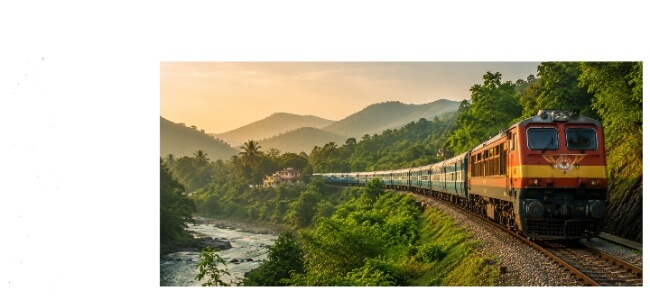
A multi-city India rail trip across India can be one of the most rewarding ways to see the country, but only if you plan it with a little give built in. The first time we tried to string five cities together by train, we built a schedule so tight that a single delay collapsed the whole thing like dominoes. We learned more from that messy trip than from any smooth one. Here is the method we now use, refined over many trips, to keep a long itinerary calm instead of chaotic.
Read on to know how to plan the perfect multi-city India rail trip from start to finish.
Table of Contents
How to Plan a Multi-City Rail Trip Across India Without the Stress
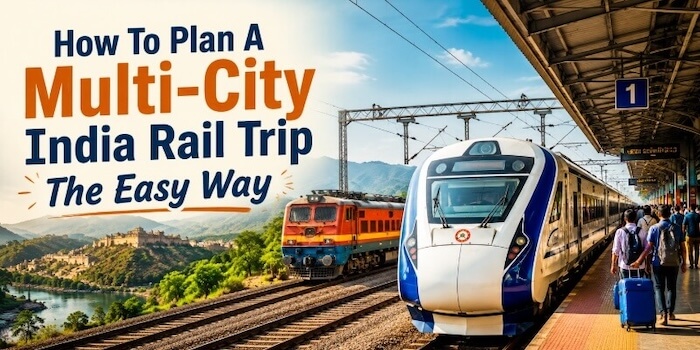
The first time we tried to string five cities together by train, we built a schedule so tight that a single delay collapsed the whole thing like dominoes. We learned more from that messy trip than from any smooth one. A multi-city rail journey across India can be one of the most rewarding ways to see the country, but only if you plan it with a little give built in. Here is the method we now use, refined over many trips, to keep a long itinerary calm instead of chaotic.
Build The Skeleton Before the Detail – Multi-City India Rail Trip
Every good multi-city trip starts with a rough shape, not a minute-by-minute plan. We begin by listing the cities we want, then we decide the logical order so that we are never doubling back across the country. India is vast, the rail network spans more than 68,000 route kilometres and over 7,300 stations, so geography should drive your sequence.
Once the order is set, we slot in nights. Only then do we move to the train booking itself. Booking before you have a skeleton is how you end up with berths that do not connect sensibly.
A simple seven-day skeleton across a popular circuit might look like this:
| Day | Route | Travel Mode | Why |
| 1-2 | Delhi | Arrive, Explore | Base and gateway |
| 2 | Delhi->Jaipur (5hrs) | Daytime Train | Short, scenic hop |
| 3-4 | Jaipur | Explore | Forts and Markets |
| 4 | Jaipur->Udaipur | Overnight Train | Sleep through the leg |
| 5-6 | Udaipur | Explore | Lakes and Palaces |
| 7 | Udaipur->Home | Train or flight | Buffer day |
Why overnight legs are your best friend
The cleverest multi-city trips use the night to travel. An overnight train does two jobs at once: it moves you to the next city, and it saves a hotel night. On a five-city trip, that can mean two or three hotel nights saved and two or three full days to actually see places.
We now plan the long legs as overnight runs wherever the timing allows, and keep daytime trains for short, scenic hops where the view is part of the fun. A sleeper berth for an overnight leg can cost as little as ₹300–₹500, which is a fraction of the room you skip.
Buffer days are not wasted days
The biggest lesson from our domino-collapse trip was this: leave slack. A multi-city itinerary with zero breathing room is a single delay away from falling apart.
Where we now build in buffer:
- A full rest day every three or four days of heavy travel.
- A loose final day before any fixed commitment like a flight home.
- A spare half-day in any city reached by a delay-prone overnight route.
- No two consecutive overnight journeys, which leave you exhausted.
Slack feels indulgent when you are planning and feels like genius when a train runs three hours late, and your trip simply absorbs it.
Booking the legs in the right order
When the skeleton is ready, we book based on scarcity, not chronology. The hardest-to-get legs, popular overnight routes, and festival-season trains get booked first, right when the 60-day reservation window opens. Easier daytime hops can wait.
| Booking priority | Which legs |
| First (window opening day) | Overnight legs on busy routes |
| Second | Festival or weekend departures |
| Third | Short daytime hops with plenty of trains |
| Flexible | Final leg home, where options are wide |
This order means you lock down the seats that genuinely run out, instead of discovering a waitlist on the one leg with no alternative.
Managing the trip once you are moving
A plan survives contact with reality only if you adapt on the day. Our single most useful habit on a multi-city trip is checking the morning train running status. With several connected legs, one delay can ripple into the next city’s plans, so we check before every departure.
When a leg runs late, we do three quick things:
- Re-time the onward connection in the next city — cab, local bus or the following train.
- Message the next stay so a late arrival does not cost the room.
- Decide whether to compress the next day’s plans to recover.
Because we built a buffer in, these are adjustments, not emergencies.
A few habits that keep long trips smooth
Beyond booking and status checks, small routines make a big difference across a week of travel:
- Keep all tickets in one place, digital and one printed backup.
- Carry a power bank, since you will rely on your phone for status and tickets.
- Pack light, because you will move between stations repeatedly.
- Note station codes for each leg to avoid confusion at busy junctions.
- Keep some cash, as smaller stations and towns are not always cashless.
None of these is dramatic. Together they are the difference between a trip you enjoy and one you endure.
Choosing your base cities wisely
Not every city deserves equal time, and picking the right bases makes a multi-city trip flow. We look for cities that are well connected by rail, have plenty of onward options, and sit logically on the route rather than forcing a backtrack. A strong base lets you take short day trips without repacking, which is far less tiring than staying in a new hotel every night.
When we weigh a potential base, we ask:
- Is it a major junction? Better connections mean more flexible booking.
- Does it anchor a cluster? One base can serve several nearby sights.
- Is the station central? A long transfer from the station to the stay eats up your day.
- Are there enough trains out? Options matter if a plan changes.
Building a trip around two or three strong bases, rather than five scattered overnight stops, almost always produces a calmer, richer journey.
Mixing trains with other transport
A purely rail itinerary is elegant, but the best multi-city trips often mix modes. Where a rail leg is awkward — an odd-hour arrival, a long detour, or a town off the main line — we happily switch to a state-run bus or a short flight for that single leg. The goal is the smoothest overall journey, not rail purity.
| Leg type | Often best by |
| Long overnight, well-served route | Train |
| Short hop between nearby towns | Train or bus |
| Town off the main rail line | Bus |
| Very long cross-country jump with little time | Flight |
Planning the trip as a whole, rather than forcing every leg onto rails, keeps you fresher and frees up days. The train stays the backbone; the other modes simply fill the gaps it leaves.
A planning checklist for the whole trip
Before we lock anything in, we run a final pass over the plan:
- Is the city order geographically sensible, with no backtracking?
- Are the long legs overnight, to save days and hotel nights?
- Is there a buffer day every few days and before any fixed event?
- Are the scarce legs booked first, the moment the window opens?
- Do I have a status-check routine for the day of each departure?
If every answer is yes, the trip is built to absorb whatever the journey throws at it.
Frequently asked questions
How many cities can I realistically cover by train in a week?
Three to four cities is a comfortable pace for a week, allowing real time in each. Trying to fit five or more usually means rushing, with most of your days lost to transit rather than exploring.
Should I book all the legs at once or as I go?
Book the scarce legs — popular overnight and festival routes — as early as the 60-day window allows. Easier daytime hops with many trains can be booked closer to travel without much risk.
How do I stop one delay from ruining a multi-city trip?
Build in buffer days, avoid back-to-back overnight journeys, and check the train running status before each leg. With slack in the plan, a delay becomes a minor adjustment rather than a collapse.
How long should a multi-city India rail trip be?
A week suits three to four cities at a comfortable pace, while ten to fourteen days lets you add a few more without rushing. Whatever the length, build in a buffer day every few days so a single delay never unravels the whole plan.
A well-planned multi-city India rail trip lets you experience more destinations with less stress, making every journey smoother and more enjoyable. By organizing your train booking in advance, checking train running status regularly, and planning your multi-city trips with enough flexibility, you can avoid common travel hassles and make the most of your adventure.
If you found this guide on planning a multi-city India rail trip helpful, please share it with your family and friends, and don’t forget to share it on social media so more travelers can confidently plan their own multi-city India rail trip and memorable multi-city trips.
We are a reader-supported site. This means, at no additional cost to you, we may earn a small commission if you book a flight or hotel, or make a purchase through one of our affiliate links. Thank you for your support!
Flights – Air India (Domestic) or Air India (International), or Priceline
Tours – Click to book top tours around the world. Book tours and activities here.
Experiences – Book your next unforgettable experience here, with flexible bookings and free cancellations. Reserve tours and activities now and pay later.
Hotels – Click to book the best hotels/resorts. Choose the best stay options with TripAdvisor or Hotels.com, or HotelsCombined
Travel Insurance – Click to book Travel Insurance that covers a range of travel insurance and safety services including medical emergencies, lost luggage, trip cancellation and more
Visas and Travel Documents Application – Click here for Online Travel Visa Check
Online Passport Photo – Get Your Passport Photo Online here


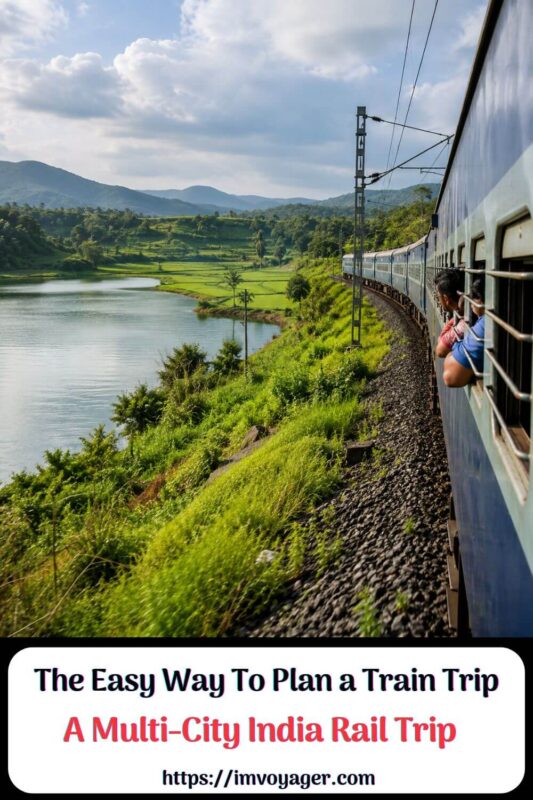
Do You Love Traveling?
Do you want to know how to travel the world? We have put together a very useful travel resources page with the best travel tips. Go check it out now. Thanks for visiting our site Voyager - imvoyager.com and taking the time to read this post! If you wish to collaborate/work with us then reach us at imvoyager18@gmail.com We’d love it if you’d comment by sharing your thoughts on this post and share this post on social media and with your friends. Follow our journey on our social media channels: Facebook X Instagram Pinterest YouTube
Start dreaming about your next adventure with Tripadvisor. Book your next unforgettable experience here with flexible bookings and free cancellations.

Flight booking online at the best fare

60+ Million Users Trust TripAdvisor With Their Travel Plans. Shouldn't You?


Sandy & Vyjay are a husband and wife duo who are travel content creators. They are co-founders of this travel website and are one of the leading travel content creators in India.
Sandy & Vyjay quit their successful corporate careers to pursue their passion for travel and writing full-time. Their dedication has earned them the “Best Travel Writer” award and numerous accolades on both national and international stages. Focusing on India’s destinations, heritage, and culture, they are passionate advocates for nature and the environment. Through their content, they promote ecotourism and sustainable travel, inspiring others to explore and preserve the beauty of India.