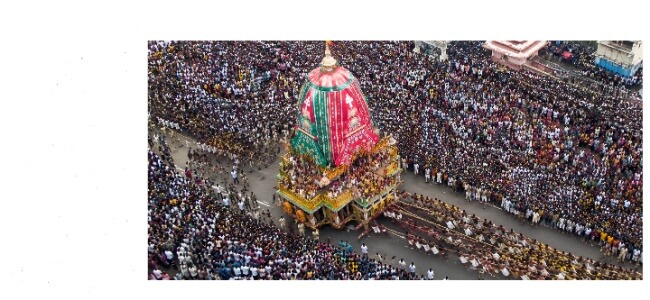
Every year, the coastal town of Puri in Odisha transforms into one of the world’s most extraordinary spiritual destinations. Millions of devotees, pilgrims, photographers, researchers, and curious travelers gather for a single event that has remained alive for centuries—the magnificent Rath Yatra of Lord Jagannath.
Unlike most temple festivals where devotees visit the deity, Puri Rath Yatra is unique because the deities themselves come out to bless everyone. Lord Jagannath, along with Lord Balabhadra and Devi Subhadra, leaves the sanctum of the Jagannath Temple and travels through the Grand Road (Bada Danda) on gigantic wooden chariots toward the Gundicha Temple. This symbolic journey represents compassion, accessibility, equality, and the divine’s willingness to meet every devotee regardless of caste, creed, or background.
For many visitors, witnessing this sacred procession is a once-in-a-lifetime experience. The rhythmic chants of “Jai Jagannath,” the thunderous sound of cymbals and drums, thousands of volunteers pulling the massive chariots with thick ropes, and an ocean of devotees moving together create an atmosphere unlike any other festival in India.
Whether you are planning your first visit or simply wish to understand the deeper meaning behind the celebrations, this Rath Yatra travel guide covers everything you need to know—from history and mythology to rituals, travel planning, safety advice, accommodation, local food, and practical tips.
Throughout this guide, you will also discover why the Jagannath Rath Yatra continues to inspire millions across generations and why Puri Rath Yatra remains one of India’s greatest spiritual and cultural celebrations.
Table of Contents
What Is Rath Yatra?
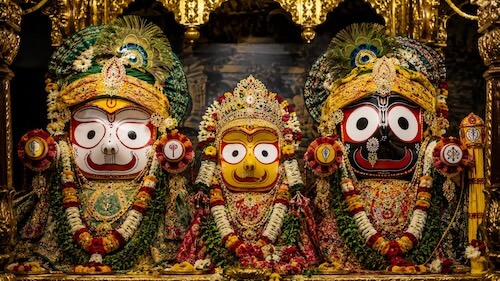
The word Rath Yatra literally means “Festival of Chariots.”
During this spectacular annual festival, Lord Jagannath, Lord Balabhadra, and Devi Subhadra are ceremoniously brought out from the Jagannath Temple and placed on three beautifully decorated wooden chariots. These enormous chariots are then pulled by devotees along the Grand Road to the Gundicha Temple, where the deities stay for several days before returning in the Bahuda Yatra.
Unlike ordinary temple processions, this festival allows everyone—including those who may never enter the temple—to receive the blessings of Lord Jagannath. It reflects the belief that divinity belongs to all humanity rather than remaining confined within temple walls.
The scale of Puri Rath Yatra is astonishing. Millions of devotees participate in the celebrations, making it one of the largest annual religious gatherings in the world. Yet despite the enormous crowds, the festival retains an atmosphere of devotion rather than spectacle. Every ritual, every chant, and every movement follows traditions preserved over centuries.
For travelers interested in India’s living heritage, Jagannath Rath Yatra offers an opportunity to witness faith, craftsmanship, community participation, and ancient traditions coming together in one unforgettable celebration.
Puri Rath Yatra: History, Rituals, Significance, Interesting Facts
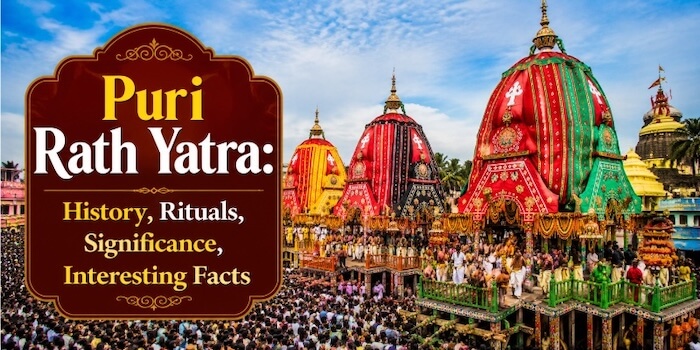
Puri Rath Yatra is much more than a spectacular chariot festival—it is a centuries-old celebration that beautifully blends faith, history, mythology, and living traditions. This comprehensive guide explores the Puri Rath Yatra history, the sacred rituals observed before, during, and after the festival, and the profound Jagannath Rath Yatra significance that continues to inspire millions of devotees around the world.
You will also discover fascinating and lesser-known facts about the annual construction of the magnificent chariots, the unique temple customs, and the symbolism behind every important ceremony. Whether you are a devotee, a history enthusiast, or a traveler eager to understand one of India’s most revered festivals, this article offers an engaging insight into the timeless legacy of Jagannath Rath Yatra. Read on to explore the history, rituals, significance, and interesting facts that make Puri Rath Yatra one of the world’s most extraordinary spiritual and cultural celebrations.
Why Is Puri Rath Yatra So Special?
Many religious festivals celebrate the arrival of devotees at a sacred place. Puri Rath Yatra reverses this tradition.
Here, Lord Jagannath comes out to meet His devotees.
This simple yet profound idea has made the festival one of the most inclusive celebrations in Hindu tradition. People from different regions, cultures, languages, and even faiths gather to witness the procession, believing that merely seeing Lord Jagannath during the yatra brings immense spiritual merit.
Several factors make the festival truly unique:
The Deities Leave the Temple
The deities emerge from the sanctum only during this annual celebration. For many devotees who cannot enter the Jagannath Temple, this becomes the most important opportunity to receive darshan.
New Chariots Every Year
One remarkable aspect of Jagannath Rath Yatra is that entirely new wooden chariots are constructed each year using sacred neem wood. Skilled hereditary craftsmen begin this work months in advance, following ancient measurements and rituals that have been passed down through generations.
Massive Community Participation
Thousands of temple servitors, artisans, volunteers, police personnel, medical teams, and local residents work together to organize the festival. Their coordinated efforts help preserve traditions while ensuring that millions of visitors can safely participate.
The King’s Humility
One of the most meaningful rituals is Chhera Pahanra, where the Gajapati Maharaja of Puri sweeps the chariots with a golden broom. The ceremony symbolizes that before Lord Jagannath, every individual—whether king or commoner—is equal.
A Living Cultural Heritage
Beyond its religious significance, Rath Yatra represents Odisha’s art, architecture, music, dance, woodcraft, textile traditions, temple rituals, and community life. It is a celebration where spirituality and culture become inseparable.
History of Rath Yatra | Puri Rath Yatra History
The origins of Jagannath Rath Yatra stretch back many centuries, blending mythology, temple traditions, historical records, and regional folklore.
The Jagannath Temple itself is believed to have been built during the 12th century under King Anantavarman Chodaganga Deva of the Eastern Ganga dynasty. However, the worship of Lord Jagannath is considered much older and reflects influences from tribal traditions, Vaishnavism, Shaivism, Shaktism, and other streams of Indian spirituality.
Historical accounts from travelers and scholars indicate that the chariot festival has been celebrated continuously for hundreds of years. Over time, Puri Rath Yatra evolved into one of India’s most significant religious events, drawing pilgrims from across the subcontinent.
The festival also gained worldwide recognition through the teachings of saints such as Chaitanya Mahaprabhu, whose deep devotion to Lord Jagannath helped spread awareness of the festival far beyond Odisha. In modern times, the celebration has inspired Rath Yatra festivals in numerous countries, introducing millions to the traditions associated with Lord Jagannath.
Despite changing times, the core spirit of Rath Yatra has remained remarkably consistent: bringing the Lord closer to His devotees and reminding humanity of compassion, humility, and universal acceptance.
The Mythological Story Behind Rath Yatra
Several sacred traditions explain why Lord Jagannath undertakes this annual journey.
One popular belief is that Lord Jagannath travels to the Gundicha Temple, considered the home of His aunt, to spend a few days with His siblings before returning to the main temple.
Another tradition associates the festival with Lord Krishna’s desire to revisit the memories of Vrindavan and reconnect with His devotees.
Some scholars also interpret the journey symbolically. The chariot represents the human body, the ropes symbolize collective devotion, and the Lord’s movement signifies the spiritual journey toward truth and liberation.
Whatever interpretation one follows, the essence remains the same: Jagannath Rath Yatra celebrates the bond between the divine and humanity, emphasizing love, equality, and accessibility.
Its enduring message explains why Puri Rath Yatra continues to attract not only devotees but also historians, cultural enthusiasts, photographers, architects, and travelers eager to experience one of India’s most remarkable living traditions.
Preparations Before Rath Yatra: Sacred Rituals That Lead to the Grand Festival | Puri Rath Yatra Rituals
Although the world eagerly awaits the day when the three magnificent chariots roll through the streets of Puri, the celebrations begin several weeks earlier with a series of deeply meaningful rituals. These ceremonies prepare both the deities and the devotees for the grand Puri Rath Yatra, preserving traditions that have been followed for centuries.
Each ritual has its own symbolism, timing, and significance. Together, they build anticipation while reflecting the philosophy that every spiritual journey begins with preparation.
Understanding these traditions allows visitors to appreciate that Jagannath Rath Yatra is not merely a one-day procession but a carefully orchestrated sequence of sacred events that unfolds over many weeks.
Akshaya Tritiya: The Beginning of Rath Yatra Preparations
The preparations for Rath Yatra officially begin on the auspicious occasion of Akshaya Tritiya.
On this day, two important activities commence simultaneously.
First, farmers ceremonially begin the agricultural season, seeking blessings for a prosperous harvest. At the same time, temple authorities initiate the construction of the three sacred chariots that will carry Lord Jagannath, Lord Balabhadra, and Devi Subhadra during the festival.
Specially selected logs of sacred neem wood are brought to Puri after elaborate rituals. Every piece of timber is inspected and prepared according to centuries-old traditions.
The commencement of chariot construction is itself considered a sacred ceremony rather than merely a carpentry project. Temple priests perform rituals before craftsmen begin their work, emphasizing that the chariots are temporary divine vehicles rather than ordinary wooden structures.
For devotees, Akshaya Tritiya marks the spiritual countdown to Puri Rath Yatra, reminding everyone that great celebrations are built upon devotion, discipline, and tradition.
Chariot Construction: A Remarkable Tradition Preserved for Centuries
One of the most fascinating aspects of Jagannath Rath Yatra is that the three enormous chariots are built entirely anew every year.
Unlike many religious processions that reuse ceremonial vehicles, the chariots of Puri Rath Yatra are reconstructed annually using traditional techniques, sacred measurements, and specific types of wood.
The work is entrusted to hereditary families of skilled carpenters, artisans, painters, and craftsmen whose ancestors have performed this responsibility for generations. Their knowledge is passed down through families, ensuring that every chariot maintains its prescribed dimensions and sacred proportions.
Construction takes place near the Jagannath Temple, where hundreds of artisans work with remarkable precision.
Interestingly, very little modern machinery is used. Much of the work continues to rely on traditional hand tools and techniques, preserving craftsmanship that has survived for hundreds of years.
The completed chariots are masterpieces of engineering, artistry, and devotion, capable of carrying massive wooden deities while being pulled by thousands of devotees through the streets of Puri.
The Three Sacred Chariots of Jagannath Rath Yatra
Each deity travels in a separate chariot, and every chariot has its own name, color scheme, guardian deity, dimensions, and symbolic meaning.
Nandighosha – Chariot of Lord Jagannath
The largest of the three chariots belongs to Lord Jagannath.
Known as Nandighosha, it is instantly recognizable by its striking yellow and red canopy.
Traditionally, it has sixteen wheels and stands as the tallest among the three ceremonial chariots.
Beautiful wooden carvings, colorful fabrics, sacred symbols, and handcrafted decorations transform the massive structure into a moving temple.
For devotees, Nandighosha represents divine compassion and Lord Jagannath’s willingness to leave His sanctum and bless the entire world.
Taladhwaja – Chariot of Lord Balabhadra
Lord Balabhadra, the elder brother of Lord Jagannath, travels in Taladhwaja.
Its canopy traditionally features green and red colors.
The chariot is slightly smaller than Nandighosha but equally impressive in craftsmanship and symbolism.
Taladhwaja represents strength, protection, courage, and righteousness, qualities closely associated with Lord Balabhadra.
Darpadalana – Chariot of Devi Subhadra
Devi Subhadra’s chariot is called Darpadalana, sometimes also referred to as Devadalana.
Its traditional canopy combines black and red colors, creating a distinctive appearance among the three chariots.
Though comparatively smaller, Darpadalana carries profound symbolic importance. It represents divine grace, compassion, balance, and the nurturing aspect of spiritual life.
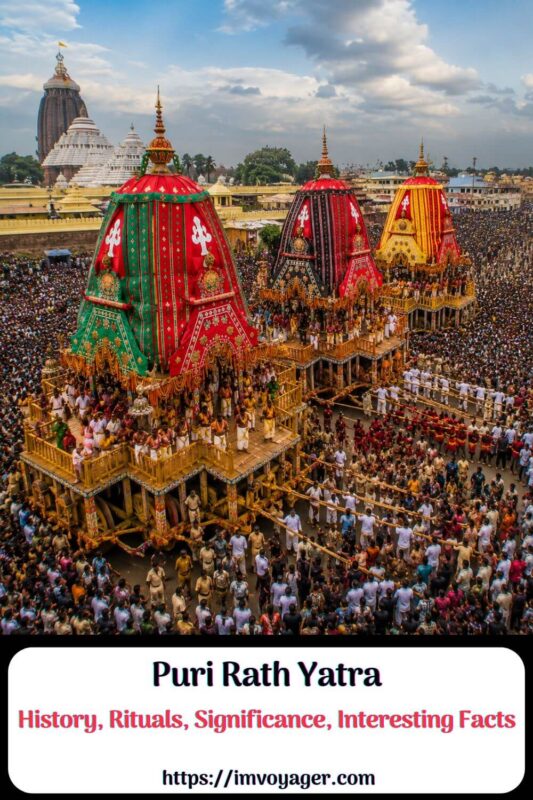
Together, the three chariots create one of the most iconic sights of Puri Rath Yatra, drawing millions of devotees from around the world.
Snana Purnima: The Grand Ceremonial Bath
One of the most important rituals before Jagannath Rath Yatra is Snana Purnima.
Celebrated on the full moon day of the month of Jyeshtha, this ceremony marks the public bathing of Lord Jagannath, Lord Balabhadra, Devi Subhadra, and Sudarshana Chakra.
The deities are brought to the Snana Mandap, where they are ceremonially bathed with 108 pots of sacred water drawn from a specially protected temple well.
The ritual is accompanied by Vedic chants, devotional music, temple ceremonies, and the participation of thousands of devotees.
Witnessing Snana Purnima is considered highly auspicious because it offers one of the rare occasions when the deities are visible outside the sanctum before Rath Yatra.
Anasara: The Sacred Period of Seclusion
Following the elaborate ceremonial bath, tradition holds that the deities fall ill due to the extensive bathing ritual.
This marks the beginning of Anasara, a deeply symbolic period during which Lord Jagannath, Lord Balabhadra, and Devi Subhadra remain away from public view.
For approximately fifteen days, the temple doors remain closed to devotees for the deities’ public darshan.
During this time, temple servitors perform special rituals and offer herbal preparations, fruits, and traditional medicines as part of the symbolic healing process.
Although devotees cannot have darshan inside the temple during Anasara, many visit nearby sacred places associated with Lord Jagannath’s worship, keeping their spiritual journey alive while awaiting the Lord’s return.
The period reminds devotees that even the divine participates in the rhythms of rest, renewal, and restoration.
Nabajaubana Darshan: The Return of the Lord
After the conclusion of Anasara comes one of the most eagerly awaited moments before Puri Rath Yatra—Nabajaubana Darshan, meaning “the vision of renewed youth.”
According to tradition, the deities emerge after their period of recovery with a refreshed and rejuvenated appearance.
Thousands of devotees gather in Puri to witness this special darshan, believing it to be especially auspicious.
For many pilgrims, Nabajaubana Darshan marks the emotional beginning of Jagannath Rath Yatra, as anticipation reaches its peak before the grand procession.
The renewed appearance of the deities symbolizes spiritual rebirth, fresh beginnings, and the eternal cycle of renewal that lies at the heart of faith.
The Spirit of Anticipation Before the Grand Procession
As the day of Puri Rath Yatra approaches, the atmosphere across the holy city changes dramatically.
The Grand Road is prepared for the procession. The completed chariots stand majestically outside the Jagannath Temple, awaiting the arrival of the deities. Devotees begin arriving from every corner of India and many parts of the world. Markets become vibrant with flowers, traditional handicrafts, sweets, and devotional items, while the sound of bhajans and temple bells fills the air.
For first-time visitors, these days before Jagannath Rath Yatra are just as memorable as the procession itself. They offer a chance to witness centuries-old traditions, observe master craftsmen’s work, interact with pilgrims from diverse backgrounds, and experience the deep spiritual anticipation that gradually builds toward one of the world’s greatest religious celebrations.
Jagannath Rath Yatra Significance
The Jagannath Rath Yatra significance extends far beyond the spectacular procession of towering wooden chariots. At its heart, the festival represents the timeless ideals of equality, compassion, humility, and the belief that the divine belongs to everyone. Unlike many temple festivals where devotees travel to seek blessings, Jagannath Rath Yatra is unique because Lord Jagannath, accompanied by Lord Balabhadra and Devi Subhadra, comes out of the temple to meet devotees from all walks of life.
Another important aspect of the Jagannath Rath Yatra significance is its message of inclusiveness. During the festival, social barriers fade as millions of people, regardless of caste, community, nationality, or background, gather with a shared spirit of devotion. The ritual of the Gajapati Maharaja sweeping the chariots with a golden broom further reinforces the idea that everyone is equal before the Lord.
The annual construction of new chariots also adds to the Jagannath Rath Yatra significance. Built from sacred neem wood every year, the chariots symbolize renewal, the cyclical nature of life, and the importance of preserving traditions while embracing fresh beginnings. Every stage of the festival—from Snana Purnima and Anasara to Bahuda Yatra and Niladri Bije—carries profound spiritual symbolism that has been carefully preserved for centuries.
For devotees, the Jagannath Rath Yatra significance lies in receiving the Lord’s blessings during His annual journey outside the temple. For historians and cultural enthusiasts, it reflects Odisha’s remarkable heritage, traditional craftsmanship, and living temple customs. Together, these spiritual, cultural, and philosophical dimensions have made Puri Rath Yatra one of the world’s most revered and enduring religious celebrations.
The Main Day of Rath Yatra: When the Divine Comes to the Devotees
After weeks of sacred preparations, the long-awaited day of Puri Rath Yatra finally arrives. Before sunrise, the holy city begins to stir as pilgrims, devotees, and visitors gather along the Grand Road, known locally as Bada Danda. The air is filled with devotional songs, the rhythmic beat of traditional drums, the sound of conch shells, and chants of “Jai Jagannath” that echo through every corner of Puri.
Unlike many religious festivals where devotees travel to seek the blessings of the deity, Jagannath Rath Yatra celebrates a profound spiritual idea—the Lord Himself steps out of the temple to meet His devotees. This gesture of divine compassion and inclusiveness has made the festival one of the most cherished and widely attended spiritual events in India.
For those witnessing it for the first time, the experience is overwhelming in the best possible way. Every ritual unfolds according to centuries-old traditions, creating a powerful blend of devotion, history, and cultural heritage.
Pahandi Bije: The Grand Procession of the Deities
The first major ritual on the day of Rath Yatra is known as Pahandi Bije, the ceremonial procession in which Lord Jagannath, Lord Balabhadra, Devi Subhadra, and Sudarshana Chakra are brought out of the Jagannath Temple and carried to their respective chariots.
Temple servitors gently move the deities in a distinctive swaying motion that resembles a graceful dance. The procession is accompanied by the continuous sound of cymbals, drums, conch shells, Vedic chants, and devotional singing. Thousands of devotees eagerly wait for their first glimpse of the deities as they emerge from the temple.
Each deity is respectfully placed on the designated chariot after elaborate rituals and prayers. This sacred procession is among the most emotional moments of Puri Rath Yatra, as it marks the beginning of the Lord’s annual journey among the people.
Chhera Pahanra: A Lesson in Humility
One of the most symbolic ceremonies during Jagannath Rath Yatra is Chhera Pahanra.
After the deities are seated on their chariots, the Gajapati Maharaja of Puri arrives in a traditional procession. Carrying a golden broom, the king ceremonially sweeps the platforms of all three chariots while sprinkling fragrant water and sandalwood.
This ritual carries a timeless message. Despite being the traditional ruler of Puri, the king performs the duties of a humble servant before Lord Jagannath. It reminds everyone that status, wealth, and power lose their importance in the presence of the divine.
For many visitors, Chhera Pahanra is one of the most inspiring moments of Puri Rath Yatra, beautifully expressing the values of humility, equality, and selfless service.
Pulling the Chariots: A Journey Powered by Faith
Once the rituals are completed, the enormous ropes attached to the three chariots are lowered for devotees.
Thousands of hands eagerly reach out to pull the chariots toward the Gundicha Temple.
Participating in this act is considered highly auspicious. Many devotees believe that helping pull the chariots symbolizes drawing oneself closer to the divine while leaving behind pride, attachment, and negativity.
The movement of the massive wooden chariots is an extraordinary sight. The towering structures slowly roll along the Grand Road amid continuous chanting, devotional music, and showers of flowers from rooftops and balconies.
Although millions witness the event, the atmosphere remains centered on devotion rather than spectacle. Volunteers, temple servitors, and security personnel work together to ensure that the procession moves safely through the vast crowds.
Watching the chariots advance through Puri is often described as the defining moment of Jagannath Rath Yatra, leaving a lasting impression on everyone present.
Arrival at Gundicha Temple
The destination of the outward journey is the Gundicha Temple, situated approximately three kilometers from the Jagannath Temple.
According to popular tradition, the Gundicha Temple is regarded as the home of Lord Jagannath’s aunt. The annual visit symbolizes a family journey filled with affection and hospitality.
After reaching the temple, the deities are ceremonially installed inside the sanctum, where they remain for several days. During this period, devotees who may not have been able to enter the Jagannath Temple have another opportunity to seek blessings.
The stay at Gundicha Temple also reflects the deeper philosophy of Puri Rath Yatra—the divine is not confined to one place but reaches out to every devotee.
Hera Panchami: A Charming Temple Tradition
Among the many rituals associated with Rath Yatra, Hera Panchami adds a delightful and symbolic narrative.
On the fifth day after the deities reach Gundicha Temple, Goddess Lakshmi, the consort of Lord Jagannath, is believed to visit in search of Him.
Temple traditions portray this event with warmth and gentle humor. According to legend, Goddess Lakshmi expresses her displeasure at Lord Jagannath for leaving without taking her along. After a symbolic interaction, she returns to the main temple.
This ritual reflects the human emotions woven into many Hindu traditions, making the divine stories relatable while enriching the cultural heritage of Jagannath Rath Yatra.
Bahuda Yatra: The Return Journey
After spending several days at Gundicha Temple, the deities begin their return procession, known as Bahuda Yatra.
The return journey follows the same Grand Road back toward the Jagannath Temple.
Once again, thousands of devotees gather to pull the chariots, chant devotional hymns, and celebrate the Lord’s homecoming. Although similar in appearance to the outward procession, Bahuda Yatra has its own unique rituals and emotional significance.
For many pilgrims, witnessing both the outward and return journeys completes the spiritual experience of Puri Rath Yatra.
Suna Besha: The Golden Adornment
One of the most visually stunning events following Bahuda Yatra is Suna Besha, also known as the Golden Attire.
While seated on their chariots outside the Jagannath Temple, Lord Jagannath, Lord Balabhadra, and Devi Subhadra are adorned with magnificent gold ornaments, crowns, weapons, necklaces, and decorative jewelry.
The dazzling sight attracts enormous crowds of devotees eager to witness the divine splendor.
Beyond its visual grandeur, Suna Besha symbolizes prosperity, divine sovereignty, and the eternal abundance bestowed upon humanity by the Lord.
For photographers, pilgrims, and cultural enthusiasts alike, it is among the most unforgettable moments of Jagannath Rath Yatra.
Adhara Pana: A Unique Offering
Another important ritual in the concluding phase of Puri Rath Yatra is Adhara Pana.
A special sweet beverage prepared from milk, cheese, sugar, spices, and aromatic ingredients is offered to the deities in unusually large ceremonial earthen pots.
After the offering, the pots are intentionally broken.
According to temple tradition, the offering is believed to satisfy numerous unseen divine attendants who accompany Lord Jagannath throughout the festival.
This distinctive ritual highlights the rich symbolism and spiritual depth found throughout the celebrations, where every ceremony carries layers of cultural and religious meaning.
Niladri Bije: The Grand Conclusion of Rath Yatra
The final ceremony of the festival is Niladri Bije, when Lord Jagannath, Lord Balabhadra, Devi Subhadra, and Sudarshana Chakra ceremonially re-enter the Jagannath Temple.
Temple traditions narrate that Goddess Lakshmi initially refuses to allow Lord Jagannath to enter because He had departed without informing her. To appease her, the Lord offers Rasgulla, symbolizing reconciliation, affection, and harmony.
Only after this symbolic exchange does the Lord re-enter the temple, marking the formal conclusion of Puri Rath Yatra.
This charming tradition reminds devotees that compassion, understanding, and loving relationships remain central values in both spiritual and everyday life.
The Spiritual Meaning Behind Rath Yatra
While the grand chariots and vibrant celebrations capture global attention, the deeper significance of Jagannath Rath Yatra lies in its timeless message.
The festival teaches that the divine belongs to everyone. Lord Jagannath’s journey beyond the temple walls symbolizes inclusiveness, compassion, and accessibility. The annual construction of new chariots reminds us of renewal and the impermanence of material things. The king sweeping the chariots demonstrates humility before the divine, while the collective effort of thousands pulling the ropes reflects the power of unity and shared devotion.
These enduring values explain why Puri Rath Yatra continues to resonate with millions of people across generations and cultures, making it far more than a religious procession. It is a living celebration of faith, equality, community, and hope.
11 Fascinating Facts About Puri Rath Yatra
- The deities come out of the temple to meet devotees.
- Three brand-new chariots are built every year.
- Chariot construction begins on Akshaya Tritiya.
- Each chariot has a unique name, colour, and symbolism.
- The Gajapati King sweeps the chariots with a golden broom.
- The deities symbolically “fall ill” after Snana Purnima.
- Millions of devotees pull the chariot ropes.
- The Lord visits Gundicha Temple every year.
- Suna Besha adorns the deities with gold ornaments.
- Niladri Bije ends with the famous Rasgulla ritual.
- The festival has inspired Rath Yatras around the world.
Frequently Asked Questions About Puri Rath Yatra
If you are planning to learn more about Puri Rath Yatra, its rituals, traditions, and spiritual significance, these frequently asked questions will help answer many of the common queries asked by devotees and travelers. From the history of Jagannath Rath Yatra to its unique ceremonies and symbolism, the answers below provide a quick and easy understanding of this centuries-old festival.
What is Puri Rath Yatra?
Puri Rath Yatra is the annual Chariot Festival of Lord Jagannath, Lord Balabhadra, and Devi Subhadra, during which the deities are taken from the Jagannath Temple to the Gundicha Temple on magnificent wooden chariots.
Why is Puri Rath Yatra celebrated?
The festival commemorates Lord Jagannath’s annual journey to the Gundicha Temple and symbolizes the Lord coming out to bless all devotees, irrespective of caste, creed, or background.
What is the significance of Jagannath Rath Yatra?
Jagannath Rath Yatra represents equality, compassion, humility, and devotion. It teaches that the divine belongs to everyone and reaches out to all with love and grace.
Why are new chariots built every year?
The three sacred chariots are constructed anew every year using specially selected neem wood according to centuries-old temple traditions, sacred measurements, and prescribed rituals.
What are the names of the three chariots in Puri Rath Yatra?
Lord Jagannath travels in Nandighosha, Lord Balabhadra in Taladhwaja, and Devi Subhadra in Darpadalana, also known as Devadalana.
What is Pahandi Bije?
Pahandi Bije is the ceremonial procession in which the deities are carried from the Jagannath Temple to their respective chariots in a graceful swaying movement before the Rath Yatra begins.
What is Chhera Pahanra?
Chhera Pahanra is a sacred ritual in which the Gajapati Maharaja of Puri sweeps the chariots with a golden broom. The ceremony symbolizes humility and reminds everyone that all are equal before Lord Jagannath.
What is Bahuda Yatra?
Bahuda Yatra is the return journey of Lord Jagannath, Lord Balabhadra, and Devi Subhadra from the Gundicha Temple back to the Jagannath Temple after their annual stay.
What is Suna Besha?
Suna Besha is a special ritual during which the deities are adorned with magnificent gold ornaments while seated on their chariots, symbolizing divine majesty and prosperity.
What is the significance of Niladri Bije?
Niladri Bije marks the conclusion of the festival when the deities ceremonially return to the Jagannath Temple after a symbolic reconciliation between Lord Jagannath and Goddess Lakshmi.
How old is the tradition of Puri Rath Yatra?
The tradition of Puri Rath Yatra has been celebrated for centuries and is closely associated with the 12th-century Jagannath Temple, although the worship of Lord Jagannath is believed to be much older.
Can anyone participate in pulling the Rath Yatra chariots?
Yes. Subject to crowd management and safety arrangements, devotees traditionally participate in pulling the sacred chariot ropes, considering it a highly auspicious act of devotion.
Why is Puri Rath Yatra famous around the world?
Puri Rath Yatra is internationally renowned for its ancient traditions, enormous handcrafted chariots, millions of participating devotees, and timeless message of inclusiveness, faith, and unity.
How long does the Rath Yatra festival last?
Although the main chariot procession takes place on one day, the complete festival extends over several days and includes important rituals such as Snana Purnima, Anasara, Bahuda Yatra, Suna Besha, Adhara Pana, and Niladri Bije.
Why is Lord Jagannath worshipped with Lord Balabhadra and Devi Subhadra?
Lord Jagannath is worshipped alongside His elder brother, Lord Balabhadra, and sister, Devi Subhadra, symbolizing family unity, harmony, compassion, protection, and the universal nature of divine blessings.
More than a spectacular procession, Puri Rath Yatra is a living tradition that has united generations through faith, devotion, craftsmanship, and community spirit. Every ritual—from the construction of the chariots and the ceremonial bath of the deities to the majestic procession, the return journey, and the concluding temple ceremonies—reflects values that continue to inspire millions.
For travelers, the festival offers a rare opportunity to witness one of India’s oldest and most vibrant spiritual celebrations. For devotees, it is a deeply meaningful occasion to seek the blessings of Lord Jagannath. For anyone interested in culture, history, architecture, or living heritage, Jagannath Rath Yatra provides an unforgettable experience that extends far beyond the streets of Puri.
Whether you visit to participate in the sacred rituals, admire the remarkable craftsmanship of the annual chariots, taste the revered Mahaprasad, or simply absorb the atmosphere of devotion that fills the city, Puri Rath Yatra leaves an enduring impression. It is a celebration where faith moves through the streets, traditions come alive before your eyes, and the timeless message of equality, humility, and compassion continues to resonate with every passing generation.
Also read:
- Planning a Trip to Puri During Rath Yatra: 15 Reliable Tips
- Incredible Jagannath Puri Story – Untold Stories Of Rath Yatra
- 8 Mysteries of Jagannath Temple Puri that are Intriguing
- Legendary Jagannath Puri Temple Prasad | Karma Bai Khichdi
- 75 Best Jagannath Quotes In English | Jagannath Captions
Where Every Journey Begins — And Every Moment Finds Meaning
Close your eyes for a moment and picture waves glistening beneath the morning sun, mist drifting across ancient hills, and timeless streets where every corner whispers a story waiting to be discovered. Travel is far more than moving from one destination to another. It is an invitation to slow down, reconnect, and see the world—and ourselves—with fresh eyes. We do not simply plan holidays; we thoughtfully curate experiences that feel deeply personal, meaningful, and unforgettable. From tranquil retreats and sacred landscapes to hidden gems waiting beyond the usual routes, every journey is designed to reflect the person we are becoming.
When your heart begins to long for your next adventure, write to us at imvoyager18@gmail.com, and together we will create a journey that stays with us long after the footprints have faded.
When the Journey Ends, the Memories Begin
Every memorable adventure starts long before the first ticket is booked. It begins with a quiet spark of curiosity, a dream of distant places, or a longing to experience something new. Discover thoughtfully curated travel inspiration filled with hidden destinations, authentic encounters, local traditions, and stories shaped by real experiences. Walk alongside fellow explorers who welcome each sunrise with wonder, embrace moments of stillness, and find unexpected joy in paths they never planned to take. These shared journeys become lasting memories that continue to inspire long after returning home.
Travel With Sandy & Vyjay — Beyond Places, Into Experiences
Welcome to Travel With Sandy & Vyjay, where every story opens a new window to the world and every photograph captures the emotion of a place. Wander through bustling markets alive with colour, witness the serenity of temple mornings, stand before breathtaking landscapes, and celebrate cultures that leave a lasting impression. There is no race to tick destinations off a list—only the joy of meaningful travel, genuine connections, and discoveries that enrich every journey.
Voyager — Where Passionate Travellers Come Together
Voyager is more than a travel platform; it is a welcoming community of explorers, storytellers, photographers, and dreamers brought together by a shared love for discovering the world. Join us on Instagram, Facebook, X, LinkedIn, and YouTube, receive regular travel inspiration through Voyager Travel Bytes on WhatsApp, or enjoy thoughtfully written stories delivered directly to your inbox. Follow along as journeys unfold naturally—honest, immersive, inspiring, and filled with moments that remind us why we travel.
Journeys Crafted Around Your Dreams
No two travellers are alike, and neither are the experiences we create. Whether you seek peaceful escapes, cultural discoveries, spiritual journeys, wildlife adventures, or unforgettable road trips, every itinerary is shaped with care, purpose, and attention to detail. We believe the most meaningful journeys are those that do more than introduce us to remarkable places—they change the way we experience the world and leave us with stories worth telling for years to come.
The World Awaits — Are You Ready to Answer Its Call?
Beyond familiar horizons lies a world filled with extraordinary landscapes, remarkable cultures, timeless traditions, and unforgettable experiences waiting to be explored. Whenever you feel that gentle call to travel, reach out to us at imvoyager18@gmail.com, and together we will create a journey that continues to inspire long after you return home.
Because travel has never been only about the destinations we visit. It is about the people we meet, the moments we treasure, the perspectives we gain, and the person we become along the way.
When the time feels right, all that remains is one simple decision—begin.
We are a reader-supported site. This means, at no additional cost to you, we may earn a small commission if you book a flight or hotel, or make a purchase through one of our affiliate links. Thank you for your support!
Flights – Air India (Domestic) or Air India (International), or Priceline
Tours – Click to book top tours around the world. Book tours and activities here.
Experiences – Book your next unforgettable experience here, with flexible bookings and free cancellations. Reserve tours and activities now and pay later.
Hotels – Click to book the best hotels/resorts. Choose the best stay options with TripAdvisor or Hotels.com, or HotelsCombined
Travel Insurance – Click to book Travel Insurance that covers a range of travel insurance and safety services including medical emergencies, lost luggage, trip cancellation and more
Visas and Travel Documents Application – Click here for Online Travel Visa Check
Online Passport Photo – Get Your Passport Photo Online here


Do You Love Traveling?
Do you want to know how to travel the world? We have put together a very useful travel resources page with the best travel tips. Go check it out now. Thanks for visiting our site Voyager - imvoyager.com and taking the time to read this post! If you wish to collaborate/work with us then reach us at imvoyager18@gmail.com We’d love it if you’d comment by sharing your thoughts on this post and share this post on social media and with your friends. Follow our journey on our social media channels: Facebook X Instagram Pinterest YouTube
Start dreaming about your next adventure with Tripadvisor. Book your next unforgettable experience here with flexible bookings and free cancellations.

Flight booking online at the best fare

60+ Million Users Trust TripAdvisor With Their Travel Plans. Shouldn't You?

Sandy & Vyjay are a husband and wife duo who are travel content creators. They are co-founders of this travel website and are one of the leading travel content creators in India.
Sandy & Vyjay quit their successful corporate careers to pursue their passion for travel and writing full-time. Their dedication has earned them the “Best Travel Writer” award and numerous accolades on both national and international stages. Focusing on India’s destinations, heritage, and culture, they are passionate advocates for nature and the environment. Through their content, they promote ecotourism and sustainable travel, inspiring others to explore and preserve the beauty of India.


This was a really useful read. I liked how the article explains that tourism is much more than simply travelling from one place to another, since transport, accommodation, food, attractions, and other services all work together to shape the overall experience. The section on the interdependence of different tourism sectors was particularly interesting because even a small issue in one area can affect the entire journey. The discussion of seasonality and changing customer demand was also a good reminder of the challenges businesses in this industry have to manage. A clear and informative overview of how tourism services work and why coordination is so important.