Among the greatest literary treasures of India, the Hindu epics occupy a place of extraordinary reverence, carrying stories of divine incarnations, courageous heroes, devoted companions, powerful kingdoms and timeless moral choices. The two great Sanskrit epics, the Ramayana and the Mahabharata, have shaped Indian philosophy, spirituality, literature, art, music, dance and everyday traditions for generations.
Their stories are not merely accounts of events from an ancient age; they explore human emotions, relationships, duty, sacrifice, courage, loyalty and the eternal struggle between good and evil. Among these magnificent narratives, the Ramayana holds a particularly special place because of its portrayal of Lord Rama, Goddess Sita, Lakshmana and Hanuman. Its influence reaches far beyond India, inspiring different cultures and communities across Asia. Even today, the epic continues to offer lessons that remain meaningful in our personal lives.
This post is about interesting facts about Ramayana, taking you through the fascinating world of Valmiki, Ayodhya, the fourteen-year exile, the abduction of Sita, Hanuman’s extraordinary journey, the battle in Lanka and the return of Lord Rama. Through these interesting facts about Ramayana, we explore familiar episodes as well as lesser known facts about Ramayana that reveal the depth and richness of this timeless epic. Whether you are interested in fascinating facts about Ramayana, facts about the Ramayana epic, or interesting stories from Ramayana, this collection offers an engaging journey through one of the most celebrated narratives in Hindu mythology.
Table of Contents
Ramayana | Valmiki Ramayana
The Ramayana is one of the two great Sanskrit epics of ancient India, traditionally attributed to Maharishi Valmiki. It narrates the life and adventures of Lord Rama, the prince of Ayodhya, who is revered in Hindu tradition as an incarnation of Lord Vishnu. The story begins with Rama’s birth into the royal family of King Dasharatha and follows his childhood, marriage to Sita, fourteen-year exile and eventual confrontation with Ravana, the powerful king of Lanka.
The epic also describes the extraordinary devotion of Hanuman, the loyalty of Lakshmana and Bharata, and the courage of countless allies who support Rama during his difficult journey. The Valmiki Ramayana is traditionally organised into seven sections known as Kandas, each covering a different stage of the narrative. These books take readers from Rama’s childhood to his return to Ayodhya and the events that follow his coronation. Together, they create a literary and spiritual masterpiece that has influenced generations of readers.
One of the most remarkable aspects of the Ramayana is its ability to speak to people across different generations, languages and cultures. Its characters represent a wide range of human qualities, from Rama’s commitment to duty and Sita’s resilience to Hanuman’s devotion and Ravana’s complicated personality. The epic also examines the responsibilities of rulers, the importance of family relationships, the consequences of pride and the strength required to remain committed to one’s principles.
Although the Valmiki Ramayana is the foundational Sanskrit telling, numerous regional and international retellings have developed over centuries. Tulsidas composed the celebrated Ramcharitmanas in Awadhi, while Kamban created the Tamil Ramavataram. The Ramayana also travelled to Southeast Asian countries, where local traditions developed their own interpretations of the story. These different tellings demonstrate how a powerful narrative can transcend geographical and linguistic boundaries while continuing to inspire people.
Interesting Facts About Ramayana – Fascinating Facts and Lesser Known Facts About Ramayana
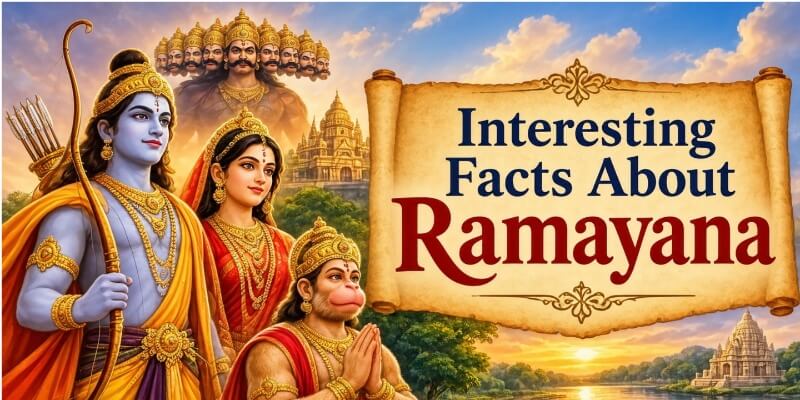
The following collection explores the history, characters, events, symbolism and cultural influence of the Ramayana. Some facts follow the traditional Valmiki narrative, while others refer to well-known episodes and interpretations from broader Ramayana traditions. Where different versions differ, the distinction is important because the epic has been retold in many forms.
Origins, composition and structure of the Ramayana | Lesser Known Facts About Ramayana
- Maharishi Valmiki is traditionally regarded as the author of the Sanskrit Ramayana and is honoured as the Adi Kavi, meaning the first poet.
- The Valmiki Ramayana is traditionally considered the Adi Kavya, or the first great Sanskrit poetic composition.
- The word Ramayana is commonly understood as the journey or story of Rama, combining Rama with the Sanskrit word ayana, meaning journey or course.
- The Valmiki Ramayana is traditionally divided into seven books called Kandas, which together narrate the different stages of Rama’s life.
- The seven Kandas are Bala Kanda, Ayodhya Kanda, Aranya Kanda, Kishkindha Kanda, Sundara Kanda, Yuddha Kanda and Uttara Kanda.
- Bala Kanda describes the childhood, education, marriage and early adventures of Lord Rama.
- Ayodhya Kanda narrates the circumstances surrounding Rama’s exile and the grief that follows his departure from the kingdom.
- Aranya Kanda takes readers into the forests, where Rama, Sita and Lakshmana encounter sages, demons and extraordinary challenges.
- Kishkindha Kanda introduces the kingdom of the vanaras and the alliance between Rama and Sugriva.
- Sundara Kanda is especially associated with Hanuman’s journey across the ocean to discover Sita in Lanka.
- Yuddha Kanda describes the great battle between Rama’s forces and Ravana’s army, culminating in Ravana’s defeat.
- Uttara Kanda narrates events traditionally associated with Rama’s reign after his return to Ayodhya, including the story of Lava and Kusha.
- The Valmiki Ramayana is composed primarily in Sanskrit shlokas, giving its narrative a distinctive poetic rhythm.
- Traditional accounts describe the Ramayana as containing approximately 24,000 shlokas, although manuscript traditions and critical editions differ in their counts.
- The Valmiki Ramayana contains around 500 sargas, or chapters, according to the traditional description of its structure.
- The famous opening episode involving a krauncha bird is traditionally associated with Valmiki discovering the shloka metre after witnessing a hunter kill one of the birds.
- Narada, the divine sage, plays an important role in the traditional account of how Valmiki came to compose the Ramayana.
Lord Rama, Ayodhya and The Royal Family | Facts About The Ramayana Epic | Interesting Stories From Ramayana
- Lord Rama was born in Ayodhya as the eldest son of King Dasharatha and Queen Kausalya.
- Rama is worshipped as the seventh avatar of Lord Vishnu in the widely followed Dashavatara tradition.
- King Dasharatha had three principal queens: Kausalya, Kaikeyi and Sumitra.
- Rama had three brothers: Bharata, Lakshmana and Shatrughna, each of whom played an important role in the story.
- Lakshmana and Shatrughna were twins, born to Queen Sumitra according to the traditional narrative.
- Rama and Lakshmana shared an exceptionally close bond, and Lakshmana voluntarily accompanied Rama into exile.
- Bharata refused to take advantage of Rama’s exile and insisted that his elder brother remained the rightful king.
- Bharata placed Rama’s sandals on the throne as a symbol of his authority and governed Ayodhya as a representative of his brother.
- Shatrughna is particularly remembered for his loyalty to Bharata and his role in protecting the royal family.
- Rama is often described as Maryada Purushottama, meaning the ideal man who upholds righteousness and moral conduct.
- Ayodhya is traditionally identified as the capital of the ancient kingdom of Kosala and the birthplace of Lord Rama.
- Rama’s birth is celebrated as Ram Navami, an important Hindu festival observed during Chaitra Navratri.
- The traditional account of Rama’s birth connects it with the Putrakameshti Yagna performed by King Dasharatha to obtain sons.
- Rama received his early education in the royal household and later trained in warfare, archery and other royal disciplines.
- Sage Vishwamitra took Rama and Lakshmana to protect his sacred rituals from the disturbances caused by demons.
Sita, Marriage and The Fourteen-year Exile | Interesting Stories From Ramayana | Lesser Known Facts About Ramayana
- Goddess Sita is traditionally described as the daughter of King Janaka and Queen Sunayana of Mithila.
- According to the popular account, King Janaka discovered Sita while ploughing a field, and she emerged from the earth.
- Sita is also known as Janaki, Vaidehi, Maithili and Bhumija, reflecting her family connections and traditional origins.
- Sita is regarded as an incarnation of Goddess Lakshmi in many Hindu traditions.
- Rama won Sita’s hand in marriage by lifting and stringing the mighty bow of Lord Shiva during the swayamvara at Mithila.
- The breaking of Shiva’s bow is one of the most celebrated episodes in the marriage story of Rama and Sita.
- The marriage celebrations included the weddings of Rama and Sita, Lakshmana and Urmila, Bharata and Mandavi, and Shatrughna and Shrutakirti.
- Rama was originally expected to become the king of Ayodhya, but Kaikeyi invoked two boons previously promised by Dasharatha.
- Kaikeyi asked for Bharata to be crowned king and Rama to be sent into exile for fourteen years.
- Rama accepted the exile without rebelling against his father’s promise, making his decision one of the central examples of duty in the epic.
- Sita chose to accompany Rama into the forest despite the hardships and uncertainties of life away from the palace.
- Lakshmana also accompanied Rama and Sita, demonstrating his deep affection and commitment to his elder brother.
- Urmila, Lakshmana’s wife, remained in Ayodhya during the exile in the Valmiki narrative.
- The fourteen-year exile took Rama, Sita and Lakshmana through forests, hermitages and landscapes far removed from royal life.
- During their forest journey, the trio encountered numerous sages who sought protection from powerful demons.
Forest Adventures and The Abduction of Sita | Lesser Known Facts About Ramayana | Facts About The Ramayana Epic
- The Panchavati forest became an important setting in the story of Rama, Sita and Lakshmana.
- Surpanakha, Ravana’s sister, approached Rama and later Lakshmana, setting off a chain of events that intensified the conflict.
- Lakshmana punished Surpanakha after she threatened Sita, and her humiliation eventually contributed to Ravana’s revenge.
- Ravana used the golden deer episode as part of his plan to separate Sita from Rama and Lakshmana.
- The golden deer was actually Maricha, a demon who assumed a beautiful deer-like appearance to deceive Rama.
- Sita asked Rama to capture the enchanting deer, and Rama pursued it into the forest.
- Maricha imitated Rama’s voice while dying, creating the impression that Rama was calling for help.
- Lakshmana left Sita reluctantly after hearing the distressing call, leaving her vulnerable to Ravana’s deception.
- Ravana approached Sita disguised as a wandering ascetic before revealing his identity and abducting her.
- Jatayu, the courageous vulture king, attempted to rescue Sita from Ravana during the abduction.
- Although Jatayu was gravely wounded, he survived long enough to inform Rama about the direction in which Ravana had taken Sita.
- Rama performed the last rites for Jatayu, honouring the bird as a brave protector and friend.
- Kabandha, a strange demon encountered by Rama and Lakshmana, directed them towards Sugriva during their search for Sita.
- Shabari, a devoted woman living in the forest, welcomed Rama with extraordinary affection and hospitality.
- The story of Shabari is celebrated for its message that sincere devotion matters more than social status or outward appearances.
Hanuman, Sugriva and The Search for Sita | Facts About The Ramayana Epic | Interesting Stories From Ramayana
- Hanuman is one of the most beloved characters in the Ramayana and is revered for his courage, wisdom, strength and devotion.
- Hanuman is traditionally described as the son of Anjana and Kesari, with Vayu, the wind god, playing an important role in his divine birth.
- Hanuman first meets Rama and Lakshmana while serving Sugriva, and his eloquent speech immediately impresses Rama.
- Sugriva was the exiled vanara king who sought Rama’s help in recovering his kingdom from his brother Vali.
- Rama and Sugriva formed an alliance in which Rama promised to help Sugriva regain his throne in return for assistance in finding Sita.
- After Vali’s death, Sugriva became king of Kishkindha and organised search parties to locate Sita.
- Jambavan, the wise bear-like leader, reminded Hanuman of his extraordinary powers when the search party reached the southern shore.
- Hanuman leapt across the ocean towards Lanka, making one of the most spectacular journeys in the Ramayana.
- Mainaka Mountain rose from the ocean and offered Hanuman a place to rest during his journey across the sea.
- Surasa tested Hanuman by demanding that he enter her mouth, but he cleverly overcame the challenge through intelligence rather than force.
- Simhika attempted to capture Hanuman by seizing his shadow, but he defeated her and continued towards Lanka.
- Lankini, the guardian of Lanka, confronted Hanuman when he entered the city and was overcome by his strength.
- Hanuman discovered Sita in the Ashoka Vatika, where she was being held captive by Ravana.
- Hanuman gave Sita Rama’s ring as proof that he had come as Rama’s messenger.
- Sita gave Hanuman a jewel traditionally identified as her chudamani to carry back to Rama as a token of recognition.
- Hanuman allowed himself to be captured after causing destruction in Ravana’s garden and challenging the authority of Lanka.
- Ravana ordered Hanuman’s tail to be set on fire, but Hanuman used the flames to set parts of Lanka ablaze.
Ravana, Lanka and The Great Battle | Fascinating Facts About Ramayana | Lesser Known Facts About Ramayana
- Ravana was the powerful king of Lanka and a central antagonist in the Ramayana.
- Ravana is traditionally described as a learned scholar, accomplished musician and devotee of Lord Shiva.
- The name Dashanana, meaning ten-headed, is associated with Ravana’s famous ten heads.
- Traditional interpretations associate Ravana’s ten heads with multiple forms of knowledge, power, ambition and human weaknesses.
- Ravana’s brother Vibhishana advised him to return Sita and avoid the disastrous consequences of his actions.
- Kumbhakarna, Ravana’s enormous brother, is famous for his extraordinary sleep and his immense physical strength.
- Indrajit, also known as Meghanada, was Ravana’s formidable son and a powerful warrior in Lanka.
- Vibhishana eventually left Ravana and joined Rama because he believed that righteousness was more important than family loyalty.
- Rama accepted Vibhishana despite the objections of some members of his army, illustrating the importance of offering refuge to those who sincerely seek protection.
- Nala and Nila are traditionally credited with helping construct the bridge that connected the mainland with Lanka.
- The bridge built by Rama’s vanara army is popularly known as Ram Setu or Rama’s bridge.
- The Ramayana describes the vanara army as an extraordinary force that helped Rama confront Ravana.
- The battle in Lanka involved powerful warriors, divine weapons, strategic decisions and numerous dramatic encounters.
- Lakshmana fought Indrajit in a fierce battle and ultimately defeated him with the help of the allied forces.
- Kumbhakarna entered the battlefield despite his reservations and was eventually killed by Rama.
- Ravana was finally defeated by Rama, bringing the conflict to an end and enabling Sita’s return.
- The victory of Rama over Ravana is celebrated during Vijayadashami or Dussehra in many parts of India.
Return to Ayodhya and The Cultural Legacy | Interesting Stories From Ramayana | Facts About The Ramayana Epic
- After the defeat of Ravana, Rama, Sita and Lakshmana returned towards Ayodhya in the Pushpaka Vimana.
- The Pushpaka Vimana is described as a magnificent flying vehicle originally associated with Kubera before Ravana acquired it.
- The return of Rama to Ayodhya after fourteen years of exile is traditionally associated with the celebration of Diwali.
- Ayodhya is said to have welcomed Rama with rows of illuminated lamps, symbolising the triumph of light over darkness.
- Rama’s coronation is celebrated as Rama Pattabhishekam and represents the restoration of rightful rule.
- The ideal kingdom of Rama is popularly remembered as Rama Rajya, a symbol of just governance, peace and prosperity.
- The Uttara Kanda tells the story of Lava and Kusha, the twin sons of Rama and Sita.
- Lava and Kusha were raised in Valmiki’s hermitage and learned the story of their parents from the sage.
- The twins are traditionally associated with singing the Ramayana in Rama’s royal assembly.
- Sita’s final return to Mother Earth is one of the most emotional episodes in the Uttara Kanda.
- The Ramayana has inspired celebrated literary works in Sanskrit, Tamil, Awadhi, Bengali, Telugu, Kannada and several other Indian languages.
- Tulsidas’s Ramcharitmanas is one of the most influential retellings of the Ramayana in North India.
- Kamban’s Tamil Ramavataram is a celebrated literary interpretation of the Rama story.
- The Ramayana also inspired the Thai epic Ramakien, which adapts the story to Thai cultural and artistic traditions.
- The Ramayana has influenced the dance, theatre, sculpture, painting, architecture and storytelling traditions of several Southeast Asian countries.
- Traditional Ramlila performances bring episodes from the Ramayana to life through dramatic enactments, especially during the festival season of Dussehra.
- The Sundara Kanda is widely recited by devotees who seek courage, confidence, hope and spiritual strength.
- The Ramayana teaches that devotion, humility, truthfulness, courage and commitment to righteousness are enduring human values.
The epic continues to inspire readers because its stories invite reflection on the choices people make, the responsibilities they carry and the values they uphold.
Additional Fascinating Details, Symbolism and Traditions | Facts About The Ramayana Epic | Interesting Stories From Ramayana
The Ramayana features numerous sages, including Bharadwaja, Atri, Agastya, Gautama and Sharabhanga, who guide or encounter Rama during his forest journey.
- Sage Agastya gave Rama divine weapons and shared important guidance that helped him during his encounters with powerful enemies.
- The Agastya Ashram is traditionally associated with Rama’s forest journey and remains an important part of several Ramayana pilgrimage traditions.
- The story of Ahalya describes her liberation from a curse through Rama’s arrival, an episode that symbolises grace and redemption.
- Ahalya was the wife of Sage Gautama, and her story is narrated during Rama’s journey with Vishwamitra.
- The sacred river Sarayu is closely associated with Ayodhya and appears in the larger narrative surrounding Rama’s life.
- The river Godavari is associated with the Panchavati region where Rama, Sita and Lakshmana lived during their forest exile.
- The forests in the Ramayana are not merely geographical settings but places where characters face moral challenges and spiritual tests.
- Rama’s encounters with different forest communities demonstrate the importance of friendship, compassion and mutual support.
- The character of Jambavan represents wisdom, experience and the ability to recognise the potential in others.
- Angada, the son of Vali, becomes an important member of Rama’s army and serves as an envoy to Ravana.
- The episode of Angada placing his foot firmly in Ravana’s court is remembered as a demonstration of strength and confidence.
- The celestial weapon Brahmastra appears in the Ramayana and represents the extraordinary destructive power of divine arms.
- Rama uses divine weapons during the battle in Lanka, demonstrating the importance of both martial skill and spiritual discipline.
- The Aditya Hridayam is a celebrated hymn associated with the Yuddha Kanda, traditionally taught to Rama by Sage Agastya before his final battle with Ravana.
- The Aditya Hridayam praises the Sun God and is traditionally recited for courage, clarity and strength.
- Rama’s devotion to dharma is a recurring theme that connects his decisions throughout the epic.
- Sita’s strength is not limited to her endurance during captivity; her dignity, conviction and independence are central to her character.
- Hanuman’s devotion is celebrated as an example of selfless service, in which personal glory becomes secondary to the welfare of the person he serves.
- Ravana’s downfall is often interpreted as a warning that knowledge and power cannot protect someone who allows arrogance and wrongdoing to control their actions.
- The Ramayana contains several examples of characters who choose duty over personal comfort, including Lakshmana, Bharata and Vibhishana.
- The story of Trijata, a rakshasi in Lanka who offers Sita reassurance, is remembered for its portrayal of compassion even in an unfriendly environment.
- Mandodari, Ravana’s queen, is portrayed in traditional accounts as a wise woman who recognises the danger created by her husband’s actions.
- Tara, the wife of Vali, is remembered for her intelligence, political understanding and ability to offer sound advice during difficult circumstances.
- The Ramayana includes several women whose stories reveal courage, loyalty, wisdom and different forms of strength.
- The episode of the squirrel helping Rama’s army build the bridge is especially popular in later retellings and is often used to illustrate that even a small contribution matters.
- The squirrel story is commonly associated with the idea that sincere effort is valuable regardless of how insignificant it may appear.
- The Ramayana has been represented through shadow puppetry traditions such as Tholu Bommalata in Andhra Pradesh and Karnataka’s Togalu Gombeyaata.
- The epic is performed through Koodiyattam, Kathakali, Yakshagana and other regional theatrical traditions, with different communities bringing their own artistic interpretations.
- Ramayana paintings and sculptures can be found in historic temples across India and Southeast Asia, preserving scenes from the epic through visual storytelling.
- The Prambanan temple complex in Indonesia features remarkable relief panels depicting episodes from the Ramayana.
- The Ramayana is also represented in Cambodia through the Reamker, a Khmer adaptation that forms an important part of the country’s cultural heritage.
- The story of Rama is known in Thailand through the Ramakien, which has inspired royal art, literature, dance and theatrical performances.
These different traditions demonstrate that the Ramayana is not confined to a single language, geographical region or artistic medium.
Frequently Asked Questions About Interesting Facts About Ramayana | Facts About The Ramayana Epic | Lesser Known Facts About Ramayana
The Ramayana is an epic filled with fascinating characters, meaningful events and timeless teachings. These frequently asked questions explore some of the most interesting facts about Ramayana, including its origins, characters, major episodes and cultural significance.
Who wrote the original Ramayana?
The Sanskrit Valmiki Ramayana is traditionally attributed to Maharishi Valmiki, who is revered as the Adi Kavi or first poet.
How many Kandas are there in the Valmiki Ramayana?
The Valmiki Ramayana is traditionally divided into seven Kandas, covering the life, exile, adventures, battles and later years of Lord Rama.
What are some lesser known facts about Ramayana?
Some lesser known facts about Ramayana include the story of Jatayu, the role of Trijata, Hanuman’s encounter with Surasa and the significance of Bharata’s devotion.
Why is the Ramayana considered an important Hindu epic?
The Ramayana is important because it explores dharma, devotion, courage, family responsibilities, ethical leadership and the victory of righteousness over wrongdoing.
Who was the father of Lord Rama?
King Dasharatha, the ruler of Ayodhya, was the father of Lord Rama and his three brothers.
Who was Sita in the Ramayana?
Sita was the wife of Lord Rama, the daughter of King Janaka in the traditional narrative and an incarnation of Goddess Lakshmi in many Hindu traditions.
Why is Hanuman so important in interesting stories from Ramayana?
Hanuman is central to interesting stories from Ramayana because his intelligence, strength, courage and unwavering devotion help Rama locate and rescue Sita.
Why did Rama go into exile for fourteen years?
Rama accepted fourteen years of exile because Kaikeyi invoked two boons promised by King Dasharatha, requesting Bharata’s coronation and Rama’s departure from Ayodhya.
Who was Ravana in the Ramayana epic?
Ravana was the powerful king of Lanka, a learned scholar and a devotee of Lord Shiva who abducted Sita and was eventually defeated by Rama.
What is the significance of Ram Setu in the Ramayana?
Ram Setu is the legendary bridge associated with Rama’s army and its journey towards Lanka to rescue Sita and confront Ravana.
What makes the seven Kandas fascinating facts about Ramayana?
The seven Kandas present different stages of Rama’s life, from his childhood and exile to the battle in Lanka and the events following his return to Ayodhya.
What is the significance of Sundara Kanda?
Sundara Kanda celebrates Hanuman’s journey to Lanka, his discovery of Sita and his extraordinary courage and devotion.
How is the victory of Rama over Ravana celebrated?
The victory is celebrated through Dussehra or Vijayadashami, symbolising the triumph of righteousness over evil.
How did the Ramayana influence other countries?
The Ramayana influenced countries such as Thailand, Cambodia, Indonesia and Laos, inspiring regional literature, dance, theatre, architecture and storytelling traditions.
What are the most important teachings of the Ramayana?
The Ramayana teaches the importance of truth, compassion, devotion, humility, courage, responsibility and standing firmly for what is right.
Interesting Facts About Ramayana and Its Timeless Wisdom | Fascinating Facts About Ramayana | Facts About The Ramayana Epic
The Ramayana is much more than an ancient epic; it is an extraordinary journey through faith, courage, sacrifice, love and the eternal search for righteousness. We hope these interesting facts about Ramayana have helped you discover new dimensions of this magnificent story and appreciate its remarkable characters. From the lesser known facts about Ramayana to the fascinating facts about Ramayana surrounding Lord Rama, Sita, Hanuman and Ravana, every episode carries something meaningful to explore.
These facts about the Ramayana epic remind us that strength is most admirable when guided by compassion, knowledge is valuable when accompanied by humility, and devotion becomes powerful when expressed through selfless action. The interesting stories from Ramayana continue to inspire generations because their messages transcend time, geography and culture. Whether you revisit the Valmiki Ramayana, explore regional retellings or discover its influence across Southeast Asia, the epic always offers another perspective to appreciate. We hope you enjoyed this collection and found it useful, informative and interesting.
Do share this post about interesting facts about Ramayana and fascinating facts about Ramayana with your family and friends. You can also share this post about facts about the Ramayana epic – lesser known facts about Ramayana on your social media platforms, including Facebook, Instagram, X (Twitter) and WhatsApp, so that more people can discover the extraordinary stories and timeless wisdom of this magnificent Indian epic.
Where Journeys Begin — And Awareness Deepens
Pause for a moment. Imagine coastlines shimmering beneath the golden light of dawn, mountains resting beneath veils of mist, and ancient streets quietly preserving the memories of centuries. Every destination holds a story, every landscape carries an emotion, and every journey opens a doorway to something waiting to be discovered. Travel, after all, is not simply about crossing distances or tracing routes on a map.
It is an intimate unfolding of the heart, a gentle transformation that often happens without announcement. At Voyager, we do not merely put itineraries together; we thoughtfully shape experiences that feel personal, meaningful and beautifully connected to the soul. From tranquil sanctuaries and timeless heritage to hidden treasures waiting beyond familiar horizons, every journey is designed to resonate with who we are and who we are becoming.
When the quiet longing to explore begins to stir within you, write to us at imvoyager18@gmail.com. Together, we will thoughtfully create a journey that becomes more than a collection of destinations, leaving behind memories that remain long after the roads grow quiet and the suitcases are unpacked.
When Miles Fade — And Meaning Remains
Every memorable journey begins long before the first bag is packed or the first ticket is booked. It begins as a whisper within, a gentle invitation to discover something beyond the familiar and embrace the beauty of the unknown. Enter a world where travel inspiration is gathered with intention, where hidden destinations, soulful encounters and authentic experiences awaken a deeper curiosity about life.
Walk alongside fellow explorers who welcome the first golden rays of morning, discover serenity in sacred spaces and find unexpected happiness in journeys that unfold without a script. Let every shared experience become an invitation to see the world differently, to travel more consciously and to collect moments that touch the heart. Because the finest journeys are not measured by the miles we cover, but by the meaning we discover along the way.
Travel With Us — Beyond Destinations, Into Presence
Welcome to Travel With Sandy & Vyjay, a world where every story opens a new window to discovery and every photograph preserves the warmth of a sunrise experienced for the first time. Wander through colourful markets alive with local rhythms, witness the peaceful stillness of temples awakening at dawn, and linger in those extraordinary moments that words can seldom capture. Here, there are no hurried schedules to pursue and no finish lines demanding our arrival. Instead, there is room for curiosity, meaningful connections, authentic encounters and the quiet enchantment of discovering the world one experience at a time.
Voyager — A Gathering of Curious Spirits
Voyager is far more than a travel platform. It is a welcoming circle of explorers, dreamers, storytellers and kindred spirits who believe that every journey has the power to enrich our understanding of the world.
Come, be part of our growing community on Instagram, Facebook, X (Twitter), LinkedIn and YouTube. Let inspiration find its way into your everyday life through Voyager Travel Bytes on WhatsApp, or welcome thoughtful travel stories and discoveries into your inbox.
Follow our adventures on Instagram, where journeys unfold through honest narratives, immersive experiences and beautifully unscripted moments. Because the true spirit of travel is not found in perfection, but in the authenticity of everything we encounter.
Journeys Shaped Around You
Whether we choose to wander gently through forgotten streets, follow distant horizons towards unfamiliar landscapes or pause to understand the living traditions of a place, every journey we create carries a reflection of our essence. Nothing is chosen without thought; every route has a purpose, every experience has a story and every detail is shaped to make room for wonder.
We believe that meaningful travel should feel natural, personal and deeply connected to the traveller. For the journeys that remain closest to our hearts do not simply introduce us to new places. They quietly reshape our perspectives, deepen our understanding and reveal something new about ourselves.
The World Is Calling — Can You Hear It?
Beyond the familiar roads and well-travelled horizons lies a world overflowing with beauty, meaning and extraordinary experiences waiting to unfold. There are distant shores to discover, ancient cultures to understand, sacred places to experience and countless stories yet to become part of our own. When that unmistakable longing to explore calls, reach out to imvoyager18@gmail.com. We will listen to your aspirations and thoughtfully craft a travel experience that feels uniquely yours, a story that continues to live within you long after the journey has ended.
Because travel has never been only about the places we visit or the distances we conquer. It is about the people we meet, the memories we gather, the perspectives we embrace and the person we gradually become along the way.
And when the heart is ready, there is only one beautiful word left to whisper.
Begin.
We are a reader-supported site. This means, at no additional cost to you, we may earn a small commission if you book a flight or hotel, or make a purchase through one of our affiliate links. Thank you for your support!
Flights – Air India (Domestic) or Air India (International), or Priceline
Tours – Click to book top tours around the world. Book tours and activities here.
Experiences – Book your next unforgettable experience here, with flexible bookings and free cancellations. Reserve tours and activities now and pay later.
Hotels – Click to book the best hotels/resorts. Choose the best stay options with TripAdvisor or Hotels.com, or HotelsCombined
Travel Insurance – Click to book Travel Insurance that covers a range of travel insurance and safety services including medical emergencies, lost luggage, trip cancellation and more
Visas and Travel Documents Application – Click here for Online Travel Visa Check
Online Passport Photo – Get Your Passport Photo Online here


Do You Love Traveling?
Do you want to know how to travel the world? We have put together a very useful travel resources page with the best travel tips. Go check it out now. Thanks for visiting our site Voyager - imvoyager.com and taking the time to read this post! If you wish to collaborate/work with us then reach us at imvoyager18@gmail.com We’d love it if you’d comment by sharing your thoughts on this post and share this post on social media and with your friends. Follow our journey on our social media channels: Facebook X Instagram Pinterest YouTube
Start dreaming about your next adventure with Tripadvisor. Book your next unforgettable experience here with flexible bookings and free cancellations.

Flight booking online at the best fare

60+ Million Users Trust TripAdvisor With Their Travel Plans. Shouldn't You?

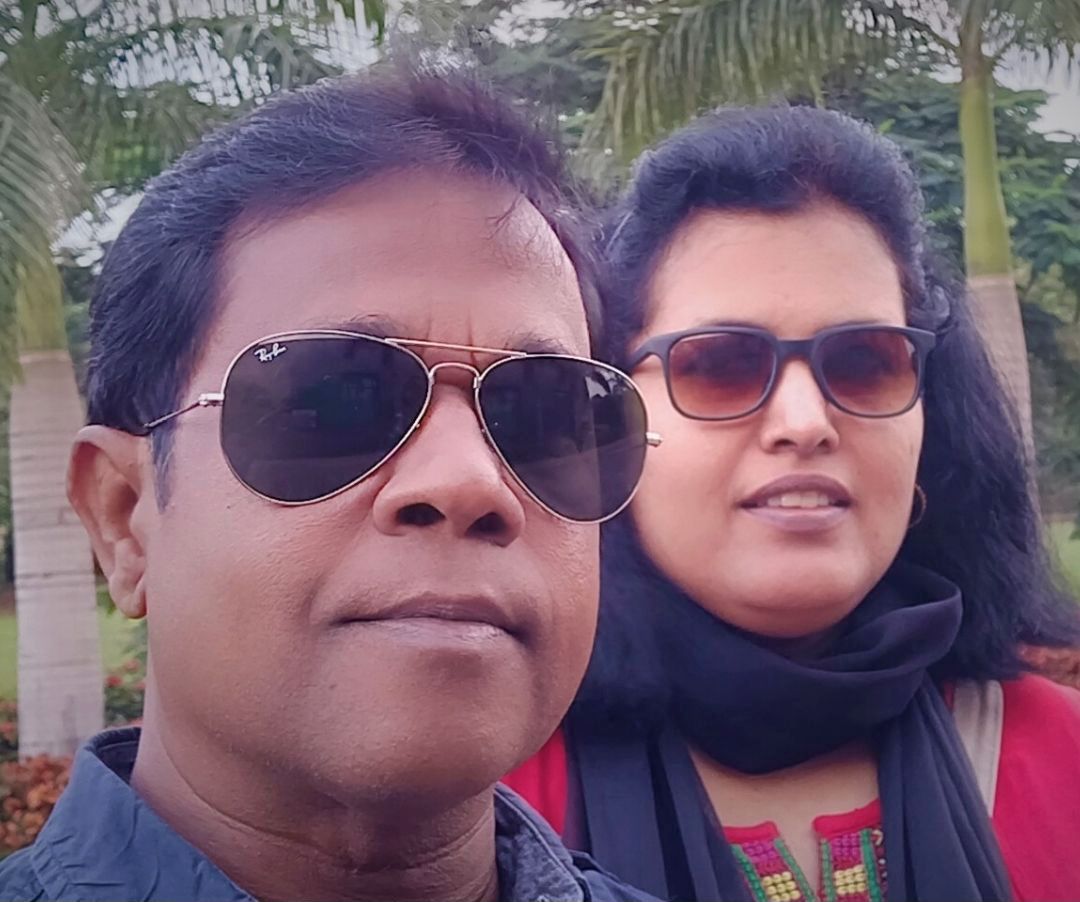
Sandy & Vyjay are a husband and wife duo who are travel content creators. They are co-founders of this travel website and are one of the leading travel content creators in India.
Sandy & Vyjay quit their successful corporate careers to pursue their passion for travel and writing full-time. Their dedication has earned them the “Best Travel Writer” award and numerous accolades on both national and international stages. Focusing on India’s destinations, heritage, and culture, they are passionate advocates for nature and the environment. Through their content, they promote ecotourism and sustainable travel, inspiring others to explore and preserve the beauty of India.