For devotees and travellers exploring the region, the Aprameya Swamy Temple offers a fascinating blend of ancient history, Vaishnava devotion, mythology and living traditions. The temple is especially revered as the Navaneetha Krishna Temple, celebrated for its enchanting image of crawling Bala Krishna holding a ball of butter. Located close to the toy town of Channapatna, the Navaneetha Krishna Temple Channapatna is also associated with the legendary saint-composer Purandaradasa and his beloved composition, Jagadodharana. Whether you are planning a spiritual visit or simply curious about its unique traditions, the stories, Navaneetha Krishna Temple timings, and Ambegalu Krishna Temple Channapatna timings make this centuries-old shrine well worth discovering.
Table of Contents
The Sacred Home of Ambegal Krishna – Aprameya Swamy Temple
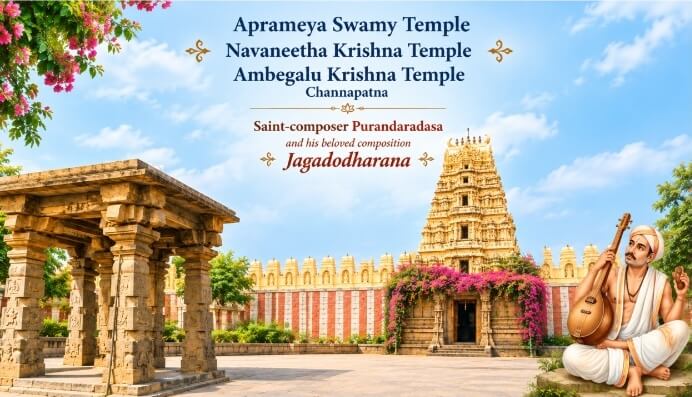
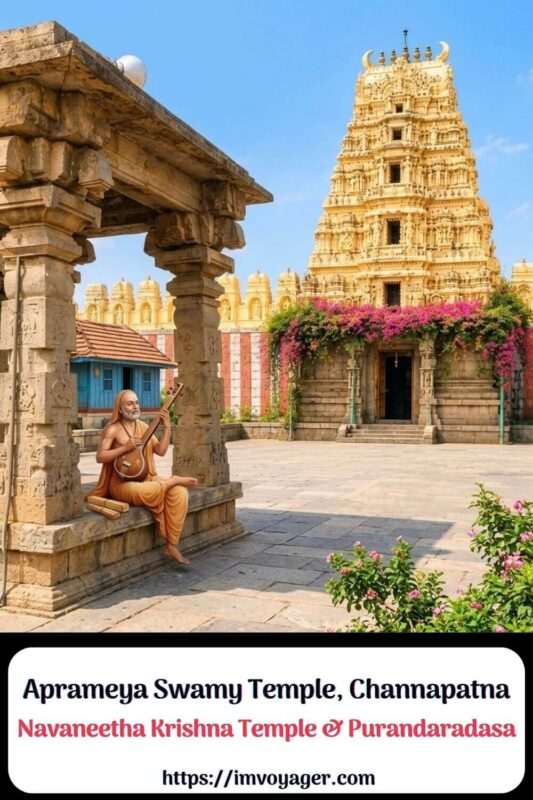
Not far from the Bengaluru–Mysuru Highway stands the ancient temple complex known by several names—Sri Aprameya Swamy Temple, Ambegalu Navaneetha Krishna Temple, and Sri Rama Aprameya Temple. One of Karnataka’s treasured Vaishnava shrines, the temple is primarily dedicated to Lord Vishnu, who is worshipped here as Aprameya Swamy.
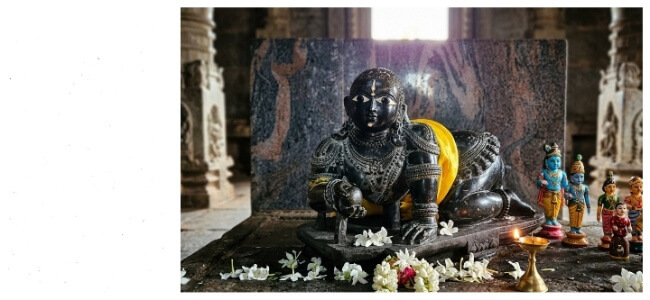
Yet, it is not the principal deity alone that draws devotees and visitors to this sacred complex. The temple’s enduring fame rests equally on the enchanting black stone image of infant Krishna, depicted crawling on his hands and knees, housed in a subsidiary shrine within the larger temple complex. Known as Ambegalu Krishna or Navaneetha Krishna, the charming deity captures Krishna in one of his most endearing forms—as the mischievous, butter-loving child of Yashoda.
Adding another layer to the temple’s spiritual and cultural significance is its traditional association with the great saint-composer Purandara Dasa. It is believed that, inspired by the captivating image of the crawling Krishna, Purandara Dasa composed and sang the celebrated devotional song “Aadisidalu Yashoda” here. This enduring connection between the temple, the divine child and one of Karnataka’s greatest musical saints lends an even deeper aura of sanctity to this ancient shrine.
Aprameya Swamy Temple – Legends And Stories Of Ambegalu Krishna Temple, Channapatna
The Sanskrit word Aprameya means “immeasurable,” “incomparable” or “beyond measurement.” Sri Aprameya Swamy is worshipped as a form of Lord Vishnu and is depicted standing with four arms, bearing the traditional attributes of Vishnu. According to local tradition, the sacred region was once known as Maraluru or Manaluru, referring to the sandy banks of the Kanva River.
Over time, the name evolved into Mallur or Malur. The area is also associated with the name Chaturveda Mangalapura, reflecting its traditional association with Vedic learning. Another enduring legend connects the temple with Lord Rama. It is believed that Rama visited this sacred region and worshipped Sri Aprameya Swamy. Because of this association, the place is sometimes revered as Dakshina Ayodhya, the Ayodhya of the South.
History of Sri Aprameya Swamy Temple – Ambegalu Krishna Temple
While local traditions trace the sanctity of this site back thousands of years, historical accounts associate the origins of the present brick-and-stone temple with the Western Ganga Dynasty. The shrine was subsequently expanded and renovated in the 11th century under the patronage of the Cholas, with the Chola general Aprameya, during the reign of Chola Emperor Rajendra Simha, traditionally credited with undertaking significant additions to the temple.
Over the centuries, the temple continued to receive royal patronage, with the Hoysala and Vijayanagara dynasties contributing further structural additions and embellishments. The temple thus bears the imprint of several powerful South Indian dynasties, each adding another layer to its architectural and historical legacy.
Sri Apameya Swamy Temple and The Legend of Rama
According to local mythology, this sacred site is believed to have been blessed by the presence of Lord Rama during his journey through the region. Tradition holds that Lord Rama stayed here for a period, performing sacred rituals and offering prayers to the presiding deity. His worship is believed to have sanctified the place and established a deep spiritual connection between the temple and the Ramayana.
Because of this revered association with Lord Rama, the presiding deity came to be worshipped by the name Sri Ramaprameya Swamy. The name itself reflects the belief that the deity is closely associated with the devotion and worship offered by Lord Rama.
Over time, the town acquired the affectionate title Dakshina Ayodhya, meaning Ayodhya of the South, drawing a sacred parallel with Ayodhya, the birthplace and kingdom of Lord Rama. For devotees, this association adds a special significance to the temple, making it not merely a place of worship but also a site where the memory and spiritual legacy of Lord Rama are believed to remain alive.
Ambegalu Navaneetha Krishna Temple And Puandaradasa
The temple also occupies a cherished place in the history of Carnatic music, owing to its enduring association with the revered saint-composer Sri Purandaradasa, who is regarded as the Pitamaha or father of Carnatic music. According to tradition, Purandaradasa was deeply moved by the enchanting image of crawling baby Krishna, depicted in an exceptionally endearing form. The innocence and divine charm of the little Krishna are believed to have touched the saint so profoundly that he was inspired to compose the immortal Kannada devotional song, “Jagadodharana Aadisidale Yashode.”
The composition beautifully portrays Yashoda gently playing with and bringing up the divine child Krishna, who, despite being the supreme Lord and the sustainer of the universe, appears before his mother as an innocent, playful child. The central theme of the song captures this beautiful paradox of Krishna—the Jagadodharana, or the one who uplifts and sustains the universe, becoming the beloved little son of Yashoda.
The temple’s captivating representation of crawling Krishna is therefore not merely an exquisite work of devotional art; it is also associated with one of the most beloved compositions in the Carnatic repertoire. Even today, “Jagadodharana” is sung by musicians and devotees across generations, keeping alive the devotional experience that tradition associates with Purandaradasa and this sacred shrine.
Architecture And Layout of Sri Aprameya Swamy Temple
The temple is a magnificent representation of multi-era Dravidian architecture, bearing the distinctive imprint of different periods of South Indian temple-building traditions. Its architectural character reflects the craftsmanship of the Chola period, while subsequent additions and renovations during the Vijayanagara era have contributed to the grandeur of the present-day complex. The result is a fascinating synthesis in which the elegance of early Dravidian design blends seamlessly with the ornate detailing and structural additions of later periods.
One of the most remarkable aspects of the temple is its unusual foundation and structural engineering. According to tradition, the temple stands on a bed of sand rather than on the conventional deep stone foundation commonly associated with large South Indian temples. This is particularly intriguing given its location on the banks of the Kanva River and the historical name of the village, Maraloor, associated with maralu, meaning sand.
The temple’s ability to withstand the passage of centuries on this unusual foundation is often cited as an example of the ingenuity of traditional Indian temple architecture. Its remarkable longevity has even prompted comparisons with other celebrated Chola monuments, including the Brihadisvara Temple at Thanjavur, renowned for its extraordinary structural resilience.
Facing east, as prescribed by traditional temple architecture, the complex is approached through an imposing five-tiered Raja Gopuram. The gateway is embellished with intricate sculptural details, including representations associated with the Dashavatara, the ten principal incarnations of Lord Vishnu. Beyond serving as the monumental entrance to the sacred complex, the gopuram establishes the visual and spiritual transition from the outer world into the temple precinct.
The Mahadwara, or principal entrance doorway, is itself an impressive architectural feature, rising to approximately 30 feet. Directly in front of the entrance stands another striking landmark—the approximately 30-foot-high Deepa Stambha, or lamp pillar. Carved from a single monolithic stone, the pillar exemplifies the extraordinary skill of the traditional sthapatis and adds a strong vertical element to the temple’s entrance axis. Traditionally, such lamp pillars are illuminated during important festivals and religious occasions, transforming the approach to the temple into a particularly evocative sight.
The Courtyard and Mandapas of Sri Aprameya Swamy Temple
Beyond the entrance, the temple unfolds through a series of courtyards, halls and transitional spaces characteristic of the Dravidian temple tradition. The inner Prakara, or enclosed courtyard, is believed to have undergone substantial strengthening and additions during the Vijayanagara period. These later interventions did not merely reinforce the structure but also enriched the temple complex with new architectural and devotional spaces.
As one proceeds into the complex, the Ratha Mantapa forms an important architectural feature. The term Ratha evokes the chariot tradition associated with temple festivals, when the processional deity is taken out of the sanctum and carried through the streets of the temple town. The mantapa thus forms part of the larger spatial arrangement through which worship, ritual and festivals are integrated into the architecture of the temple.
Another significant feature is the four-pillared Purandara Dasa Mantapa, located in front of the central shrine. Its presence is particularly meaningful because of the temple’s revered association with the saint-composer Sri Purandaradasa. The mantapa provides an architectural link between the temple’s sacred traditions and its celebrated contribution to the history of devotional music.
At the heart of the complex lies the Garbhagriha, or sanctum sanctorum, where the presiding deity resides. The progression from the monumental gopuram, through the courtyards and mandapas, and finally towards the intimate sanctum reflects a fundamental principle of Dravidian temple architecture: the gradual movement from the external and expansive to the internal and sacred. Every architectural element, from the towering gateway and monolithic Deepa Stambha to the intricately carved pillars and enclosed sanctum, contributes to the temple’s distinctive spiritual and architectural character.
Main Sanctum And Other Shrines of Sri Aprameya Swamy Temple
The temple houses three main shrines includin the one dedicated to the presiding deity Sri Aprameya Swamy, or Lord Vishnu – the immeasurable one. At the heart of the temple, within the sacred Garbhagriha, is the magnificent idol of the presiding deity, Lord Vishnu, standing approximately 4.5 feet tall. The idol is carved from the revered Shaligrama stone, a sacred stone traditionally associated with Lord Vishnu and held in high esteem in Vaishnava tradition. The dark, lustrous appearance of the stone lends the deity a particularly serene and majestic presence within the sanctum.
Lord Vishnu is depicted in his traditional Chaturbhuja, or four-armed, form. Each of His four hands carries one of His principal divine attributes, giving the icon both profound theological symbolism and visual balance. The upper right hand holds the Chakra, or divine discus, representing the Lord’s supreme power and the destruction of evil, while the upper left hand holds the Shankha, or conch, whose sacred sound is associated with the dispelling of ignorance and the proclamation of divine truth.
In His lower hands, the Lord holds the Gada, or mace, symbolizing strength, authority and protection, and the Padma, or lotus, representing purity, spiritual awakening and the blossoming of divine consciousness. Together, these four attributes embody the many aspects of Lord Vishnu—as the protector of the universe, the upholder of dharma and the compassionate guardian of His devotees.
The simplicity and spiritual power of the Shaligrama stone, combined with the traditional iconography of the four-armed Vishnu, give the sanctum an atmosphere of profound serenity. For devotees, standing before this ancient image is not merely an encounter with a remarkable work of sacred sculpture, but an opportunity to experience the divine presence of Sri Ramaprameya Swamy, the Lord who is revered here through centuries of faith and worship.
Ambegalu Navaneetha Krishna Temple – Aprameya Swamy Temple
One of the temple’s most cherished treasures is the legendary idol of Lord Krishna, enshrined in a separate sub-shrine within the temple complex. Carved from black Saligrama stone, the idol is remarkable for its extraordinary depiction of Krishna not as the regal deity, flute in hand, but as an adorable crawling toddler, capturing the playful and intimate Bala Krishna aspect of the Lord.
In this enchanting representation, little Krishna is shown crawling forward while holding a ball of butter in his right hand—a charming reference to one of the most beloved episodes of Krishna’s childhood. His fondness for stealing butter from the homes of Gokula is an enduring theme in Vaishnava devotional tradition, symbolizing the innocent mischief and irresistible charm of the divine child.
According to temple tradition, this extraordinary idol was consecrated by the revered Madhwa saint and philosopher Sri Vyasatirtha, one of the most influential figures in the Dvaita tradition. The association with Vyasatirtha adds another important dimension to the spiritual heritage of the shrine.
What makes the idol particularly fascinating is its rare iconographic form. It is widely regarded by devotees and temple tradition as being unique, and is often described as the only known temple idol depicting Lord Krishna specifically in a crawling posture while holding a ball of butter. Rather than portraying Krishna as the majestic Supreme Being, the idol celebrates the Lord in his most endearing form—as the mischievous, butter-loving child of Gokula.
This intimate depiction of divinity is also deeply connected with the temple’s musical heritage. The captivating image of crawling Krishna is traditionally associated with the inspiration behind Sri Purandaradasa’s celebrated composition, “Jagadodharana Aadisidale Yashode.” The song beautifully expresses the wonder of Yashoda nurturing the very child who is believed to sustain and protect the entire universe. Thus, the idol represents not only an extraordinary example of devotional sculpture but also a meeting point of mythology, music, art and living tradition.
The Temple of Aravindavalli Thayar – Goddess Mahalakshmi
To the right of the central shrine stands the temple dedicated to Goddess Mahalakshmi, who is worshipped here by the beautiful name Aravindavalli. The name Aravindavalli is associated with the lotus (aravinda), an apt name for the Goddess of prosperity and auspiciousness, who is traditionally depicted seated upon a lotus.
The shrine is closely connected with the sacred Vishnu Teertham, the temple tank located within the temple precincts. According to local tradition, Goddess Mahalakshmi manifested herself from a lotus blossoming in the waters of Vishnu Teertham. This sacred legend is believed to explain not only the Goddess’s association with the temple tank but also her name as Aravindavalli—the Goddess who emerged from the lotus.
The symbolism of the legend is deeply rooted in Hindu tradition. The lotus, which rises pure and radiant from the waters, represents purity, prosperity, beauty and spiritual transcendence. Its association with Mahalakshmi is therefore especially significant, as the Goddess is traditionally portrayed emerging from or seated upon a lotus.
The presence of Aravindavalli alongside Sri Aprameya Swamy also reflects the inseparable divine relationship between Lord Vishnu and Goddess Lakshmi. While Lord Vishnu represents the principle of preservation and protection, Goddess Lakshmi embodies prosperity, abundance, grace and auspiciousness. Together, their shrines form an integral part of the temple’s spiritual landscape, allowing devotees to seek both the protection of the Lord and the blessings of the Goddess.
Sri Aprameya Swamy Temple – A Living Centre of Faith
The temple comes alive during its annual festivals and religious celebrations, which continue to attract devotees from across Karnataka and neighbouring regions. Among the most important celebrations is the Brahma Rathotsava, a grand festival in which the processional deity is brought out of the sanctum and taken through the temple streets in a beautifully decorated ratha, or temple chariot. Accompanied by devotional music, chanting and the participation of large numbers of devotees, the chariot procession transforms the temple precincts into a vibrant centre of worship and celebration.
One of the most fascinating traditions associated with the temple is linked to the Hasta Nakshatra, or the lunar constellation Hasta. According to temple tradition, on the festival day associated with Hasta, the first rays of the rising sun enter the temple in such a precise manner that they fall upon the image of the presiding deity, illuminating the Lord from head to toe. This fleeting phenomenon is regarded as an especially auspicious moment and is eagerly witnessed by devotees.
The alignment is particularly intriguing because it reflects the sophisticated understanding of astronomy, orientation and architectural planning that is evident in many traditional Indian temples. The positioning of entrances, corridors and sanctum spaces in relation to the movement of the sun demonstrates how sacred architecture was often conceived not merely as a structure but as a carefully integrated relationship between the temple, the celestial movements and the natural environment.
The annual celebration of Brahma Rathotsava, therefore, combines the splendour of ritual and community worship with this remarkable solar phenomenon. The sight of the rising sun gradually illuminating the sacred image creates a powerful symbolic moment, representing the arrival of divine light and the awakening of spiritual consciousness. It is traditions such as these that add to the temple’s enduring appeal, bringing together faith, mythology, architecture and the ancient Indian understanding of the cosmos.
Navaneetha Krishna Temple Timings | Ambegalu Krishna Temple Channapatna Timings
If you are planning a visit to the Navaneetha Krishna Temple, it is important to know the temple timings so that you can plan your darshan without arriving during the afternoon closure. The Navaneetha Krishna Temple timings are generally 8:00 AM to 1:00 PM in the morning and 4:00 PM to 8:00 PM in the evening, throughout the week. Also known as the Aprameya Swamy Temple, the shrine is located at Doddamallur, close to Channapatna, and is famous for its beautiful crawling Krishna idol.
The Ambegalu Krishna Temple Channapatna timings are therefore particularly useful to know if you are travelling from Bengaluru or Mysuru and want to include this sacred shrine in your itinerary. The Navaneetha Krishna Temple Channapatna is easily accessible from the Bengaluru–Mysuru highway, making it a convenient pilgrimage and sightseeing stop.
How To Get To Aprameya Swamy Temple | Reaching Navaneetha Krishna Temple Channapatna
The Sri Aprameya Swamy Temple, famous for its enchanting Ambegalu Sri Krishna, is located at Doddamallur (Dodda Mallur) in Channapatna taluk of Karnataka. The temple stands along the Bengaluru–Mysuru route, making it a convenient pilgrimage stop for those travelling between the two cities. It is approximately 60–63 km from Bengaluru and around 80 km from Mysuru.
Temple Address – Sri Aprameya Swamy Temple
Ambegal Krishna Temple Address:
Mysore Road, National Highway 275,
Doddamalur,
Channapattana,
Karnataka 562160, India
Sri Aprameya Swamy Temple By Road
From Bengaluru:
The temple is approximately 60–63 km from Bengaluru and can be reached by following the Bengaluru–Mysuru highway (NH 275) towards Channapatna. Doddamallur is just a few kilometres from Channapatna, making the temple an easy stop for those travelling by car. Depending on traffic and the starting point in Bengaluru, the journey generally takes around 1.5 to 2 hours.
From Mysuru:
From Mysuru, the temple is approximately 80 km away. Follow the Bengaluru–Mysuru highway towards Bengaluru and take the turn towards Doddamallur near Channapatna. The journey usually takes around 1.5 to 2 hours, depending on traffic.
Sri Aprameya Swamy Temple By Train
The nearest convenient railway station is Channapatna Railway Station, located approximately 3–4 km from the temple. Channapatna lies on the Bengaluru–Mysuru railway line, and trains connecting Bengaluru and Mysuru can be used to reach the town. From Channapatna railway station, auto-rickshaws and local taxis are available to Doddamallur.
Sri Aprameya Swamy Temple By Air
The nearest convenient airport to the temple is Bengaluru’s Kempegowda International Airport which is approximately 107 kilometres away. Mysore Airport is nearer, however the frequency of flight arrivals and departures is low.
Flight Booking:
If you are planning to visit the Navaneetha Krishna Temple, it is always a good idea to book your flights well in advance to Bangalore – Bengaluru to secure the best fares and convenient travel schedules. You can easily compare options and book your flight tickets online through Air India (Domestic) or Air India (International), or Priceline for a seamless travel experience.
Planning Your Stay For Visiting Navaneetha Krishna Temple, Channapatna | Hotel Booking:
You can conveniently book your stay at any of the hotels/resorts in Bengaluru or Mysuru in India and enjoy world-class hospitality, unique experiences, and unforgettable memories and head from there to the Navaneetha Krishna Temple in Doddamallur .
| Click to book your stay at best hotels |
|---|
Frequently Asked Questions About Aprameya Swamy Temple | Navaneetha Krishna Temple FAQs
The Aprameya Swamy Temple at Doddamallur is a fascinating destination where history, mythology, architecture and devotion come together. These FAQs about the Navaneetha Krishna Temple cover its location, deities, timings, legends and the unique Ambegalu Krishna idol. Read on to find useful information before planning your visit to this ancient temple.
Where is the Aprameya Swamy Temple located?
The Aprameya Swamy Temple is located at Doddamallur in Channapatna taluk of Karnataka, close to the Bengaluru–Mysuru highway.
What is the Navaneetha Krishna Temple famous for?
The Navaneetha Krishna Temple is famous for its unique black stone idol of crawling Bala Krishna, shown holding a ball of butter in his hand.
What are the Navaneetha Krishna Temple timings – Ambegalu Krishna Temple Channapatna timings?
The Navaneetha Krishna Temple timings are generally from 8:00 AM to 1:00 PM and from 4:00 PM to 8:00 PM, although timings may vary during festivals and special occasions.
What is the significance of the name Aprameya Swamy Temple?
The name Aprameya Swamy Temple refers to the immeasurable and incomparable nature of Lord Vishnu, who is worshipped as the presiding deity of the ancient shrine at Doddamallur.
Why is the temple called the Navaneetha Krishna Temple Channapatna?
The name Navaneetha Krishna Temple Channapatna is associated with the charming image of Bala Krishna holding navaneetha, or freshly churned butter, while crawling.
Who is the main deity of the Aprameya Swamy Temple?
The principal deity of the Aprameya Swamy Temple is Lord Vishnu, worshipped as Sri Aprameya Swamy or Sri Ramaprameya Swamy.
What is special about Ambegalu Krishna at the Navaneetha Krishna Temple?
The Navaneetha Krishna Temple houses a particularly enchanting depiction of Krishna crawling on his hands and knees while holding a ball of butter, a rare and beloved form of Bala Krishna.
What is the connection between Aprameya Swamy Temple and Purandaradasa?
The Aprameya Swamy Temple is traditionally associated with saint-composer Purandaradasa, who is believed to have been inspired by the captivating crawling Krishna idol to compose the celebrated Kannada devotional song Jagadodharana.
How far is Navaneetha Krishna Temple Channapatna from Bengaluru?
The Navaneetha Krishna Temple Channapatna is approximately 60–63 kilometres from Bengaluru and can be reached by road along the Bengaluru–Mysuru route.
Is the Aprameya Swamy Temple worth visiting?
The Aprameya Swamy Temple is well worth visiting for its ancient heritage, distinctive architecture, association with Lord Rama and Purandaradasa, and the enchanting Ambegalu Krishna shrine.
Today, Sri Aprameya Swamy Temple remains much more than an ancient monument. It is a living centre of Vaishnava worship where mythology, history, music and devotion come together.Here, the immeasurable Lord becomes beautifully small — crawling on his hands and knees, holding butter in his tiny hand, and capturing the hearts of generations of devotees.
We hope you enjoyed discovering the enchanting story of Ambegalu Sri Krishna from the Sri Aprameya Swamy Temple, as much as we enjoyed bringing it to you. From the captivating image of the crawling child Krishna to the fascinating mythology, musical heritage, architecture and living traditions surrounding the temple, this sacred shrine offers a beautiful glimpse into the many layers of India’s spiritual and cultural heritage.
If you enjoyed this journey, we invite you to subscribe to our blog and newsletter, Voyager Travel Bytes, for more fascinating stories, inspiring destinations, temples, traditions and travel experiences from across India and the World. And we would love to stay connected with you beyond the blog. Follow us on social media and join us as we continue to explore, experience and share the incredible stories that make India such a fascinating destination.
Where Journeys Begin — And Awareness Deepens
Pause for a breath. Let the imagination wander for a moment—to shorelines shimmering like quiet constellations beneath an endless sky, to mountains wrapped in veils of mist and memory, and to ancient streets that seem to murmur forgotten stories beneath every footstep. This is not merely movement across maps or a passage from one destination to another. It is a gentle unfolding of the self, a quiet transformation that arrives softly, almost imperceptibly, somewhere between one horizon and the next.
We do not simply design itineraries; we curate experiences that feel intimate, authentic, and deeply personal, like a message written especially for the heart. From tranquil sanctuaries and timeless cultural spaces to overlooked wonders waiting beyond the well-trodden path, every journey is thoughtfully shaped to resonate with who we are, and with who we are becoming.
When that quiet inner call to explore begins to stir, write to us at imvoyager18@gmail.com, and together we will shape a journey that becomes more than a memory—a story that remains with us long after the road has grown still and the miles have faded into silence.
When Miles Fade — And Meaning Remains
Every meaningful journey begins long before the bags are packed and the first step is taken. It begins as a whisper within—a quiet pull, an inexplicable sense that somewhere beyond the familiar, something is waiting to be discovered. Step into a world where travel inspiration is gathered and curated with care, where hidden places, soulful encounters, and authentic lived stories awaken curiosity and invite us to look at the world with renewed wonder.
Walk alongside fellow seekers who welcome the morning beneath golden light, discover stillness in sacred moments, and find unexpected joy in the beautiful turns that no itinerary could ever predict. Let these shared experiences become gentle guides, leading us towards journeys that feel personal rather than prescribed, alive rather than hurried, and unforgettable long after the photographs have been tucked away.
Travel With Us — Beyond Destinations, Into Presence
Welcome to Travel With Sandy & Vyjay, a space where every story becomes a doorway and every image carries the warmth, wonder, and promise of a first sunrise in a new place. Wander with us through vibrant markets alive with colour and conversation, witness the sacred hush of temple dawns, and linger awhile in those rare moments that cannot quite be explained, only felt. Here, there are no schedules to chase and no urgency to reach the next landmark. There is simply the freedom to remain present—to follow curiosity, embrace connection, and surrender to the quiet magic that reveals itself when we allow a destination to unfold at its own pace.
Voyager — A Gathering of Curious Spirits
Voyager is more than a travel space. It is a gathering of explorers, dreamers, seekers, and storytellers who believe that the most beautiful journeys are often the ones that leave something behind within us. Join our growing circle on Instagram, Facebook, X Twitter, LinkedIn, and YouTube, and travel alongside us as stories, discoveries, and inspirations unfold. Receive gentle sparks of wanderlust through Voyager Travel Bytes on WhatsApp, or invite reflective travel stories and thoughtful journeys into your inbox. Follow our adventures on Instagram as they unfold—honest, immersive, intimate, and beautifully unscripted, just as travel itself is meant to be.
Journeys Shaped Around You
Whether we move quietly through landscapes that invite contemplation, follow distant horizons that awaken our sense of wonder, or pause long enough to listen to the unmistakable pulse of a place, every journey we create is shaped around our essence. Each path is chosen with intention. Each detail is considered with care. Every experience is designed to leave room for wonder, discovery, connection, and those beautiful unplanned moments that become the stories we remember most. Because the journeys that remain etched in our hearts do not simply introduce us to new places; they gently transform the way we see the world, and perhaps even the way we see ourselves within it.
The World Is Calling — Can You Hear It
Beyond the familiar stretches of the map lies a world overflowing with beauty, meaning, mystery, and moments waiting patiently to unfold. There are quiet corners still waiting to be noticed, stories still waiting to be heard, and roads that may lead us somewhere far more meaningful than we ever imagined. When our hearts tell us that the time has come to step beyond the familiar, reach out to imvoyager18@gmail.com, and together we will thoughtfully craft a travel story that lingers in the soul long after the journey itself has ended.
Because travel has never been only about where we go.
It is about what we feel, what we discover, whom we encounter, and, ultimately, who we become along the way.
And when we are ready, there is only one thing left to do.
We simply whisper—
Begin.
We are a reader-supported site. This means, at no additional cost to you, we may earn a small commission if you book a flight or hotel, or make a purchase through one of our affiliate links. Thank you for your support!
Flights – Air India (Domestic) or Air India (International), or Priceline
Tours – Click to book top tours around the world. Book tours and activities here.
Experiences – Book your next unforgettable experience here, with flexible bookings and free cancellations. Reserve tours and activities now and pay later.
Hotels – Click to book the best hotels/resorts. Choose the best stay options with TripAdvisor or Hotels.com, or HotelsCombined
Travel Insurance – Click to book Travel Insurance that covers a range of travel insurance and safety services including medical emergencies, lost luggage, trip cancellation and more
Visas and Travel Documents Application – Click here for Online Travel Visa Check
Online Passport Photo – Get Your Passport Photo Online here


Do You Love Traveling?
Do you want to know how to travel the world? We have put together a very useful travel resources page with the best travel tips. Go check it out now. Thanks for visiting our site Voyager - imvoyager.com and taking the time to read this post! If you wish to collaborate/work with us then reach us at imvoyager18@gmail.com We’d love it if you’d comment by sharing your thoughts on this post and share this post on social media and with your friends. Follow our journey on our social media channels: Facebook X Instagram Pinterest YouTube
Start dreaming about your next adventure with Tripadvisor. Book your next unforgettable experience here with flexible bookings and free cancellations.

Flight booking online at the best fare

60+ Million Users Trust TripAdvisor With Their Travel Plans. Shouldn't You?

Sandy & Vyjay are a husband and wife duo who are travel content creators. They are co-founders of this travel website and are one of the leading travel content creators in India.
Sandy & Vyjay quit their successful corporate careers to pursue their passion for travel and writing full-time. Their dedication has earned them the “Best Travel Writer” award and numerous accolades on both national and international stages. Focusing on India’s destinations, heritage, and culture, they are passionate advocates for nature and the environment. Through their content, they promote ecotourism and sustainable travel, inspiring others to explore and preserve the beauty of India.