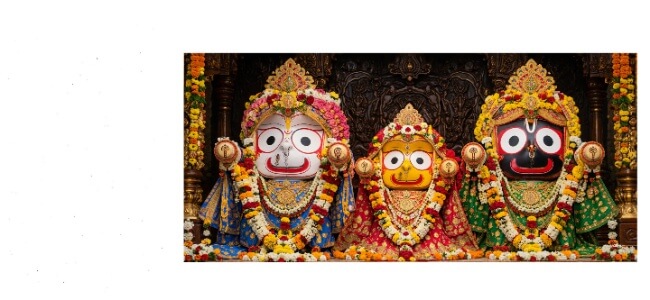
The Nabakalebara ceremony of Jagannath Puri is one of the mist intriguing, mystical, and fascinating ceremonies associated with the temple. Of course, the famous Jagannath Puri Rath Yatra is a global phenomenon and there are many other mysteries associated with the great temple of Puri, one of the sacred Chard Dham temples popularized by Adi Shankaracharya, however the Nabakalebara ceremony is arguably the most fascinating of them all.
Table of Contents
Nabakalebara: The Sacred Mystery of the Jagannath Temple in Puri
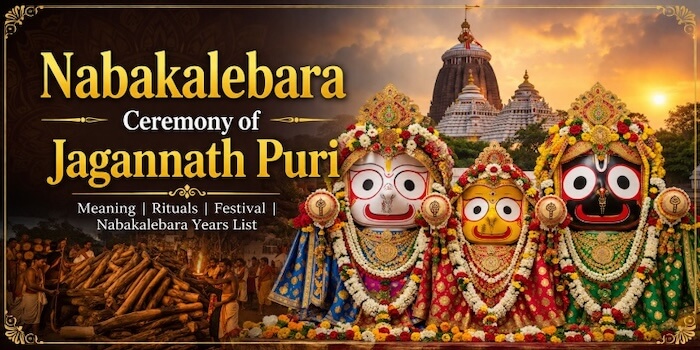
Among the countless rituals associated with the Jagannath Temple of Puri, none is as mystical, profound, and eagerly anticipated as Nabakalebara, literally meaning “the new body.” This extraordinary ceremony, held only at intervals of 12 to 19 years, depending on the Odia calendar, symbolizes the eternal cycle of birth, death, and rebirth. It is a unique tradition in the Hindu world, where the deities themselves are believed to relinquish their mortal forms and assume new bodies, while their divine essence remains eternal.
The Nabakalebara ceremony is not merely a ritual—it is a living expression of one of Hinduism’s most profound philosophical truths: the soul is immortal, while the body is transient.
What Is The Nabakalebara Ceremony of Jagannath Puri? | Nabakalebara Meaning
The word Nabakalebara is derived from two Sanskrit words—Naba, meaning “new,” and Kalebara, meaning “body.” During this sacred ceremony, the wooden idols of Lord Jagannath, Lord Balabhadra, Goddess Subhadra, and Sudarshana Chakra are ceremonially replaced with newly carved idols.
Unlike most Hindu temples, where the deities are sculpted from stone or metal, the idols of Jagannath are carved from sacred neem wood, known as Daru Brahma. Since wood naturally deteriorates over time, the deities are periodically given new physical forms through this elaborate and deeply spiritual ceremony.
When Does The Nabakalebara Ceremony of Jagannath Puri Happen?
Nabakalebara ceremony of Jagannath Puri, does not occur according to a fixed calendar. It is celebrated only in those years when the Hindu lunar calendar contains two Ashadha months, a rare astronomical occurrence known as Adhika Ashadha.
This unique alignment generally takes place every 12 to 19 years, making each Nabakalebara a once-in-a-generation event for many devotees. the last Nabakalebara ceremony happened in the year 2015 while the next one is scheduled for 2034.
Rituals of The Nabakalebara Ceremony of Jagannath Puri | Nabakalebara Ritual
The Nabakalebara ceremony of Jagannath Puri involves a series of rituals or activities spread over several months which begins with what is known as the Banajaga Yatra.
Nabakalebara Festival
Nabakalebara is a highly significant festival celebrated according to the Hindu Odia calendar at the Jagannath Temple in Puri. The tradition was initiated in 1575 A.D. by Bhoi King Ramachandra Deva. The first Nabakalebara ritual was performed by his eldest son, Padmanava Pattanaika, at the Barunei Fort in Khordhagarh. During the ceremony, members of the Deulakarana and Tadhaukarana subdivisions of the Karana community play a vital ceremonial role as representatives of the Gajapati Raja.
Carrying the sacred Pata Khanda (sword) of Lord Jagannath, they are entrusted with guarding the temple premises throughout the rituals. The festival represents the symbolic death and rebirth of Lord Jagannath in Puri. As part of this sacred tradition, newly carved idols are consecrated and installed inside the Jagannath Temple, while the previous idols are ceremonially interred within the temple grounds at Koili Baikuntha.
Jagannath Puri Temple Banajaga Yatra – The Search For The Trees
The Nabakalebara ceremony begins with the Banajaga Yatra, a sacred expedition undertaken to locate the holy neem trees, known as Daru Brahma, from which the new idols of Lord Jagannath, Balabhadra, Subhadra, and Sudarshana will be carved. This is no ordinary search, for the chosen trees must bear a number of auspicious signs believed to indicate divine selection. They should naturally display sacred symbols such as the Chakra (wheel), Shankha (conch), Gada (mace), or Padma (lotus) on their bark.
The trees are expected to stand near a river, pond, cremation ground, or a crossroads, and must be free of bird nests or signs of decay. Tradition also regards the presence of an anthill at the base of the tree and a cobra nearby as highly auspicious, signifying the tree’s sanctity. Guided by ritual, faith, and divine revelation, the Daitapati priests identify these sacred trees before the ceremony proceeds to its next stage.
Divinity Takes Form During The Nabakalebara Ceremony of Jagannath Puri
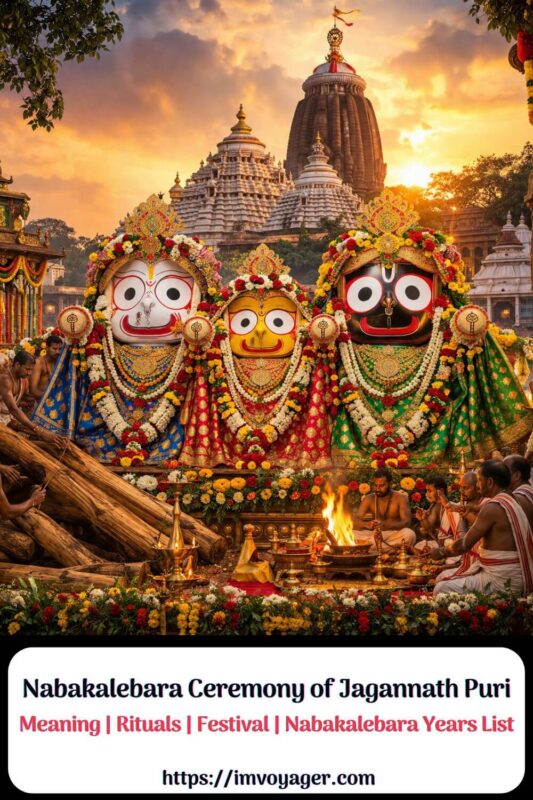
Once the sacred Daru Brahma trees have been identified and ritually consecrated, they are ceremonially felled amidst Vedic chants and elaborate rites before being transported to the Jagannath Temple in Puri. Within the temple precincts, the logs are taken to the secluded enclosure of Koili Baikuntha, a place steeped in profound spiritual significance. Here, a select group of hereditary master craftsmen, known as the Biswakarmas, begin the sacred task of carving the new idols.
The work is carried out in complete seclusion, away from public view, and shrouded in an aura of mystery. No one other than the designated artisans and temple priests is permitted to enter the enclosure. The craftsmen remain within the temple premises throughout the carving process, dedicating themselves entirely to their divine responsibility until the new forms of the deities are brought to life.
Brahma Parivartan – The Transfer of the Divine Essence
The most sacred and mysterious phase of Nabakalebara is the Brahma Parivartan, the ritual in which the eternal divine essence is transferred from the old idols to the newly carved ones. Performed in the stillness of midnight, this ceremony is shrouded in complete secrecy and is witnessed only by a handful of selected Daitapati priests.
As the ritual begins, the Jagannath Temple is plunged into darkness, and tradition holds that the entire sacred precinct is enveloped in silence. The chosen priests are blindfolded, and their hands are wrapped in layers of cloth so that they can neither see nor directly feel the sacred object they are entrusted to handle. They then reverentially transfer the Brahma Padartha—the mysterious divine essence believed by devotees to embody the immortal spirit of Lord Jagannath, and traditionally associated with Lord Krishna—from the old idols into the new.
What exactly constitutes the Brahma Padartha remains one of Hinduism’s greatest unsolved mysteries. Its nature has never been revealed, and every priest who participates in the ceremony is bound by an oath of lifelong secrecy. For centuries, this profound ritual has remained veiled in mystery, deepening the spiritual aura that surrounds Lord Jagannath and the sacred city of Puri.
What Happens To The Old Deities During Nabokalebara Ceremony of Jagannath Puri?
After the transfer of the divine essence, the old idols are treated as departed members of a family. The Daitapati priests observe mourning rituals similar to those performed after the death of a loved one. The old idols are then ceremonially buried within the sacred precincts of Koili Baikuntha, where generations of previous deities rest.
This solemn ceremony beautifully reflects the Hindu belief that while the physical body perishes, the soul lives on eternally.
First Darshan After Nabokalebara Ceremony of Jagannath Puri | Nabakalebara of Lord Jagannath
After the completion of Nabakalebara, the newly consecrated deities are revealed to devotees during the Nava Jaubana Darshan, literally meaning the “Vision of Youth.”
This marks the first public appearance of Lord Jagannath, Lord Balabhadra, Goddess Subhadra, and Sudarshana in their renewed forms.
Shortly thereafter, they emerge from the temple for the world-famous Jagannath Rath Yatra, where millions of devotees gather to pull the colossal wooden chariots through the streets of Puri.
Nabakalebara Years List
The Nabakalebara ceremony of Jagannath Puri is a rare and sacred event that is not observed every year. The Nabakalebara festival is celebrated only when the Hindu lunar calendar includes an Adhika Ashadh Maas (also known as Joda Ashadh or the extra Ashadh month), a special astronomical occurrence created by the alignment of the lunar and solar calendars. Because this unique calendrical combination happens only once every 12 to 19 years, the Nabakalebara of Lord Jagannath is considered one of the rarest and most awaited religious ceremonies in Hinduism.
Each celebration signifies the ceremonial renewal of the wooden idols of Lord Jagannath, Lord Balabhadra, Devi Subhadra, and Sudarshana, drawing millions of devotees and pilgrims to Puri. The infrequent nature of this sacred festival makes every Nabakalebara year historically and spiritually significant, preserving a centuries-old tradition that continues to inspire devotion across generations.
The following years witnessed the sacred Nabakalebara ceremony of Jagannath Puri:
- 1912
- 1931
- 1950
- 1969
- 1977
- 1996
- 2015 (Last held)
- 2034 (Upcoming)
Frequently Asked Questions About Nabakalebara Ceremony
Before attending or learning about the Nabakalebara Ceremony, many devotees have questions about its rituals, significance, and traditions. These frequently asked questions provide clear answers about the Nabakalebara Festival, including its history, unique customs, and the sacred Nabakalebara of Lord Jagannath, helping pilgrims and visitors better understand this rare and spiritually significant event.
What is the Nabakalebara Ceremony?
Nabakalebara is a sacred ritual of Lord Jagannath in which the wooden idols of Lord Jagannath, Lord Balabhadra, Devi Subhadra, and Sudarshana are ceremonially replaced with newly carved neem wood idols while preserving their divine essence.
Why is the Nabakalebara Ceremony celebrated?
The ceremony symbolizes the cycle of life, death, and rebirth. It represents the belief that while the physical body changes, the eternal soul remains unchanged.
How often is the Nabakalebara ceremony held?
Nabakalebara does not take place every year. It is observed only during a year when the Hindu lunar calendar includes an extra month (Adhika Ashadha), which usually occurs every 12 to 19 years.
Where is the Nabakalebara ceremony performed?
The ceremony is conducted at the Jagannath Temple in Puri, Odisha, one of the Char Dham pilgrimage sites and among the most revered temples dedicated to Lord Jagannath.
Which deities receive new idols during the Nabakalebara ceremony of Jagannath Puri?
During the Nabakalebara ceremony of Jagannath Puri, new wooden idols are carved for Lord Jagannath, Lord Balabhadra, Devi Subhadra, and Sudarshana as part of the sacred ritual.
What wood is used to carve the new idols for the Nabakalebara festival?
The idols for the Nabakalebara festival are carved from specially selected sacred neem trees, known as Daru. These trees are identified through an elaborate religious process based on scriptural guidelines and divine signs.
What is Banajaga Yatra?
Banajaga Yatra is the sacred expedition undertaken by designated temple servitors to search for the holy neem trees that will be used to carve the new idols for the Nabakalebara Ceremony.
What happens to the old idols after the new ones are installed?
During the Nabakalebara ceremony of Jagannath Puri, the old idols are given a highly sacred burial at Koili Baikuntha within the Jagannath Temple complex after the divine essence is transferred to the newly carved idols through secret rituals.
Can devotees witness all the Nabakalebara rituals?
No. While devotees can participate in the associated festivals and public celebrations, several important rituals, including the transfer of the divine essence (Brahma Parivartana), are conducted in complete secrecy and are not open to the public.
Who performs the Nabakalebara rituals?
The rituals are carried out by specially appointed temple servitors known as Daitapatis, along with other hereditary sevayats, following centuries-old traditions and temple customs.
Why is Nabakalebara considered one of the most significant festivals of Lord Jagannath?
Nabakalebara is regarded as one of the most important ceremonies because it represents the renewal of the deities’ physical forms while affirming the eternal nature of the divine. The rare occurrence of the event also makes it spiritually significant for devotees.
Can non-Hindus witness the Nabakalebara Ceremony?
Non-Hindus are not permitted inside the Jagannath Temple in Puri. However, they can witness the public processions, cultural events, and festivities associated with Nabakalebara ceremony of Jagannath Puri from outside the temple premises.
Nabakalebara is much more than the replacement of wooden idols. It is a profound spiritual metaphor for the cycle of existence itself.
The ceremony echoes the timeless teaching of the Bhagavad Gita, where Lord Krishna declares: “Just as a person discards worn-out garments and puts on new ones, so does the soul cast off an old body and assume a new one.” Through Nabakalebara, this philosophical truth is transformed into a living tradition witnessed by millions.
The Nabakalebara ceremony is among the rarest and most extraordinary religious observances in the world. It seamlessly blends devotion, ritual, philosophy, craftsmanship, and mystery into an event unlike any other.
In the ever-turning wheel of time, Nabakalebara reminds us that while bodies change and generations pass, the divine remains eternal—a timeless truth that has echoed through the sacred city of Puri for centuries.
Share the Divine Legacy
If you found this post insightful, do share it with your family and friends and spread the spiritual significance of the Nabakalebara festival, the sacred Nabakalebara of Lord Jagannath, and the timeless Nabakalebara ceremony of Jagannath Puri across your social media platforms.
We hope you are as fascinated reading about the mysterious and profound ritual of Nabakalebara, as we have been while researching and writing about it. Do let us know your thoughts through the comments section. For more such inspiring and thought provoking content, make sure to subscribe to our blog and newsletter. Do not forget to connect with us on our social media handles.
Every Journey Begins Within
Before a destination appears on a map, it is first discovered in the heart. Picture sunlit coastlines kissed by gentle waves, mist-draped mountains guarding ancient legends, and timeless streets where every corner echoes with history. Travel is far more than moving from one place to another—it is an invitation to slow down, to feel deeply, and to embrace moments that quietly reshape us. We believe every itinerary should reflect the traveller’s spirit, blending iconic landmarks with hidden treasures to create experiences that are meaningful, authentic, and unforgettable.
When the desire to explore turns into a dream you wish to fulfil, connect with us at imvoyager18@gmail.com. Together, we’ll create a journey that continues to inspire long after you’ve returned home.
Beyond the Distance, Beyond the Destination
Every memorable adventure begins with curiosity—a gentle whisper encouraging us to step beyond the familiar. Discover destinations chosen with care, stories rooted in real experiences, and encounters that reveal the soul of a place. Wander through hidden lanes, embrace peaceful sunrises, celebrate unexpected discoveries, and collect moments that become treasured memories. Let every experience inspire journeys that are rich in purpose, connection, and wonder.
Travel With Us — Where Every Story Comes Alive
Welcome to Travel With Sandy & Vyjay, where every destination tells a story and every photograph preserves the magic of a fleeting moment. Explore bustling local markets, witness the serenity of sacred temples at dawn, admire breathtaking landscapes, and uncover traditions that make every place unique. Here, travel is never measured by schedules or checklists but by meaningful experiences, genuine connections, and the joy of discovery.
Voyager — A Community Inspired by Exploration
Voyager is more than a travel platform—it is a welcoming community for travellers, storytellers, and curious minds. Stay connected with us on Instagram, Facebook, X, LinkedIn, and YouTube. Receive thoughtfully curated travel inspiration through Voyager Travel Bytes on WhatsApp, enjoy insightful stories delivered to your inbox, and follow our journeys on Instagram as they unfold naturally, authentically, and without scripts—just as every great adventure should.
Experiences Crafted Especially for You
Every journey we design is inspired by your interests, dreams, and travel aspirations. Whether you seek peaceful retreats, cultural discoveries, spiritual experiences, or unforgettable adventures, every detail is thoughtfully planned to create moments filled with meaning and joy. The finest journeys do more than introduce us to remarkable destinations—they transform the way we experience the world and ourselves.
The Next Chapter Awaits
The world is filled with extraordinary places, unforgettable experiences, and stories waiting to become part of your own. Whenever you feel ready to begin your next adventure, write to us at imvoyager18@gmail.com, and together we’ll design a journey that remains close to your heart long after the final destination.
Because travel is never simply about the miles we cover—it is about the memories we create, the people we meet, the perspectives we gain, and the person we become along the way.
When the time is right, all that’s left to do is take the first step.
We are a reader-supported site. This means, at no additional cost to you, we may earn a small commission if you book a flight or hotel, or make a purchase through one of our affiliate links. Thank you for your support!
Flights – Air India (Domestic) or Air India (International), or Priceline
Tours – Click to book top tours around the world. Book tours and activities here.
Experiences – Book your next unforgettable experience here, with flexible bookings and free cancellations. Reserve tours and activities now and pay later.
Hotels – Click to book the best hotels/resorts. Choose the best stay options with TripAdvisor or Hotels.com, or HotelsCombined
Travel Insurance – Click to book Travel Insurance that covers a range of travel insurance and safety services including medical emergencies, lost luggage, trip cancellation and more
Visas and Travel Documents Application – Click here for Online Travel Visa Check
Online Passport Photo – Get Your Passport Photo Online here


Do You Love Traveling?
Do you want to know how to travel the world? We have put together a very useful travel resources page with the best travel tips. Go check it out now. Thanks for visiting our site Voyager - imvoyager.com and taking the time to read this post! If you wish to collaborate/work with us then reach us at imvoyager18@gmail.com We’d love it if you’d comment by sharing your thoughts on this post and share this post on social media and with your friends. Follow our journey on our social media channels: Facebook X Instagram Pinterest YouTube
Start dreaming about your next adventure with Tripadvisor. Book your next unforgettable experience here with flexible bookings and free cancellations.

Flight booking online at the best fare

60+ Million Users Trust TripAdvisor With Their Travel Plans. Shouldn't You?

Sandy & Vyjay are a husband and wife duo who are travel content creators. They are co-founders of this travel website and are one of the leading travel content creators in India.
Sandy & Vyjay quit their successful corporate careers to pursue their passion for travel and writing full-time. Their dedication has earned them the “Best Travel Writer” award and numerous accolades on both national and international stages. Focusing on India’s destinations, heritage, and culture, they are passionate advocates for nature and the environment. Through their content, they promote ecotourism and sustainable travel, inspiring others to explore and preserve the beauty of India.



The Nabakalebara Ceremony of Jagannath Puri is beautifully described, highlighting its spiritual depth, cultural significance, and unique traditions. As a person who still have to visit, it enriches understanding, inspires devotion, and connects deeply with India’s timeless heritage.
Wow, what a detailed post. Everything in detail , exactly what travelers struggle to find.
This will help so many people plan their trip to Jagannath Puri smoothly. Really appreciate the effort you have put in
This is like a guide for someone looking at these kind of festivals. I hadn’t heard of this ceremony before I read your blog. Good to read about other cultures in India.
So loved reading this detailed and informative post. I have a long time wish to visit this festive time in Orissa .