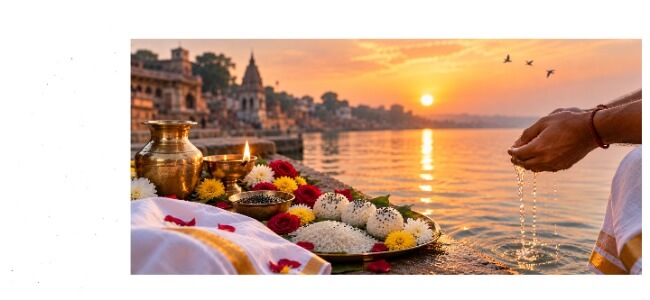
Our forefathers are woven into the story of who we are today, even when their faces survive only in old photographs, family stories, fading memories, or names passed from one generation to another. The sacrifices of departed family members often become the unseen foundation upon which later generations build their lives, dreams, homes, and traditions. Remembering them is therefore not merely an act of looking into the past; it is also a way of understanding our roots and acknowledging the journey that brought us here. In Hindu tradition, certain days are especially devoted to expressing this gratitude through prayers, offerings, charity, and remembrance.
This post is about the significance of Mahalaya Amavasya and Pitru Paksha, exploring their spiritual meaning, mythology, rituals, customs, charitable practices, astrological perspectives, and deeper emotional significance. As we explore this sacred period, we can also ask ourselves: How often do we pause to remember the people whose sacrifices made our present possible?
Table of Contents
Departed Ancestors | Forefathers | Departed Family Members
Departed ancestors occupy a deeply respected place in Hindu thought, where family is understood not merely as the people living under one roof but as a continuing lineage connecting past, present, and future. Our forefathers may no longer walk beside us, yet their values, decisions, traditions, blessings, and sacrifices can continue to influence generations. During Pitru Paksha, families intentionally create time to remember these departed family members with humility and gratitude.
The significance of Mahalaya becomes especially meaningful here because remembrance is transformed into a sacred practice rather than remaining only a private memory. Food, water, prayers, charity, and simple rituals become symbolic expressions of love for those who came before us. In this sense, the period invites us to look backward with gratitude while continuing forward with greater awareness. The deeper Pitru Paksha meaning is therefore connected with remembrance, responsibility, gratitude, and the continuity of family lineage.
Think about your own family for a moment. Are there grandparents, great-grandparents, elders, or relatives whose stories are still repeated at family gatherings? Perhaps someone sacrificed personal comforts so that another generation could study, build a home, preserve a tradition, or simply live with greater opportunities. Mahalaya Amavasya provides a sacred setting to remember such people and acknowledge their place in our family history.
The significance of Pitru Paksha extends beyond ritual because it encourages us to recognize that our lives did not begin with us. The Mahalaya Amavasya importance lies partly in this beautiful reminder of continuity. Through prayers and offerings, descendants express respect toward their Pitru Devatas, while the living are reminded of their own responsibilities toward family, society, and future generations.
Pitru Paksha And Mahalaya Amavasya | Significance Of Mahalaya
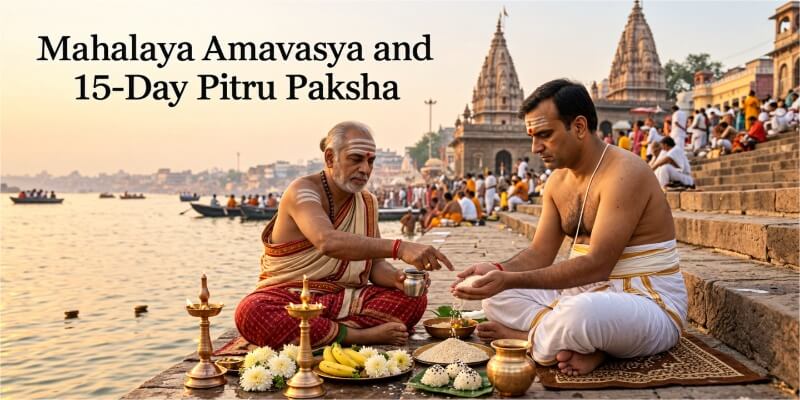
Pitru Paksha is a sacred fortnight traditionally dedicated to ancestral remembrance, while Mahalaya Amavasya marks the concluding and particularly significant new-moon day of this period. Together, they form an important spiritual window in the Hindu calendar for offering Tarpan, Shraddha, Pinda Daan, prayers, and charity for departed ancestors. The significance of Mahalaya is closely associated with the belief that descendants should remember and honour their lineage with sincerity.
The idea of Pitru Devatas, or revered ancestors, occupies an important position in Hindu culture. The relationship between generations is understood as a sacred continuity rather than a relationship that ends with death. During the Mahalaya Paksha period, families may perform rituals according to their traditions to express gratitude and seek blessings for the family. The Pitru Paksha significance is therefore both ritualistic and philosophical.
Mahalaya Amavasya also carries a special transitional quality. With the completion of Pitru Paksha, attention turns toward Devipaksha, Navratri, and the worship of Goddess Durga. In many parts of India, the dawn associated with Mahalaya is connected with the powerful invocation of Goddess Durga, particularly through the imagery of Mahishasura Mardini. Thus, the spiritual movement travels from remembrance and ancestral offerings toward devotion, renewal, strength, and the celebration of divine victory.
Understanding Pitru Paksha: Pitru Paksha Meaning And The Fortnight Of The Ancestors
The traditional Pitru Paksha period occurs during the Krishna Paksha, or waning phase of the Moon, associated with the lunar months of Bhadrapada and Ashwin depending on the regional calendar and lunar reckoning. The exact dates vary from year to year and between traditions. This period is generally considered a time when descendants remember departed family members and perform rituals connected with ancestral honour.
The Pitru Paksha meaning becomes clearer when we understand the traditional concept of Pitru Loka. Hindu philosophical and religious traditions describe different subtle realms of existence, and Pitru Loka is traditionally associated with departed ancestors. According to belief, ancestors may receive offerings and remembrance from their descendants, while the living maintain a spiritual relationship with their lineage.
Another important concept is Pitru Rina, or the debt owed to our ancestors. Hindu philosophy speaks of different forms of Rina, or sacred obligations, and Pitru Rina reminds us that our existence is connected to previous generations. We inherit not only physical life but also language, culture, family knowledge, values, property, traditions, and countless opportunities created by those who came before us.
The significance of Pitru Paksha can therefore be understood as a reminder that receiving from previous generations also creates a responsibility to remember, respect, and contribute to the continuity of the family. This is why the Pitru Paksha meaning extends far beyond a calendar observance.
Mythology And Legends Behind Mahalaya Paksha
Several stories are associated with ancestral rituals, although versions differ across scriptures, regional traditions, and oral traditions. These stories help explain why offerings of food, water, charity, and prayers became important components of ancestral observances.
The Story Of Karna And The Origin Of Tarpan
One of the best-known stories associated with Pitru Paksha concerns Karna, the great warrior of the Mahabharata. According to a popular traditional account, after his death, Karna reached the heavenly realm but was given gold and precious objects instead of food because, during his earthly life, he had generously donated wealth but had not made offerings of food and water to his ancestors.
When Karna questioned this, he was given an opportunity to return to Earth for a period and perform charitable acts and ancestral offerings. This story is often narrated as an explanation for the importance of food, water, and Tarpan during the ancestral fortnight.
The story reinforces an important idea within the Pitru Paksha meaning: charity and remembrance should include basic nourishment and should not be limited to material wealth.
Lord Rama And Tarpan For King Dasharatha
Another traditional association connects Lord Rama with ancestral offerings for his father, King Dasharatha. Gaya in Bihar is particularly renowned for Pinda Daan and ancestral rituals, and traditions surrounding Lord Rama are among the many sacred narratives associated with the place.
Such stories emphasize the responsibility of descendants to honour departed parents and ancestors. Whether approached literally as sacred history or symbolically as a teaching tradition, the message remains powerful: gratitude toward those who gave us life and guidance is an important spiritual responsibility.
Samudra Manthan And Ancestral Traditions
The Samudra Manthan, or churning of the cosmic ocean, is primarily a major Hindu creation and cosmological narrative involving the Devas and Asuras and the emergence of numerous divine substances and beings. Some later traditional interpretations and ritual narratives associate cosmic churning, purification, and the movement between different realms with ancestral spiritual themes.
It is important to recognize that this particular connection is not presented identically in all Hindu scriptures or traditions. Its inclusion in discussions of ancestral observances is better understood as part of the broader symbolic landscape surrounding purification, transition, and the relationship between earthly and subtle realms.
The Finale On Sarva Pitru Amavasya: Significance Of Mahalaya Amavasya
Among the days of the ancestral fortnight, Mahalaya Amavasya is traditionally regarded as especially important. The new-moon day marks the culmination of the period and provides an opportunity for people to remember ancestors whose annual death dates may be unknown, forgotten, or difficult to determine.
This is one reason the Mahalaya Amavasya significance is so profound for families who cannot perform a separate annual Shraddha on a known Tithi. Instead of allowing an uncertain date to become a reason for forgetting, tradition provides a collective occasion for remembrance.
The Mahalaya Amavasya importance also lies in its position at the threshold between two spiritual moods. As Pitru Paksha concludes, Devipaksha begins, bringing with it the worship of Goddess Durga and the festive energy associated with Navratri and Durga Puja.
In Bengal and several other regions, Mahalaya is strongly associated with the invocation of Goddess Durga and the celebrated recitation and broadcast of devotional verses connected with Mahishasura Mardini. Thus, Mahalaya carries a striking emotional transition: remembrance of the departed gives way to the arrival of the Divine Mother and the celebration of renewal and victory.
Core Rituals And Customs: How Pitru Paksha Is Observed
The rituals performed during Pitru Paksha vary according to family traditions, region, caste, community, and religious lineage. It is always wise to follow the customs taught by one’s family priest or local tradition rather than assuming that one procedure applies everywhere.
Pitru Tarpan
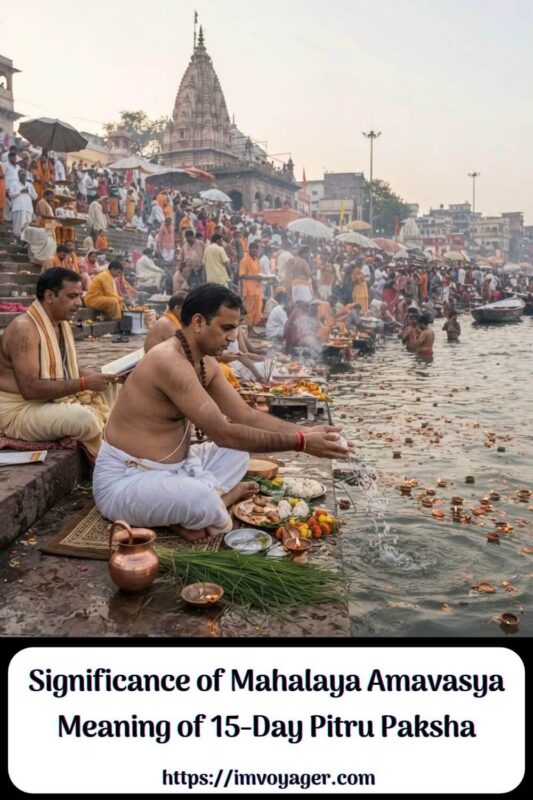
Pitru Tarpan – Mahalaya Tharpanam is sacred ritual of offering water mixed with black sesame seeds (til) and Kusha grass to honour and pay homage to departed ancestors, traditionally performed while facing south. Water is offered with prayers while remembering specific ancestors.
The Pitru Paksha mantra recited during Pitru Tarpan can differ according to lineage and ritual procedure. Some families use Sanskrit mantras prescribed by priests, while others follow simpler prayers of remembrance.
Shraddha Karma
Shraddha is a formal ancestral observance involving prayers, offerings, food, and charity. Traditional procedures may involve the eldest son or another designated descendant, but practices differ considerably among communities.
The central purpose is not simply to complete a prescribed sequence of actions. It is to perform the observance with Shraddha, meaning faith, sincerity, reverence, and heartfelt remembrance.
Pinda Daan
Traditional rites performed to express reverence and gratitude to departed ancestors by offerings made in the form of rice balls, often prepared with ingredients such as black sesame and ghee according to regional practice. The offering symbolizes nourishment and remembrance of the departed. These rituals are accompanied by offering meals to Brahmins and distributing food, donations, or other essentials to the needy, as an expression of devotion, remembrance, and charity.
Gaya is particularly famous place for Pinda Daan, and pilgrims visit the city throughout the year for ancestral rituals.
Sacred Geographical Centres
Gaya, Varanasi, Prayagraj, and Rameswaram are among the places associated with ancestral rites and pilgrimage traditions.
Gaya is especially renowned for Pinda Daan and Shraddha rituals.
Varanasi carries profound spiritual significance because of its association with the Ganga, liberation, and Hindu sacred traditions.
Prayagraj is revered for the confluence of sacred rivers and its long pilgrimage history.
Rameswaram is associated with sacred water, pilgrimage, and ancestral rites, making it an important destination for many devotees.
Pitru Paksha Mantra: Sacred Prayer For Ancestral Remembrance
A Pitru Paksha mantra is traditionally recited while remembering departed ancestors and offering Tarpan (tarpanam), Shraddha, or other ancestral prayers. Mantras may vary according to family tradition, regional practice, and the particular ritual being performed, so you can follow the guidance of your family priest or spiritual teacher. One simple and widely used Sanskrit prayer for ancestral remembrance is:
ॐ पितृभ्यः स्वधायिभ्यः स्वधा नमः। पितामहेभ्यः स्वधायिभ्यः स्वधा नमः। प्रपितामहेभ्यः स्वधायिभ्यः स्वधा नमः।
Om Pitrubhyah Swadhayibhyah Swadha Namah. Pitamahebhayah Swadhayibhyah Swadha Namah. Prapitamhebhayah Swadhayibhyah Swadha Namah.
This Pitru Paksha mantra is an invocation offered respectfully to the ancestors, including the paternal ancestors and earlier generations of the lineage. The word Swadha is traditionally associated with offerings made to the Pitrs, or ancestors, while Namah expresses reverence and respectful salutation. In simple terms, the prayer conveys our humble remembrance and respect for our departed forefathers and invites us to make ancestral offerings with faith and sincerity.
You do not need to think of the Pitru Paksha mantra merely as a collection of Sanskrit words. Its deeper purpose is the feeling behind the recitation. When you remember your parents, grandparents, great-grandparents, or other departed family members while chanting the mantra, the practice can become a quiet moment of gratitude for the lives, sacrifices, values, and blessings that came before you.
If you are performing Tarpan or Shraddha according to a specific family tradition, the appropriate Pitru Paksha mantra may be longer and may include the names, Gotra, and lineage of the ancestors being remembered. In such circumstances, following the instructions of a knowledgeable priest is preferable, particularly because pronunciation and ritual procedure can vary between traditions.
The essence remains simple: remember your ancestors with respect, offer what your tradition prescribes, practice charity where possible, and perform the observance with a sincere heart. This is where the spiritual Pitru Paksha significance becomes more personal, turning an ancient ritual into an intimate expression of gratitude between generations.
The Power Of Charity: Dana And Compassion
The significance of Mahalaya is not limited to rituals performed inside a home or temple. Charity, compassion, and feeding others are also important expressions of remembrance during this period.
Pancha Bali And Feeding Living Beings
A traditional practice known as Pancha Bali symbolically extends compassion toward different forms of life. Depending on the tradition, offerings may be made to cows, dogs, crows, ants, and Brahmins or Sadhus.
The crow is particularly associated with ancestral observances in many Indian traditions. Seeing a crow accept food is sometimes interpreted symbolically as the acceptance of an offering by the ancestors.
Such practices encourage an important shift in perspective. Instead of remembering our ancestors only through words, we transform remembrance into an act of generosity toward living beings.
Annadanam
Annadanam, or the offering of food, is regarded as an especially meaningful form of charity. Providing nourishing food to people who need it can turn remembrance into tangible compassion.
If you observe Mahalaya Paksha, consider whether your ancestral remembrance can also inspire an act of kindness. A meal offered to someone in need, support for a community kitchen, or a sincere charitable contribution can become a meaningful part of the observance.
Astrological Perspectives: Pitru Dosha And Remedies
In Vedic astrology, Pitru Dosha is traditionally interpreted as an ancestral-related affliction indicated through particular planetary combinations in a birth chart. Interpretations vary among astrologers, and it should not be treated as a scientific diagnosis.
Traditional astrological discussions may associate Pitru Dosha with repeated obstacles, difficulties concerning family growth, delays, relationship challenges, or recurring patterns that appear across generations. These interpretations are part of the religious and astrological belief system rather than established medical or scientific fact.
For believers, performing Shraddha, Tarpan, charity, and ancestral prayers during Mahalaya Amavasya is sometimes considered a way of seeking relief from such generational blockages.
The Pitru Paksha significance therefore extends into the astrological dimension for those who follow these traditions. A sincere Pitru Paksha mantra, combined with charity and remembrance, may be recommended by a knowledgeable priest or astrologer according to the family’s spiritual tradition.
Strict Do’s And Don’ts During Pitru Paksha
Auspicious Practices To Follow
- Offer sincere prayers and remember departed ancestors with gratitude.
- Perform Tarpan, Shraddha, or Pinda Daan according to your family tradition.
- Offer food, water, or charity to people who are genuinely in need.
- Maintain a simple and peaceful lifestyle during the observance.
- Spend time learning family history and remembering the values taught by earlier generations.
- Recite an appropriate pitru paksha mantra or ancestral prayer according to your tradition.
Restrictions And Taboos
- Many traditional households avoid meat, alcohol, and other forms of indulgence during Pitru Paksha.
- Some families avoid purchasing new clothes, vehicles, property, or other major items during the period.
- Traditional households may also postpone weddings, major celebrations, housewarming ceremonies, and other auspicious milestones until Pitru Paksha concludes.
- These restrictions are not identical across every Hindu community. If your family follows a particular custom, it is best to understand its meaning rather than following it mechanically.
Philosophical And Psychological Meaning Of Pitru Paksha
What happens when we move beyond the ritual itself?
The deeper significance of Pitru Paksha can be found in gratitude. Modern life often encourages us to focus intensely on the future, but ancestral remembrance asks us to pause and acknowledge the past.
Knowing where our family came from can provide psychological grounding. Stories about grandparents, migrations, hardships, achievements, traditions, and sacrifices help us understand our own identity within a larger narrative.
The Pitru Paksha meaning can therefore be understood as an invitation to remember that every generation receives something from the one before it. We receive language, values, knowledge, culture, opportunities, and sometimes even unfinished responsibilities.
The Mahalaya Amavasya significance becomes especially moving when we think about ancestors whose names may no longer be remembered clearly. The day creates a symbolic space where even forgotten or unknown members of the lineage can be acknowledged.
Perhaps this is also why the Mahalaya Amavasya importance continues to resonate in contemporary families. You may live in a city far from your ancestral village. You may have travelled across countries. Your lifestyle may be completely different from that of your grandparents. Yet remembrance can still connect you to your roots.
Frequently Asked Questions About Mahalaya Amavasya And Pitru Paksha In India
Mahalaya Amavasya and Pitru Paksha bring together ritual, mythology, family memory, charity, and spiritual reflection. The following questions address some common doubts while recognizing that specific practices can differ between communities and family traditions.
Can women perform Tarpan or Shraddha during Pitru Paksha?
Yes, women can perform Tarpan or Shraddha in many contemporary Hindu families and traditions, although traditional practices concerning who performs the rites vary by community, lineage, and family custom.
What is the Pitru Paksha meaning if I do not know my ancestors’ death dates?
When specific death dates are unknown, Mahalaya Amavasya is traditionally considered an important occasion for remembering and making offerings to ancestors collectively.
Why is the crow important during Mahalaya Amavasya?
In many traditions, the crow is regarded as a symbolic messenger associated with ancestors, so offering food to it during Mahalaya Amavasya represents an act of ancestral remembrance.
Can we buy new clothes or vehicles during Mahalaya Amavasya?
Many traditional families avoid major purchases during Mahalaya Paksha, preferring to wait until Pitru Paksha concludes and the festive period of Navratri or Devipaksha begins.
What if I live abroad and cannot perform elaborate Pitru Paksha rituals?
You can remember your ancestors through a simple prayer, meditation, charity, feeding animals, or an appropriate Pitru Paksha mantra while following the customs that are practical and meaningful for your circumstances.
What is the significance of Mahalaya for ancestors whose death dates are unknown?
The significance of Mahalaya includes providing a collective opportunity to remember ancestors whose specific annual death Tithis may not be known or observed.
What is the Mahalaya Amavasya importance in Pitru Paksha?
The Mahalaya Amavasya importance comes from its position as the concluding Amavasya of the ancestral fortnight and its association with collective ancestral remembrance.
What is Pitru Dosha and how is it connected with Pitru Paksha?
In traditional astrology, Pitru Dosha refers to certain planetary combinations believed to indicate ancestral-related obstacles, and some practitioners recommend Shraddha and charity during Pitru Paksha as spiritual remedies.
What is a Pitru Paksha mantra?
A Pitru Paksha mantra is a traditional prayer or Sanskrit invocation used during ancestral observances, with the exact mantra varying according to ritual, family tradition, and spiritual lineage.
Is Pinda Daan performed only during Mahalaya Amavasya?
No, Pinda Daan – Pind Daan may be performed on specific ancestral Tithis and at sacred pilgrimage locations such as Gaya, while Mahalaya Amavasya provides a particularly significant collective occasion for ancestral offerings.
Why is charity important during Pitru Paksha?
Charity reflects the Pitru Paksha significance by transforming remembrance into compassion, particularly when food, clothing, financial assistance, or other useful support is offered to people in need.
How does Mahalaya connect Pitru Paksha with Durga Puja?
Mahalaya Amavasya marks the end of the ancestral observance and the transition toward Devipaksha, while the traditional invocation of Goddess Durga creates a powerful movement from remembrance and purification toward divine celebration and renewal.
Conclusion: From Ancestral Remembrance To A New Beginning
The journey through Pitru Paksha reminds us that life is not an isolated chapter but part of a much longer family story. The significance of Mahalaya lies in creating a sacred pause where we remember those who came before us with humility and gratitude. Understanding the Pitru Paksha meaning helps us see these traditions not simply as rituals but as expressions of responsibility, compassion, memory, and continuity.
Mahalaya Amavasya stands at the beautiful threshold between ancestral remembrance and the beginning of Devipaksha, carrying the emotional energy of closure and renewal. During Mahalaya Paksha, families may pray, offer Tarpan, perform Shraddha, give charity, and remember departed loved ones in ways shaped by their own traditions. A sincere pitru paksha mantra can become a quiet expression of gratitude when spoken with faith and understanding.
As Pitru Paksha ends, the arrival of Navratri and the worship of Goddess Durga remind us that remembrance does not mean remaining trapped in the past; it can give us strength to move forward. Perhaps the greatest blessing is to carry the wisdom and values of our ancestors while creating a kinder and more meaningful future for the generations who will follow us.
We hope you liked this post about the significance of Mahalaya, Pitru Paksha meaning, Mahalaya Amavasya, Mahalaya Paksha, and pitru paksha mantra, and found it useful, insightful, and meaningful.
Do share this post about the significance of Mahalaya, Pitru Paksha meaning, Mahalaya Amavasya, Mahalaya Paksha, and pitru paksha mantra with your family and friends, and share it across your social media platforms to help others discover the spiritual meaning and traditions associated with this sacred period.
Where Journeys Begin — And the Soul Awakens
Take a gentle breath and allow your imagination to wander. Picture coastlines glistening beneath the heavens like constellations scattered across the earth, mountains wrapped in veils of mist and timeless memories, and ancient streets whispering their stories to those who pause long enough to listen. Travel, after all, is so much more than tracing lines across a map. It is an unfolding of the soul, a quiet awakening, and a transformation that often takes place before we even realise it.
At Voyager, we do not simply put together itineraries; we thoughtfully weave experiences that feel personal, authentic, and deeply connected to the heart, like a treasured letter written just for you. From tranquil sanctuaries where silence becomes a prayer to hidden wonders waiting beyond the familiar, every journey is designed to resonate with who we are, what we cherish, and who we are yet to become.
And when that irresistible longing to discover the world begins to stir within you, reach out to us at imvoyager18@gmail.com. Together, we will shape a journey filled with meaning, beauty, and moments to treasure, creating memories that remain close to the heart long after the last mile has faded into silence.
When the Miles Disappear — And the Memories Become Forever
Every extraordinary journey begins long before a suitcase is opened or a ticket is booked. It begins as a whisper within, a gentle tug at the heart, and an inexplicable feeling that somewhere beyond the familiar, something beautiful is waiting to be found. Step into a world where travel inspiration is gathered with thoughtfulness and care, where hidden corners, soulful encounters, and stories drawn from lived experiences awaken a deeper curiosity about the world.
Walk alongside fellow wanderers who welcome the morning beneath a golden sunrise, discover moments of stillness in sacred spaces, and find unexpected happiness along roads that were never part of the original plan. Here, even the smallest encounters can become cherished memories, and the most unplanned detours can lead to the most meaningful discoveries. Let these shared experiences open your heart to journeys that feel unmistakably personal, wonderfully alive, and impossible to forget.
Travel With Us — Beyond Destinations, Into the Heart of the Moment
Welcome to Travel With Sandy & Vyjay, where every story becomes an invitation to explore and every photograph captures something of the wonder of a first sunrise. Wander through colourful markets alive with local voices and everyday rituals, witness the sacred stillness of temples at dawn, and linger in those rare moments whose beauty is felt far more deeply than words can ever explain.
This is a place where there is no relentless race against the clock, no pressure to reach the next destination, and no need to hurry past the beauty unfolding around us. Instead, we make room for curiosity, embrace the warmth of human connection, and surrender to the quiet magic of discovery. Because sometimes, the most beautiful part of travelling is not arriving somewhere new, but being fully present in the moment that finds us along the way.
Voyager — Where Curious Souls Find Their Circle
Voyager is more than a travel platform; it is a welcoming circle of explorers, dreamers, mindful travellers, and storytellers who believe that every journey has something meaningful to offer. Become part of our growing community on Instagram, Facebook, X (Twitter), LinkedIn, and YouTube, where inspiration travels freely and stories bring distant places a little closer. Invite gentle moments of discovery into your everyday life through Voyager Travel Bytes on WhatsApp, or let thoughtful travel stories find their way into your inbox.
Follow our journeys on Instagram, where experiences unfold in their truest form: honest, immersive, heartfelt, and beautifully unscripted, just as travel was always meant to be. Here, we celebrate not merely the places we visit, but the people we meet, the cultures we embrace, and the unexpected moments that make every adventure uniquely our own.
Journeys That Bear Your Signature
Whether your heart seeks the gentle rhythm of slow travel, yearns to follow distant horizons, or longs to immerse itself in the living pulse of a place, every journey we create is shaped around the essence of the traveller. Nothing is chosen without thought; every path carries an intention, and every detail is considered with care to leave room for wonder, discovery, and meaningful connection. We believe that travel should feel like an extension of who you are, honouring your curiosities, reflecting your dreams, and opening doors to experiences that speak to something deeper within you.
Because the journeys that remain with us are rarely measured by the number of places visited or the distance covered. They are remembered for the quiet revelations, the unexpected connections, and the subtle transformations they leave behind. The most extraordinary journeys do not simply introduce us to unfamiliar landscapes; they gently reshape the way we see the world, understand others, and recognise ourselves.
The World Is Calling — Will You Listen?
Beyond the boundaries of the familiar lies a world overflowing with extraordinary beauty, untold stories, profound meaning, and fleeting moments waiting for their time to unfold. There are distant shores to discover, ancient pathways to follow, sacred spaces in which to find stillness, and encounters that may change the way we carry the world within us. And when that quiet voice within finally tells us that the time has come, reach out to imvoyager18@gmail.com. Together, we will thoughtfully craft a travel story shaped by your dreams, enriched by meaningful experiences, and filled with memories that linger long after the journey itself has reached its end.
Because travel has never been only about where we go. It is about the stories we gather, the connections we nurture, the silences we learn to appreciate, and the people we become along the way.
And when the heart is ready, when curiosity rises and the horizon begins to beckon, there is no need for grand declarations.
We simply close our eyes, listen to the quiet invitation of the world, and whisper one beautiful word:
Begin.
We are a reader-supported site. This means, at no additional cost to you, we may earn a small commission if you book a flight or hotel, or make a purchase through one of our affiliate links. Thank you for your support!
Flights – Air India (Domestic) or Air India (International), or Priceline
Tours – Click to book top tours around the world. Book tours and activities here.
Experiences – Book your next unforgettable experience here, with flexible bookings and free cancellations. Reserve tours and activities now and pay later.
Hotels – Click to book the best hotels/resorts. Choose the best stay options with TripAdvisor or Hotels.com, or HotelsCombined
Travel Insurance – Click to book Travel Insurance that covers a range of travel insurance and safety services including medical emergencies, lost luggage, trip cancellation and more
Visas and Travel Documents Application – Click here for Online Travel Visa Check
Online Passport Photo – Get Your Passport Photo Online here


Do You Love Traveling?
Do you want to know how to travel the world? We have put together a very useful travel resources page with the best travel tips. Go check it out now. Thanks for visiting our site Voyager - imvoyager.com and taking the time to read this post! If you wish to collaborate/work with us then reach us at imvoyager18@gmail.com We’d love it if you’d comment by sharing your thoughts on this post and share this post on social media and with your friends. Follow our journey on our social media channels: Facebook X Instagram Pinterest YouTube
Start dreaming about your next adventure with Tripadvisor. Book your next unforgettable experience here with flexible bookings and free cancellations.

Flight booking online at the best fare

60+ Million Users Trust TripAdvisor With Their Travel Plans. Shouldn't You?

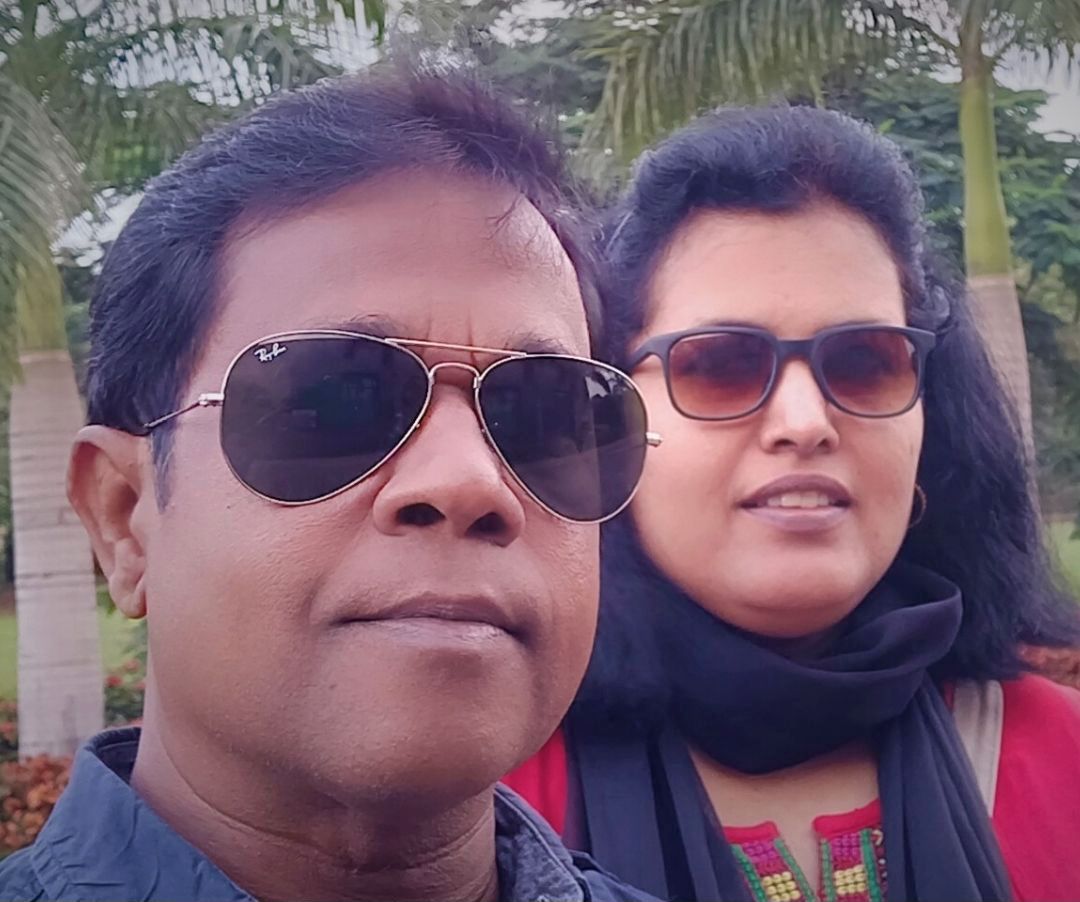
Sandy & Vyjay are a husband and wife duo who are travel content creators. They are co-founders of this travel website and are one of the leading travel content creators in India.
Sandy & Vyjay quit their successful corporate careers to pursue their passion for travel and writing full-time. Their dedication has earned them the “Best Travel Writer” award and numerous accolades on both national and international stages. Focusing on India’s destinations, heritage, and culture, they are passionate advocates for nature and the environment. Through their content, they promote ecotourism and sustainable travel, inspiring others to explore and preserve the beauty of India.